
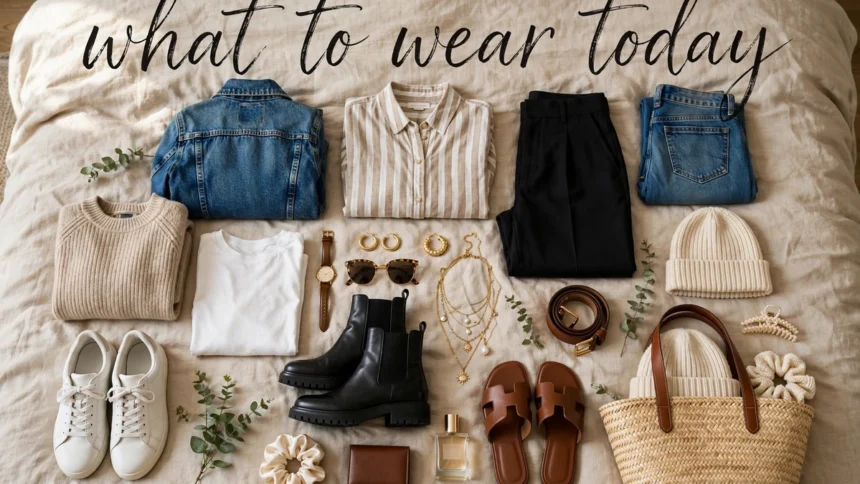
Standing in front of a full wardrobe with nothing to wear is a familiar morning problem, and it usually has nothing to do with owning too few clothes. The answer to what to wear today starts with three checks, not with a shopping trip: the weather outside, the most demanding thing on your schedule, and what is actually clean and ready to wear. Get those three right and the outfit almost picks itself.
The three checks, in order
Check the weather first, because it is the one constraint you cannot negotiate with. A beautiful outfit that leaves you cold, wet or overheated will feel wrong all day, however good it looks in the mirror. Look at the high and the low, not just the morning temperature, and check for rain or wind if you will be outside for any length of time.
Check your schedule second. Your first high-stakes moment of the day sets the dress level: a presentation, an interview or a formal dinner outranks a quiet afternoon at home, even if the rest of the day is casual. Dress for that moment, then make the outfit comfortable enough for everything else.
Check what is clean third. The best outfit in your wardrobe is useless if it is in the laundry basket. Dressing from what is actually available, rather than what you wish you owned, removes the most common morning frustration. If you keep finding the same favourite missing, that is a laundry-routine problem, not a wardrobe problem.
A five-minute routine
Give yourself five minutes and work in this order. First, pick the bottom half for the day’s main activity: trousers or jeans for work, comfortable trousers or a skirt for a casual day, something smarter for an evening out. Second, add a top that suits the temperature and the occasion. Third, add one outer layer if the weather or the venue calls for it. Fourth, choose shoes you can actually walk in for as long as the day requires. Fifth, add one finishing touch — a watch, a scarf, a bag — and stop. The routine works because it limits decisions instead of multiplying them.
It also helps to decide the night before when the next morning is tight. Laying out the outfit, including shoes, the night before turns a morning decision into a morning routine, and it is the single most reliable fix for rushed, regretted choices.
Dressing by temperature
Use these as starting points and adjust for how warm or cold you personally run, and for wind and rain.
- Below about 40°F: a warm coat over a sweater, with a base layer underneath on the coldest days. Boots or warm closed shoes, plus a hat, scarf and gloves if you will be outside.
- 40–55°F: a coat or heavy jacket over a sweater or long sleeves. Layers matter here, because mornings and afternoons can feel like different seasons.
- 55–65°F: a light jacket or overshirt over long sleeves. This is good layering weather: a jacket you can carry if the day warms up.
- 65–75°F: a single layer — a shirt, blouse or tee with jeans or trousers — with shorts or sandals becoming comfortable at the warmer end.
- Above 75°F: light, breathable fabrics and lighter colours, with sun protection if you will be outside. Comfort beats structure in real heat.
Rain changes the equation at any temperature: waterproof shoes and a jacket you do not mind getting wet matter more than the outfit underneath.
Simple outfit formulas
Formulas beat inspiration on busy mornings. Pick the one that matches your day and plug in the pieces you already own.
Workday: a well-fitting shirt or blouse, smart trousers, and shoes you can walk in. A blazer or structured jacket lifts the same outfit for meetings without requiring a different wardrobe. Dressing for a day at the office has the same logic as dressing a dog for a day out with you, as in take your dog to work day — comfort and practicality first, with one polished touch.
Casual day: jeans or comfortable trousers, a plain tee or knit, and clean trainers or flats. Fit does most of the work here: a plain outfit that fits well looks intentional, while a complicated outfit that fits badly does not.
Date or evening out: one piece you feel confident in — a dress, a sharp shirt, well-cut trousers — plus shoes you have worn before. Avoid anything brand new for an important evening; unfamiliar shoes and stiff fabrics are distractions you do not need. Dressing up for an occasion is its own small pleasure, much like putting on a fun accessory for a party, as with stay classy gus.
Travel day: stretchy, comfortable layers, shoes that slip on and off easily, and a jacket with pockets. Pack for the destination’s weather, not the departure city’s, and keep one smarter layer in reach in case plans change. A trip outfit has to survive sitting, walking and weather in a single day, as any trip to San Francisco will remind you.
Build a wardrobe that decides faster
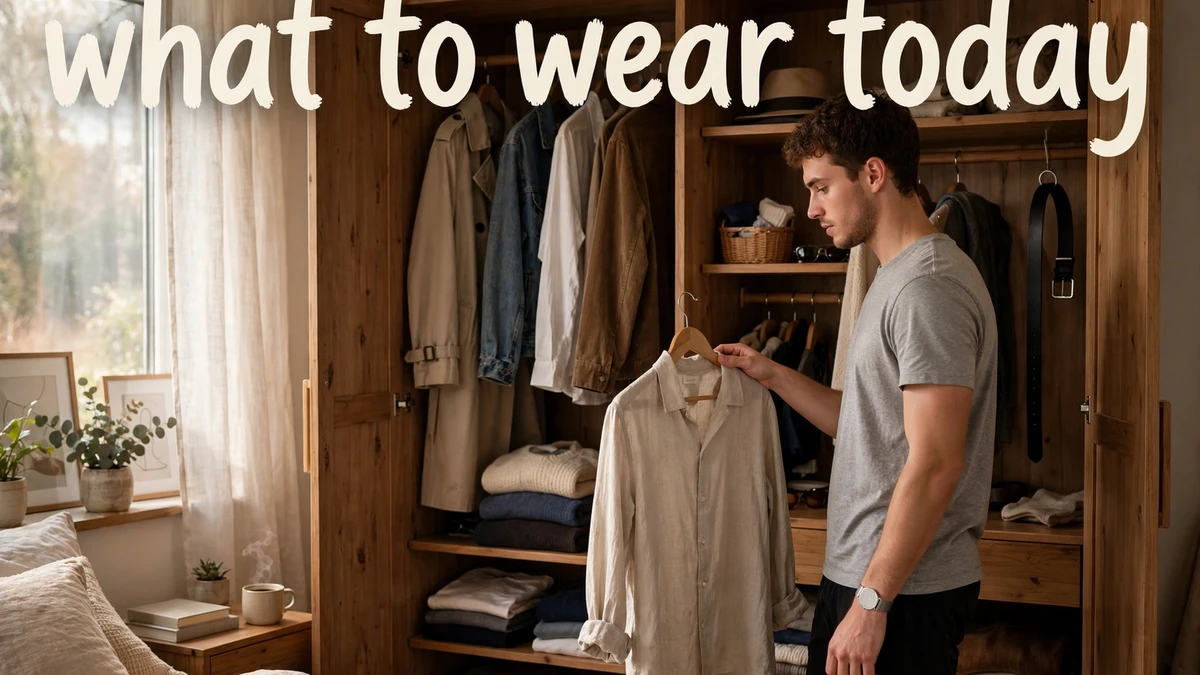
If choosing takes too long every day, the wardrobe itself may need simplifying rather than expanding. A small set of neutral bottoms that go with most tops, a few tops in colours you actually like, and one good jacket per season will cover most days. This is the idea behind a capsule wardrobe: fewer, better pieces that all work together, so any combination looks deliberate.
Colour helps too. Start with a neutral base — navy, black, grey, beige or white — and add one colour or pattern as the accent. Two bold patterns or three bright colours in one outfit are hard to balance before coffee; one accent is easy. And keep a note, mental or written, of outfits that worked. Repeating a good outfit is not a failure of imagination; it is the whole point of finding one.
Formal occasions still follow their own rules, which is why a dress code matters: smart casual, business casual and black tie are not vague suggestions, and dressing one level above the expected code is safer than one level below it when you are unsure.
Common mistakes to skip
Wearing brand-new shoes on a long day is the classic one — break them in on a short outing first. Ignoring the afternoon forecast is another: a morning jacket left at home cannot help you at 4 p.m. And dressing for the person you wish you were, rather than the day you actually have, produces outfits that feel like costumes by lunchtime. The test of a good outfit is simple: you forget about it. If you are adjusting, tugging or thinking about it all day, it was the wrong choice, however good it looked at 8 a.m.
The bottom line
What to wear today is a three-check decision: weather, schedule, and what is clean. Pick the bottom half for your main activity, add a top and a layer, choose shoes you can walk in, and stop at one finishing touch. On most days that is enough — and on the days it is not, the answer is usually a simpler wardrobe, not a bigger one.