
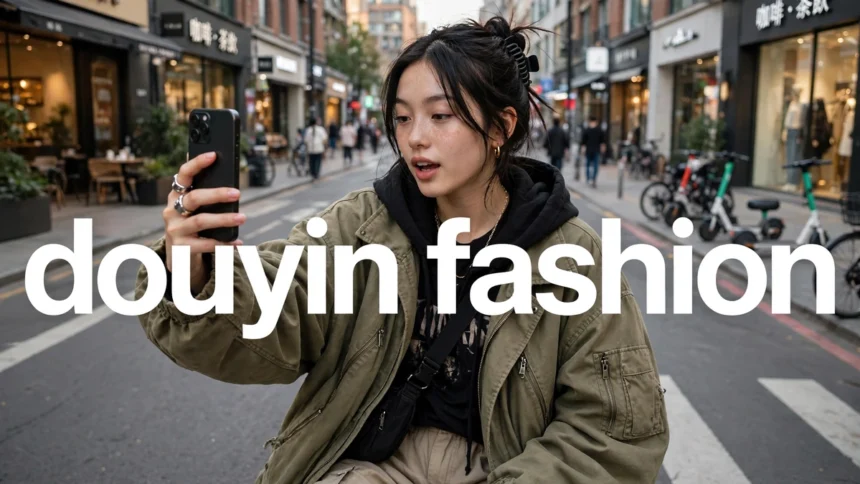
If a fashion trend seems to appear everywhere at once — the same brown-toned outfit, the same bright colours, the same minimalist layers — there is a good chance it started on Douyin first. Douyin fashion is not one single look. It is the style system of China’s biggest short-video platform: outfits designed to read clearly in a few seconds of video, made by millions of creators, and copied, remixed, and exported around the world.
What Douyin actually is
Douyin (抖音) is a short-video app developed by ByteDance and launched in China in September 2016. It is the domestic counterpart of TikTok, which ByteDance launched internationally in 2017 — the two apps look similar but run separately, with their own content, creators, and shopping systems. The name roughly means “shaking sound”, a nod to the music and movement at the heart of the format.
That format shapes the fashion. A Douyin outfit is not presented in a still photograph; it is shown in motion — a coat opening as the beat drops, a full outfit revealed in a single cut, a colour change in one take. Clothes that move well, photograph cleanly, and read at a glance do better than clothes that need a close look to appreciate. That is why Douyin fashion favours strong silhouettes, clear colour stories, and one memorable detail over fussy layering.
Douyin is also a shopping platform, not just a video feed: creators link the clothes they wear, viewers buy from the video, and trends can go from a creator’s wardrobe to a bestseller list in days. Fashion on Douyin is therefore fast, but it is not random — the same aesthetics return again and again, because they are built on colour, proportion, and cultural reference rather than on a single garment.
The trends that define Douyin fashion
Maillard style: dressing in browns
Maillard style — named after the browning reaction that gives seared food its colour — dresses in shades of brown, caramel, coffee, and cream. The idea is simple: build an outfit from one warm colour family, and let texture do the work that contrast usually does. A camel coat, a brown knit, cream trousers, and tan boots read as intentional even when every piece is simple.
It works because it flatters most skin tones, suits autumn and winter, and photographs warmly. To try it, pick three browns in different depths — light, medium, dark — and keep accessories in the same family. The one mistake is matching too exactly; varied shades look styled, identical shades look like a uniform.
Dopamine dressing: colour as mood
Dopamine dressing is the opposite instinct: bright, saturated colour worn deliberately to lift mood — hot pink, vivid green, sunny yellow, electric blue, often in one bold piece against a neutral base. On Douyin it appears in transition videos, where a dull outfit flips to a colourful one on the beat, and in everyday outfits where a single coloured bag, coat, or pair of shoes carries the whole look.
The wearable version is restraint: one loud colour, everything else quiet. A bright coat over black, or a coloured knit with plain jeans, gives the dopamine effect without turning the outfit into a costume. Two or more loud colours need a shared undertone — warm with warm, cool with cool — or they compete instead of combining.
Minimalist and Acubi: quiet, clean, and fitted
At the other end of the spectrum sits the minimalist look often called Acubi: clean lines, neutral colours, slim or straight silhouettes, and simple basics worn well. Think a fitted top, straight trousers, a structured jacket, and minimal accessories. The appeal is precision — nothing extra, everything fitted and in proportion.
Acubi is the easiest Douyin trend to wear daily, because it is built from ordinary pieces. The difference between plain and Acubi is fit and finish: clothes that sit correctly on the shoulder and at the waist, fabrics that hold their shape, and a restrained palette of black, white, grey, and beige. It pairs naturally with the one-statement-piece rule used in retro fashion styles — let one proportion or detail carry the look, and keep the rest simple.
Guochao and modern tradition
Guochao, roughly “national trend”, is the movement of Chinese cultural elements into modern fashion: hanfu-inspired silhouettes, traditional patterns and closures, embroidery, and qipao-style details, remade as everyday clothing rather than historical costume. On Douyin, creators mix a modern jacket with a traditional collar, or a contemporary dress with a Chinese knot button, and the result reads as both current and rooted.
This is the trend most often misunderstood outside China, because it is easy to treat it as a costume. The Douyin version works when the traditional element is one detail in a modern outfit — a collar, a print, a fabric — not a full historical reconstruction. Worn that way, it is closer to how any culture’s heritage details enter everyday dress: a reference, not a re-enactment.
Streetwear, Y2K, and athleisure
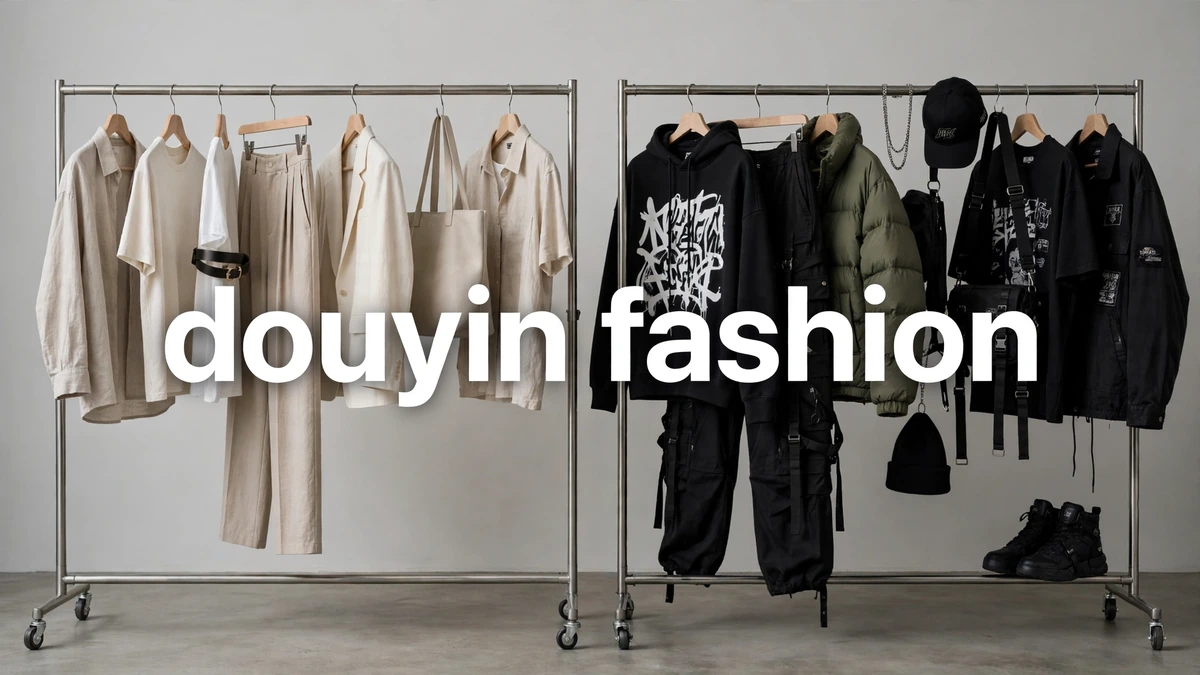
Douyin’s streetwear strand mixes oversized jackets, cargo trousers, graphic hoodies, and chunky shoes — comfortable, urban, and made to move on camera. Y2K revival pieces (low-rise jeans, baby tees, shiny fabrics, logo details) appear alongside it, as does athleisure: leggings, sports tops, and trainers worn as an everyday outfit rather than only for exercise.
These strands overlap with Western social media fashion, which is part of why Douyin trends travel so fast: a streetwear or Y2K look needs little translation. The Douyin difference is presentation — the outfit is shown in motion, often with a transformation or a before-and-after, so the styling has to be legible in seconds. That pressure favours bold shapes and clear colour over subtle detail.
Why Douyin trends reach the rest of the world first
Trends that start on Douyin often appear on TikTok, Instagram, and Pinterest weeks later, because the platform’s scale and its shopping links compress the usual fashion cycle. A creator posts an outfit, viewers buy the pieces from the video, other creators remix the look, and by the time the trend is named in English, it has already been through several rounds of variation in China.
That speed also means Douyin fashion is a moving target. Maillard style and dopamine dressing were defining looks in recent seasons; the next wave may already be forming around futuristic metallics or a return to softer, romantic styles. The useful skill is not memorising this season’s names, but recognising the underlying patterns: a colour story, a silhouette, or a cultural reference, repeated across many creators until it becomes a trend.
How to wear Douyin fashion without copying a video
The temptation with video fashion is to copy an outfit exactly — same pieces, same pose, same filter. The result usually disappoints, because video flatters through movement, lighting, and editing that real life does not provide. A better approach:
- Take the colour story, not the outfit. Maillard browns, dopamine brights, or a neutral minimalist palette can be built from clothes you already own.
- Pick one silhouette idea. An oversized jacket, a straight trouser, or a fitted top — one clear shape, with the rest of the outfit kept simple.
- Check it in motion and in daylight. Walk, sit, and look in a mirror without a filter. If the outfit only works on camera, it is a video costume, not a wardrobe choice.
- Keep it appropriate to the day. A full Douyin transformation outfit suits a night out or a shoot; a single trend element — a brown palette, a bright accessory, a traditional detail — suits everyday life. The same low-effort logic in what to wear today applies: decide the one thing the outfit is about, and let everything else stay easy.
Denim is a useful bridge here too: the throwback denim shapes explored in what are jorts sit comfortably inside Douyin streetwear, and a well-fitting pair of jeans grounds even the boldest trend piece.
The bottom line
Douyin fashion is best understood as a system, not a single aesthetic: short-video presentation rewards clear colour stories, strong silhouettes, and one memorable detail, and the platform’s shopping links turn those ideas into trends at unusual speed. Maillard browns, dopamine brights, minimalist layers, modern tradition, and streetwear are the current vocabulary — but the grammar matters more than the words. Borrow a colour story or a silhouette, wear it in your own size and your own daylight, and you have the Douyin look without needing the Douyin filter.