
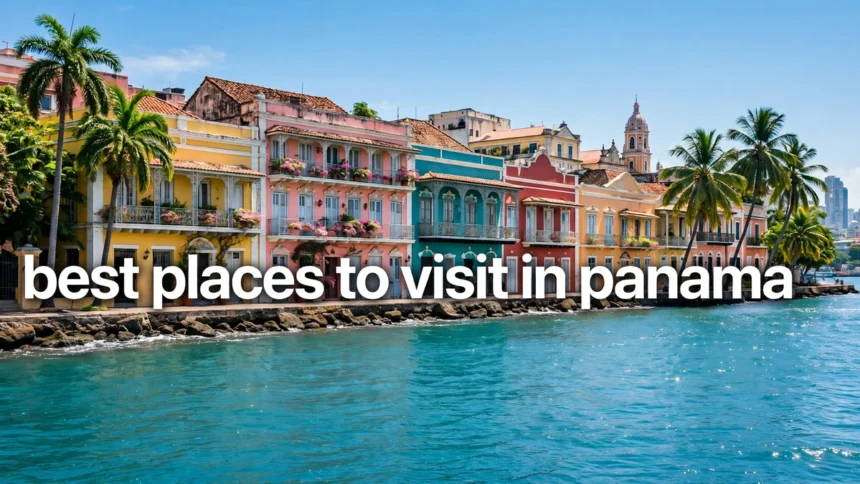
Panama is a small country with an unusually large range: a modern capital, a canal that changed world trade, Caribbean islands, Pacific surf towns, and mountain villages where the air turns cool. The best places to visit in Panama are not all alike, and that is the point — most first trips work best when they combine a city, an island, and the highlands, rather than trying to see everything in one rush.
Panama City and the Panama Canal
Start in Panama City, because almost every trip passes through it anyway, and because it contains three different cities in one. The modern downtown is a skyline of glass towers along the waterfront. Casco Viejo, the restored old quarter, is colonial streets, plazas, churches, and rooftop bars. And Panama Viejo holds the ruins of the original city, founded in 1519 and later sacked by pirates.
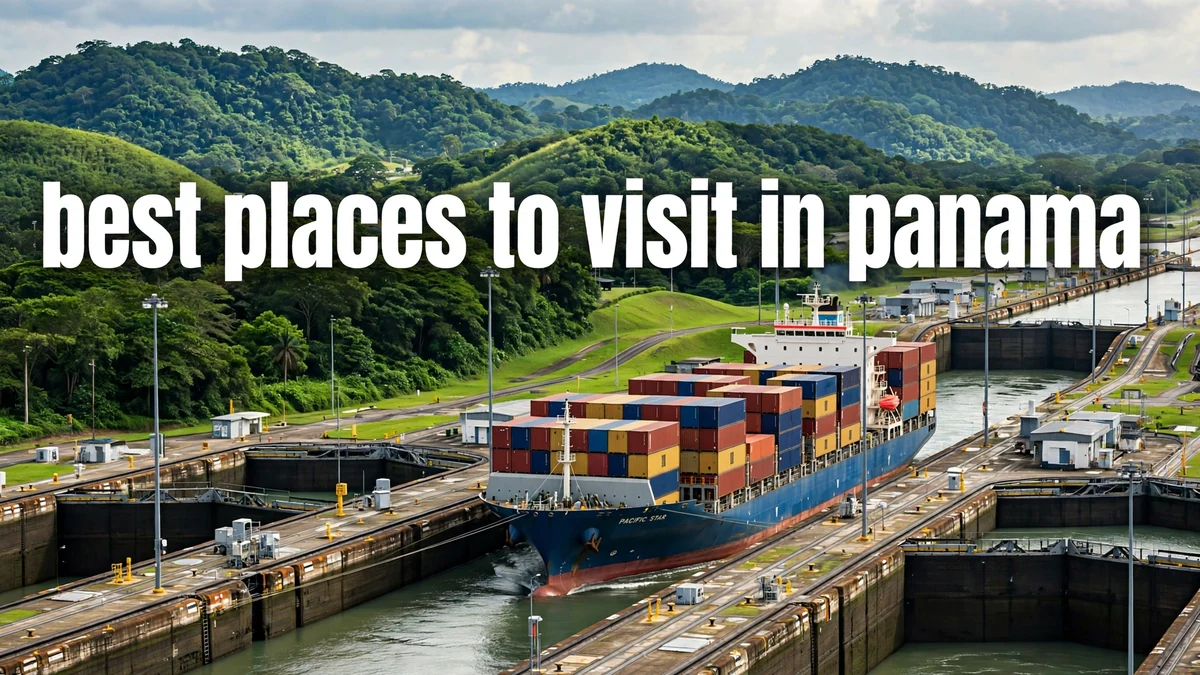
The Panama Canal is the country’s most famous sight, and the easiest way to understand it is to watch it work. At the Miraflores Locks visitor centre, ships rise and fall between chambers as water fills and drains around them — a slow, deliberate process that is far more impressive in person than in a photograph. The canal opened in 1914 and still links the Atlantic and Pacific oceans, saving ships the long voyage around South America. Panama as a whole owes much of its modern history to that narrow strip of water, and a visit to the locks gives the story a physical scale that reading alone cannot.
Give the city two days: one for Casco Viejo and the canal, and one for the waterfront, the BioMuseo on the Amador Causeway, and the Metropolitan Natural Park, a patch of rainforest inside the city limits.
Bocas del Toro
Bocas del Toro is Panama’s Caribbean postcard: stilt houses over the water, boats instead of buses, and beaches with names like Starfish Beach and Red Frog Beach. The main town on Isla Colón is lively and walkable, and water taxis run to quieter islands and snorkelling spots. It is the place to slow down — the rhythm here is set by boat schedules and the afternoon rain, not by itineraries.
Bocas suits travellers who want the Caribbean without a resort compound. Stay in town for restaurants and nightlife, or on a quieter island for early mornings and empty beaches. The surf is real here, so check conditions before swimming at exposed beaches, and bring cash, since card machines are not universal on the smaller islands.
San Blas Islands (Guna Yala)
The San Blas Islands, in the Guna Yala region, are the opposite of Bocas: hundreds of tiny coral islands, many of them uninhabited, managed by the Guna people. Accommodation is simple — thatched huts, shared meals, no hot water on some islands — and that simplicity is the appeal. The water is clear, the beaches are empty, and the experience is closer to visiting someone’s home territory than to checking into a hotel.
Visits are almost always organised tours from Panama City, and visitors should respect Guna rules, including entry fees and photography customs. Pack light, bring cash and a passport, and expect to disconnect: phone signal is patchy, which is part of why people go.
Boquete and the Chiriquí Highlands
Boquete, in the Chiriquí highlands near the Costa Rican border, is where Panama cools down. The town sits among coffee farms, cloud forest, and hot springs, and the air is fresh enough that a jacket is welcome in the evening — a genuine surprise after the lowland heat. Hiking is the main draw: the Quetzal Trail through cloud forest, and the overnight or pre-dawn climb of Volcán Barú, Panama’s highest peak, where on a clear morning you can see both oceans from the summit.
Boquete is also coffee country. A farm tour here explains why Panama’s Geisha coffee commands such attention, and the tasting that follows makes the point better than any description — the same variety tasted in the Panama Geisha coffee guide is grown on these slopes. If you only add one highland stop to a trip, make it Boquete.
El Valle de Antón
El Valle de Antón is a town inside the crater of an extinct volcano, about two hours from Panama City, and it makes an easy weekend escape. Waterfalls, hiking trails, a small zoo and butterfly house, and a famous Sunday market fill a couple of days without demanding much planning. The crater setting keeps it cooler than the capital, and the market is the place to buy local crafts and produce directly from the people who made or grew them.
El Valle works well as a first or last stop: close enough to the city to reach without a domestic flight, different enough to feel like a real change of scene.
Santa Catalina and Coiba National Park
Santa Catalina, on the Pacific coast, is a surf town with a second life as the gateway to Coiba National Park, a UNESCO-listed marine park once used as a penal colony. The diving and snorkelling around Coiba are among the best in Panama: reef sharks, turtles, rays, and, from July to October, humpback whales. Boats leave from Santa Catalina, and most visitors spend two or three nights in town to allow for a full day on the water.
Santa Catalina itself is low-key — surf hostels, seafood restaurants, and long beaches — which makes it a good place to recover after the highlands or before flying home. The road in is slower than the main highways, so build in extra travel time.
The Azuero Peninsula
The Azuero Peninsula is Panama’s cultural heartland: farming towns, folklore, and festivals, including the country’s largest Carnival celebration in Las Tablas. Pedasí, on the peninsula’s coast, has well-preserved colonial buildings and a relaxed beach-town feel, while nearby Playa Venao draws surfers to a long golden beach. Wildlife reserves on Isla Iguana and Isla Cañas are among the few places where olive ridley sea turtles nest.
Azuero suits a second trip or a longer first one. It rewards travellers who like small towns and local festivals more than headline sights, and it shows a side of Panama that the canal and the islands do not.
How to put a trip together
A sensible first trip runs ten days to two weeks. One workable shape: two days in Panama City and the canal, three or four days in Bocas del Toro or San Blas, three days in Boquete, and a night or two in El Valle or Santa Catalina on the way back. Trying to cover every place on this list in one trip means spending the holiday in transit; Panama’s roads and domestic flights are workable, but distances between the Caribbean, the Pacific, and the highlands are real.
The dry season, roughly mid-December to mid-April, is the most popular time to visit, with the least rain. The green season brings afternoon showers but fewer visitors and lower prices, and the highlands and islands are still enjoyable. Pack for two climates — city heat and mountain cool — and the simple approach to choosing each day’s outfit in what to wear today applies here too: one light layer for the highlands, and everything else built around heat and rain.
Finally, choose your bases the way you would choose where to live for a week: a lively town base for restaurants and transport, or a quiet island base for rest. The contrast between a busy port town and a small settlement is part of the trip, and the same town-versus-countryside trade-off described in town vs city shows up in Panama too — Bocas town and a San Blas island are barely the same kind of place, even though both are on the Caribbean.
The bottom line
Panama rewards a trip built around contrast: the canal and Casco Viejo for history and engineering, Bocas or San Blas for the Caribbean, Boquete for cool air and coffee, and El Valle or Santa Catalina for a slower pace. Pick one from each group, give each place enough days to settle into, and leave the rest for the next trip — Panama is small enough that a second visit is easy, and varied enough that it will not feel like a repeat.