
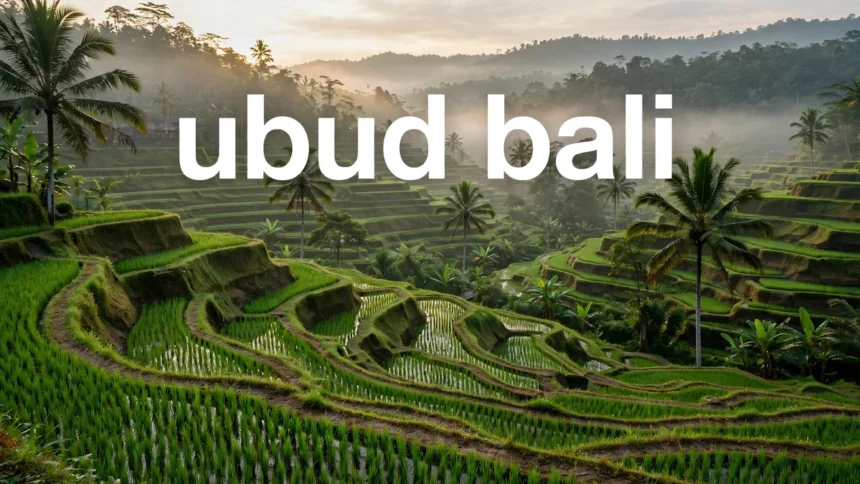
Ubud is Bali’s cultural heart, and it earns the title honestly: painters and woodcarvers, classical dancers and gamelan musicians, temples and healers all cluster in one small inland town. Set among rice terraces, rainforest, and rivers, it offers a calmer, greener Bali than the beach resorts — and a first trip here is best spent slowly. So if you are planning ubud bali for the first time, start with the six below. Ubud is a town in the uplands of Bali, Indonesia, about an hour’s drive inland from the south-coast resorts.
1. The Sacred Monkey Forest Sanctuary
The Sacred Monkey Forest Sanctuary is Ubud’s most famous single sight: more than a thousand long-tailed macaques roaming a jungle of ancient banyan trees, with three temples inside the forest grounds. It is a working sacred site as well as a wildlife visit, so treat it that way — keep bags closed, do not carry loose food or shiny objects the monkeys can grab, and keep a respectful distance.
Go early in the morning for the forest at its quietest, and allow at least an hour to wander the paths beyond the main entrance, where the crowds thin out.
2. Tegalalang Rice Terraces
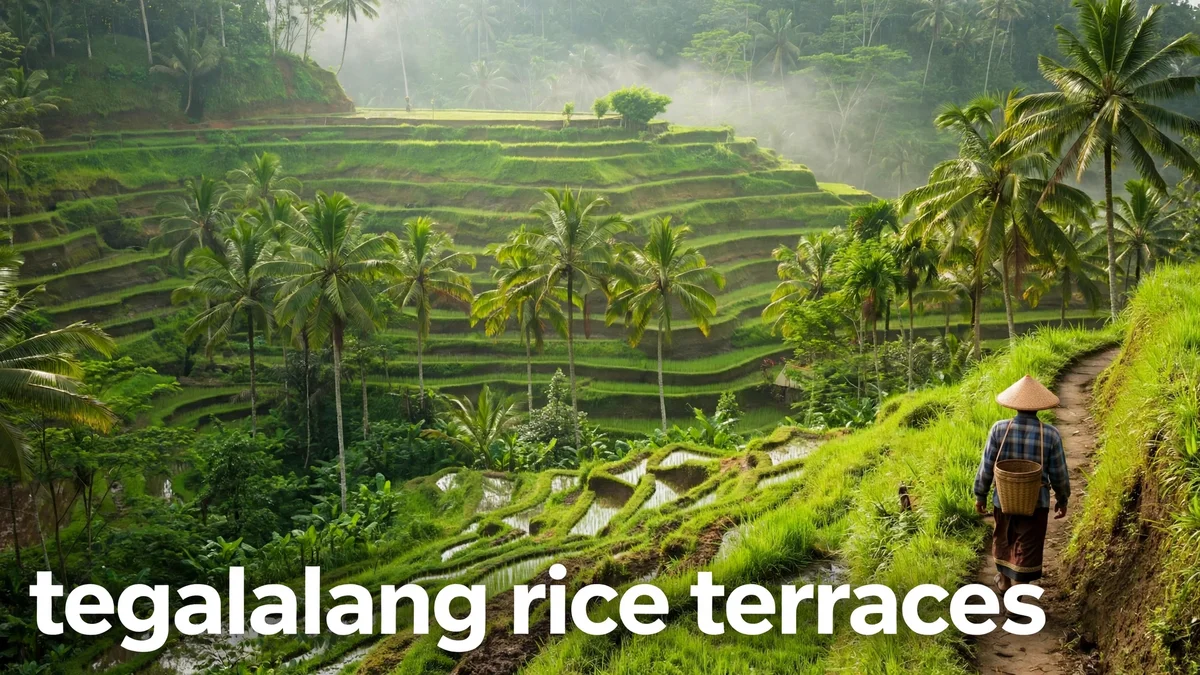
The Tegalalang Rice Terrace, a short drive north of Ubud, is Bali’s most photographed landscape: layered green fields carved into a hillside, shaped by the subak irrigation system — the centuries-old cooperative water-sharing system that UNESCO recognises as a cultural practice. Walk down into the terraces rather than viewing them only from the roadside cafés; the lower paths are quieter and the scale of the carving is clearest from inside the valley.
For a quieter alternative, the UNESCO-listed Jatiluwih terraces further west are larger and far less visited, and worth the drive if you have a spare half day.
3. Ubud Palace and the nightly dances
Ubud Palace (Puri Saren Agung), in the centre of town, was built in the 1800s and remains the home of the Ubud royal family. By day it is a compact, beautifully carved palace to wander; by night its courtyard hosts traditional dance performances — Kecak, Legong, and Barong among them — with gamelan music, intricate hand movements, and elaborate costumes.
Performances usually start in the early evening, and the best seats go early, so arrive ahead of the start time. The Ubud Art Market sits directly opposite the palace and is the place for handmade crafts, textiles, and souvenirs — bargain politely and expect to haggle.
4. Temples: Goa Gajah and Tirta Empul
Two temples anchor a temple day. Goa Gajah, the Elephant Cave, is a 9th-century archaeological site with intricate stone carvings and ancient bathing pools, set in a jungle gorge a short drive east of town. Tirta Empul, further north, is one of Bali’s most important water temples, famous for its holy spring water, where visitors join a ritual purification under the spouts — follow local guidance, wear the provided sarong, and treat the ritual with respect rather than as a photo stop.
Together they show two sides of Balinese Hinduism: the ancient carved site and the living temple, still in daily use.
5. Walks and waterfalls: Campuhan Ridge and Tegenungan
The Campuhan Ridge Walk is Ubud’s easiest great walk: a grassy ridge trail above rice fields and jungle, best done early before the heat builds, with views across the valley and old temples hidden in the trees. Pair it with a waterfall afternoon. Tegenungan Waterfall, the most accessible near Ubud, has a wide pool for swimming and lookouts for photos; Tibumana Waterfall, smaller and quieter, is a single gentle cascade framed by tall rock walls and jungle greenery.
If you want a bigger morning, the Mount Batur sunrise trek — a pre-dawn hike to views over Lake Batur — is the classic Ubud day trip, but it means a very early start and a full day afterwards, so do not stack it on a temple day.
6. Art, wellness, and eating well
Ubud’s art museums repay a slow afternoon: the Museum Puri Lukisan, the town’s oldest art collection, and the Neka Art Museum, set in pavilions on a hill northwest of the centre, both show traditional and modern Balinese painting, and the Agung Rai Museum of Art (ARMA) on the southern fringe adds another major collection. If you prefer hands-on, a Balinese cooking class — market visit first, then a kitchen session — is one of the best souvenirs Ubud offers.
Wellness is the other Ubud staple: yoga studios run classes through the day, with The Yoga Barn among the best known, and the town’s organic cafés and riverside restaurants make eating well easy. Allow one unplanned afternoon for all of it; Ubud rewards wandering more than a packed schedule.
Planning notes: seasons, days, and getting around
The dry season, roughly April to October, is the best window, with June and September among the most comfortable months; the wet season brings afternoon rain but also greener terraces and fewer visitors. Three to four days covers Ubud comfortably: day one for the Monkey Forest, palace, and Art Market; day two for Tegalalang and the temples; day three for the ridge walk, a waterfall, and a museum or cooking class; day four, if you have it, for Mount Batur or Jatiluwih.
Getting around is easiest by hired driver for day trips and on foot or by scooter-taxi in town — the centre is walkable, but the sights spread out quickly beyond it. The same unhurried logic applies to other first trips: pick a small set of anchors and enjoy them properly, as in florence sites to visit, where six sites beat a rushed dozen, or best places to visit in panama, where fewer stops made a better trip. And like any good trip, the planning is part of the pleasure — the same spirit as remembering a walk like our trip to San Francisco, where the shape of the place mattered as much as any single sight.
The bottom line
On a first trip to Ubud, visit the Monkey Forest, Tegalalang terraces, Ubud Palace and a nightly dance, Goa Gajah and Tirta Empul, the Campuhan Ridge Walk with a waterfall, and one art museum — in roughly that order, over three to four days in the dry season, with dance tickets and a driver booked ahead. Everything else is a bonus, and Ubud has bonuses to spare.