
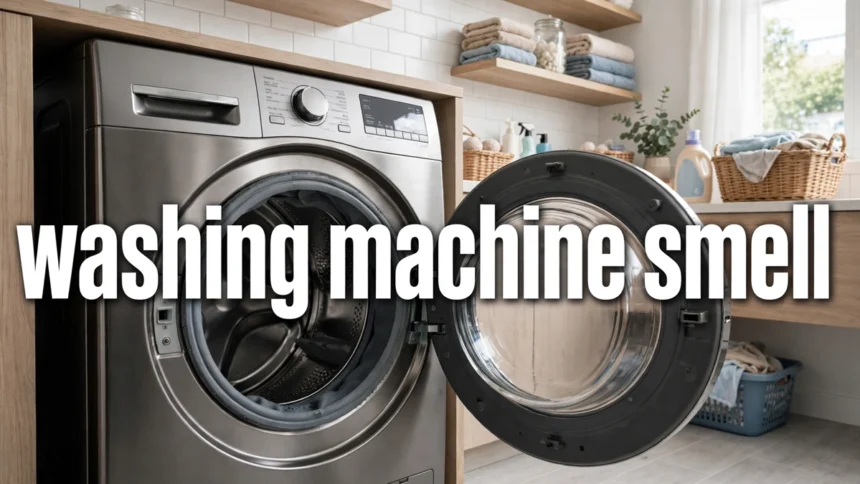
Open the washer expecting clean laundry and get a sour, musty smell instead, and the first thought is usually that the machine is broken. Most of the time it is not. A washing machine smell almost always traces back to the same three things: moisture that never dries, residue that never rinses away, and the bacteria and mold that grow in the combination. All three are fixable, and the fix starts with figuring out which smell you have.
What the smell tells you
Different smells point to different causes, and matching them saves you from cleaning the wrong part:
- Musty or "wet dog" smell: mold or mildew growing in the drum, the door seal, or the detergent drawer. This is the most common washer smell.
- Sour smell, like stale laundry: detergent or softener residue that has started to break down, often with clothes left sitting wet in the drum.
- Rotten egg or sulphur smell: usually not the washer itself, but stagnant water in the drain, standpipe, or a blocked filter — hydrogen sulphide from standing water smells exactly like rotten eggs.
- Sewage smell: almost always a drainage or plumbing problem, such as a blocked waste pipe or a missing drain trap seal, rather than a dirty drum.
If the smell is musty or sour, work through the cleaning steps below. If it smells like sewage or rotten eggs and cleaning does not help, skip to the plumbing section — no amount of drum cleaning fixes a drain problem.
Cause 1: mold in the door seal
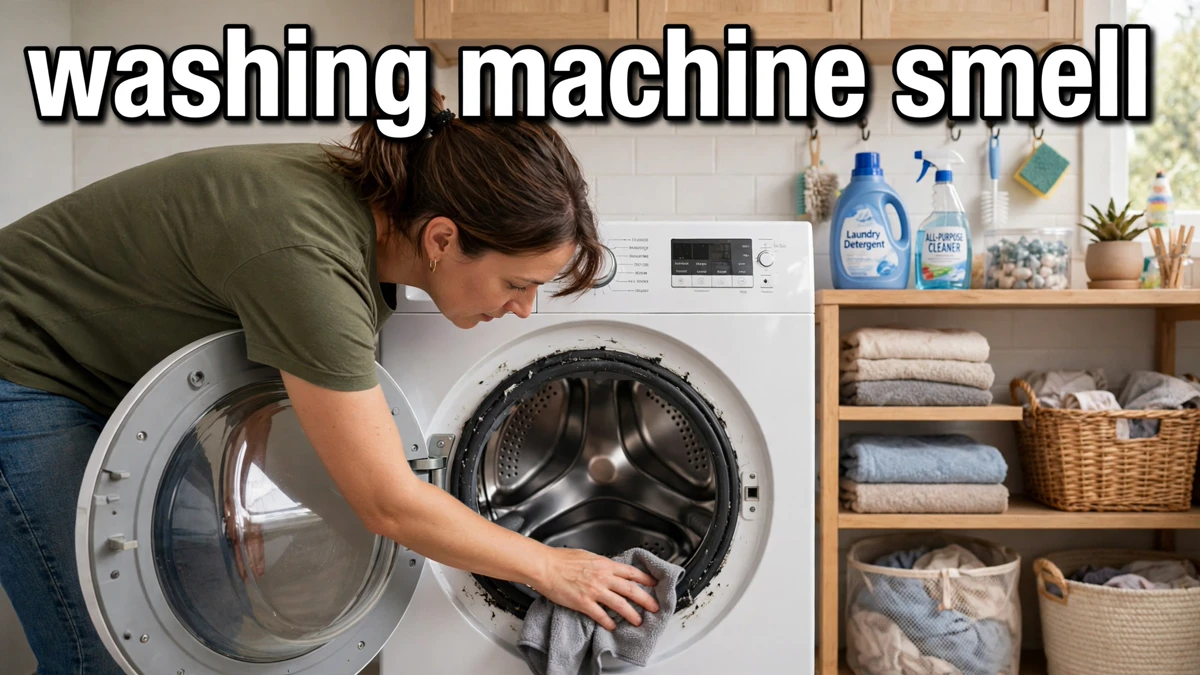
Front-load washers are the worst offenders here, and the reason is built into the design. The thick rubber gasket around the door — the bellow — has folds that absorb vibration, and water, lint, hair, and dirty suds pool inside those folds after every cycle. Because the door seals shut, that standing water cannot evaporate, and the dark, damp folds become an incubator for mold and mildew.
To check, pull the gasket folds open gently and look inside. Black or grey spots, slime, or standing water confirm the diagnosis. To clean it, wipe the folds with a cloth dampened with a washing-machine cleaner or diluted bleach, following the product’s instructions, and rinse with a clean damp cloth. If the gasket is heavily stained or the mold has eaten into the rubber, cleaning improves the smell without fully removing it, and replacing the door boot is the longer-term fix.
Cause 2: too much detergent and softener
More detergent does not mean cleaner clothes — it is one of the most common causes of washer odor. Modern high-efficiency washers use far less water than older machines, so excess detergent cannot all be rinsed away. The leftover soap mixes with lint, skin oils, and dirt to form a sticky film inside the drum, the outer tub, and the hoses. Liquid fabric softener makes it worse: it is designed to coat fibres, and the coating it leaves behind feeds bacteria.
Signs you are overdosing include excessive suds during the wash, clothes that feel slightly soapy after the cycle, slime in the detergent dispenser, and a washer that smells fine right after cleaning but turns musty again within days. The fix is simple: use high-efficiency (HE) detergent in an HE machine, dose to the line for your load size and soil level rather than filling to the maximum, and skip softener for a few weeks to see whether the smell fades.
Cause 3: cold washes and a closed door
Washing in cold water saves energy and protects fabrics, but cold water does not dissolve body oils or sanitise the drum the way a hot wash does. Grease and organic soil from gym clothes and bedding build up on the drum walls, and without an occasional hot wash they turn rancid. The same logic applies to the door: leaving it shut after a cycle traps warm, damp air inside, which is exactly what mold needs.
Two habits prevent most of this. First, run a hot service wash — an empty cycle at the hottest setting, with a washing-machine cleaner or a small amount of bleach per the product instructions — about once a month, or use the machine’s Tub Clean or Drum Clean cycle if it has one. Second, leave the door ajar after each wash, and the detergent drawer slightly open, so the inside can dry. These two habits alone keep most washers fresh.
Cause 4: a clogged drain pump filter
Most front-load machines and some top-loaders have a small access door near the bottom front of the unit. Inside sits the drain pump filter, which catches coins, hairpins, and lint before they reach the drain pump. When it is neglected, wet lint and organic debris rot inside the filter housing for weeks, producing a strong smell that no drum cleaning touches.
Unplug the machine first, put a towel and a shallow tray under the access door, and open it slowly — some water will come out. Remove the filter, clear the debris, rinse it, and refit it. Check your manual for the exact location if you cannot find the door; on some models it sits behind the lower front panel. A filter check every couple of months belongs on the same list as cleaning the lint trap in a dryer.
Cause 5: drainage and plumbing problems
If the smell is sewage-like, or if it returns within days of a thorough cleaning, the problem is usually downstream of the drum. A blocked standpipe or filter lets water stagnate, and stagnant water breeds the bacteria that release sulphur smells. A drain hose pushed too far into the standpipe can siphon dirty water back into the machine. A missing or dry drain trap lets sewer gas rise into the laundry area.
Check the simple things first: the drain hose should loop up before entering the standpipe, the standpipe should not be blocked, and the filter should be clear. If the smell persists, or if it comes with standing water, slow draining, or unusual pump noises, that is the point to call a technician or a plumber rather than running more cleaning cycles. Drainage faults can also be the reason a machine stops draining properly, which is a separate problem covered in why is my washer not draining.
A cleaning routine that keeps the smell away
You do not need a complicated schedule. This is the whole routine:
- After every wash: take clothes out promptly, and leave the door and detergent drawer ajar.
- Monthly: run a hot service wash or the machine’s cleaning cycle, and wipe the door seal folds and the detergent drawer.
- Every couple of months: check and rinse the drain pump filter.
- Always: dose detergent to the load, use HE detergent in an HE machine, and run a hot wash occasionally if you mostly wash cold.
Fresh-smelling laundry starts with a fresh machine, and the same thinking applies to the rest of the routine: clean clothes are easier to enjoy when you are not fighting the smell, just as picking what to wear today is easier when everything in the drawer actually smells clean. And laundry setups differ more than people expect — city apartments and town houses often have very different machines and spaces, a contrast explored in town vs city.
Safety notes
Never mix bleach with vinegar or with other cleaners — the combination can release harmful gases. Use one cleaning product at a time, follow its label, and ventilate the room. Unplug the machine before opening the filter housing or reaching into the pump area, and if you are unsure about any step, check the manufacturer’s manual for your model. A washing machine is a simple appliance, but it mixes water and electricity, and the manual for your exact model outranks any general guide, including this one.
The bottom line
A smelly washer is usually a cleaning problem, not a broken machine: mold in the seal, too much detergent, cold-only washing, a closed door, or a clogged filter. Work through those in order, and most smells clear within a week. If the smell is sewage-like or keeps coming back after a full clean, stop cleaning and check the drain — that is a plumbing job, not a laundry job.