
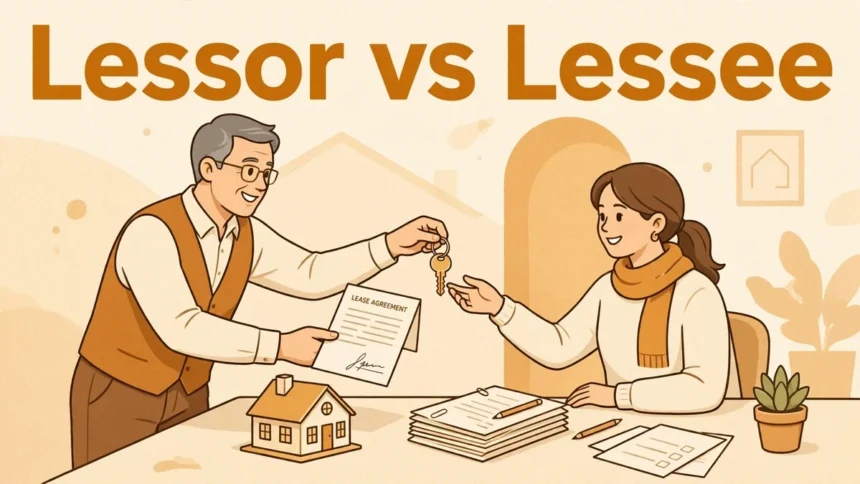
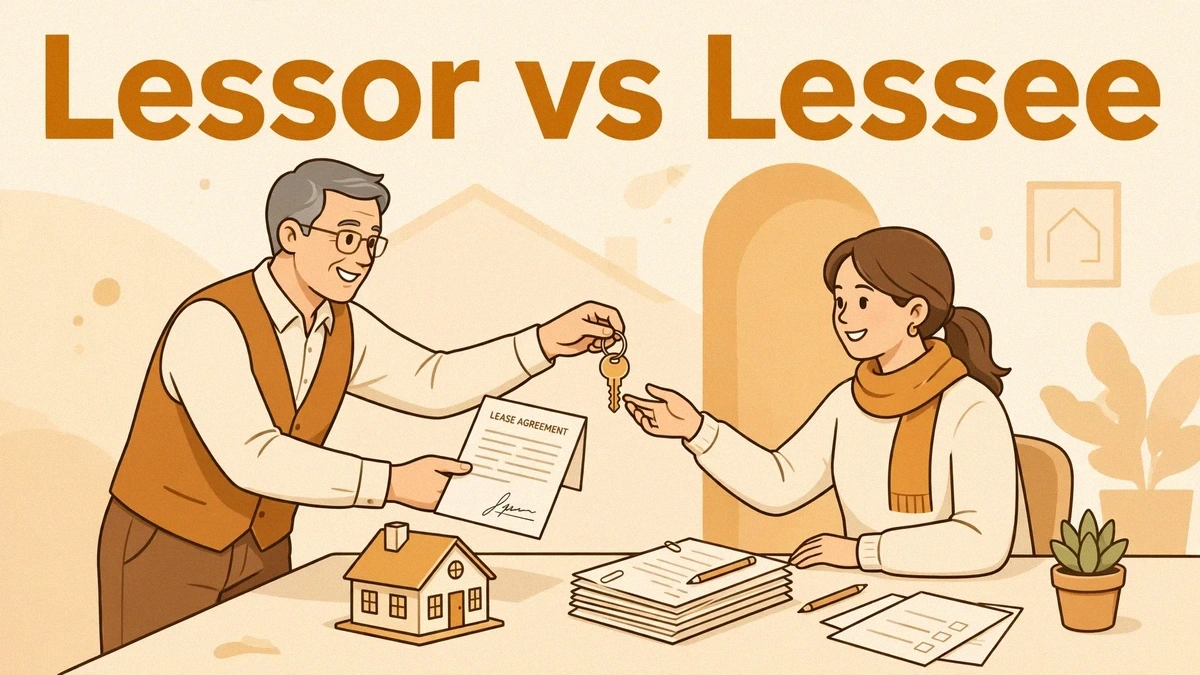
lessor vs lessee: the lessor is the owner who grants the lease, and the lessee is the person who pays to use the property. In a home rental, that usually means the lessor is the landlord and the lessee is the tenant — but the two words are not just fancy synonyms for landlord and tenant. They are the names a contract gives to its two sides, and the lease will use them every time it assigns a right, a duty, or a payment. Once you know which side is which, the rest of the document reads far more easily.
What Is a Lessor?
The lessor meaning is simple: a lessor is the person or company that owns an asset and grants someone else the right to use it for a set period, in exchange for payment. In a home rental, the lessor is usually the landlord — the owner of the house or apartment. In a car lease, the lessor is the leasing company. In an equipment lease, it is the company that owns the machine.
The lessor keeps ownership for the whole term. Handing over the keys does not hand over the property: the lessor gives up the right to use it during the lease, but not the title to it. That is why the lessor is the side that collects the rent, sets the terms of the agreement, and takes the property back when the term ends.
A lessor is not always the owner in person. A property manager can sign a lease on the owner’s behalf, acting as the owner’s agent — but the owner is still the lessor. The signature line may say “as agent for” the owner, and that phrase is worth noticing, because it tells you who actually holds the title.
What Is a Lessee?
A lessee is the person or business that pays for the right to use someone else’s property. In a home rental, the lessee is the tenant. In a car lease, the lessee is the driver. The lessee does not own the asset — what they hold is a contractual right to use it for a defined period, on defined terms, in exchange for payment.
That right to use the property is real and protected. Once the lease starts, the lessee can live in the home, use its rooms and facilities, and expect the lessor not to walk in unannounced. The trade is straightforward: the lessee gets use of the property without buying it, and the lessor gets a steady stream of payments without giving up ownership.
Because the lessee is the one paying, the lessee is also the side the lease watches most closely on money: rent is due on the dates the lease names, and late payment is the most common reason a lease ends early.
Lessor vs Lessee: The Difference at a Glance
Every difference between the two roles grows out of one split: ownership. The lessor owns, the lessee uses.
| Lessor | Lessee | |
|---|---|---|
| Owns the property | Yes | No |
| Other name in a home rental | Landlord | Tenant |
| Pays rent | No — receives it | Yes |
| Sets the lease terms | Yes | Agrees to them |
| Holds the title or deed | Yes | No |
| May hold the security deposit | Yes | Pays it |
| Responsible for major repairs | Yes | No — except damage they cause |
| Responsible for everyday care | No | Yes |
| Gets the property back at the end | Yes | No — moves out |
A quick way to keep the two straight: lessor ends in “-or,” like “owner,” and lessee ends in “-ee,” like “employee” — the one who receives something. The lessor is the owner side; the lessee is the receiving side.
Why Do Leases Say “Lessee” Instead of “Tenant”?
A lease is a contract first, and contracts name their parties by role rather than by asset. That is why your agreement says “lessor” and “lessee” instead of “landlord” and “tenant”: the same two words work for an apartment, an office suite, a car, or a tractor, so the contract never has to change its vocabulary when the asset changes.
The words also carry a legal precision that everyday words do not. A lease usually defines each party once at the start — “This lease agreement is entered into between John Smith (‘Lessor’) and Jane Doe (‘Lessee’)” — and then uses those two words throughout. Every clause after that, about rent, repairs, notice, or ending the lease, applies to one side or the other by name.
None of this changes the law that applies. In a home rental, landlord-tenant law is written around the word “tenant,” and the rules on habitability, notice periods, and deposit deadlines apply whether the document calls you a tenant or a lessee. The two pairs of words land in the same place; only the document’s vocabulary differs.
What Each Side Is Responsible For
A lease assigns different duties to each side, and knowing them in advance is the best way to avoid a dispute later. The exact duties depend on the lease and on the state, so always read your own agreement — but the usual split looks like this.
The lessor is usually responsible for:
- Delivering the property in a livable, habitable condition.
- Repairing the structure and the building systems — roof, plumbing, heating, and wiring.
- Honouring the lessee’s quiet enjoyment of the property throughout the term.
- Following the state’s notice rules before entering the property.
- Returning the security deposit on the state’s timeline.
The lessee is usually responsible for:
- Paying rent on time, on the dates the lease names.
- Taking reasonable care of the property and using it as the lease permits.
- Handling everyday upkeep and keeping the place clean.
- Paying for repairs to damage they caused.
- Housing only the people listed on the lease, with written consent before subletting.
- Giving the notice the lease requires before moving out.
Neither side outranks the other. Most lessor-versus-lessee disputes trace back to a clause nobody read, or a duty nobody realised was theirs.
Who Handles Repairs — the Lessor or the Lessee?
The short answer is that the lessor handles structural and system problems, and the lessee handles damage they caused. A leaking roof or a broken furnace is the lessor’s job; a window broken by the lessee is the lessee’s job.
The grey areas are where arguments start: appliances, pest control, lawn care, and snow removal are not always assigned in the lease, and an unassigned repair can default to an argument the first time something breaks. Before signing, check which of these your lease names and who it names for each. If a repair is not assigned to anyone, ask for it to be written in before you sign.
When a Lessee Becomes a Lessor
The roles are not always fixed for the life of a lease. In a sublease, the lessee vs lessor question gets a twist: the original lessee becomes a sublessor and hands possession of the property to a sublessee — while staying fully liable to the original lessor. If the sublessee stops paying, the original lessee still owes the original lessor the rent.
A sublet works the other way around. The owner finds a new renter and signs a new lease with them directly, so the original lessee drops out of the chain and never becomes a lessor. That is the real dividing line between a sublet and a sublease: in a sublease, one person holds both roles at once; in a sublet, the chain is replaced rather than extended.
A co-signer is neither. A co-signer promises to cover the rent if the lessee does not, but gains no right to live in the property — so a co-signer never becomes a lessee.
How to Tell Who Is Who on Your Lease
Your lease already answers the question on its first page. Four quick checks settle it:
- Read the parties clause in the opening paragraph — it names both roles outright.
- Check the signature block, where the labels “lessor” and “lessee” almost always appear next to each signature.
- Follow the money and the mail: rent goes to the lessor, and notices go to the lessee.
- Look for “as agent for” next to a property manager’s signature, to find out who the actual lessor is.
It is common for a lease to say “landlord” and “tenant” in one clause and “lessor” and “lessee” in the next. Legally the two pairs land in the same place, but a tenant reading the lease for the first time would have no way of knowing that. If your lease mixes the terms, pick one pair in your own notes and stick with it.
“Lesser” vs “Lessor”: Which One Is Correct?
“Lesser” and “lessor” are easy to mix up, and only one of them belongs in a lease. Lessor is the legal term for the owner who grants a lease. Lesser is an ordinary adjective meaning smaller or less important — as in “the lesser of two evils.” If your document says “lesser,” it is a typo; the party it means is the lessor.
The same kind of small spelling difference changes the meaning in other confusing pairs too. The principal vs principle mix-up works the same way — one letter apart, two different words — and the past vs passed pair trips up just as many writers. Even awhile vs a while follows the pattern: words that look almost identical but do different jobs. With lessor and lessee, the trick is the ending — “-or” for the owner, “-ee” for the one who receives.
Lessor vs Lessee in Everyday Words
Strip away the legal language and the pair is simple. In renting, the lessor is the person who has the property and lets someone else use it; the lessee is the person who pays for that use. The lessor is the landlord, the lessee is the tenant, and the lease is the document that records who owes what to whom.
That is also why the words matter beyond the paperwork. When a lease says “the lessee shall pay rent on the first of the month,” it is talking about you if you are the tenant. When it says “the lessor shall maintain the structure,” it is talking about the landlord. Reading the lease with the two roles straight means you know, clause by clause, which duties are yours and which are theirs — and that is the whole point of the words being there.
Frequently Asked Questions
What is the difference between a lessor and a lessee?
The lessor owns the property and grants the lease; the lessee pays rent for the right to use it. In a home rental, the lessor is the landlord and the lessee is the tenant.
Is the lessor the landlord?
Yes. In a residential lease, the lessor is the landlord — the owner of the property. The only exceptions are arrangements like a master lease or a ground lease, where an intermediate party can hold a lessee role of its own.
Is the lessee the tenant?
Yes. In a residential rental, the lessee is the tenant — the person who lives in the property and pays rent for it.
Can the same person be both a lessee and a lessor?
Yes. In a sublease, the original lessee becomes a sublessor: they lease from the owner and sublease to someone else, holding both roles at once while still owing rent to the original lessor.
Who pays rent — the lessor or the lessee?
The lessee pays rent to the lessor. The lessor receives the payments; the lessee makes them.
What is the lessor meaning in simple terms?
The lessor is the owner who lets someone else use their property for a set time in exchange for payment. In a home rental, that is the landlord.
The lessor owns, the lessee uses, and the lease records the deal between them. Remember the endings — “-or” for the owner, “-ee” for the one who receives — and the two words stop being confusing the moment you meet them on a real lease.