
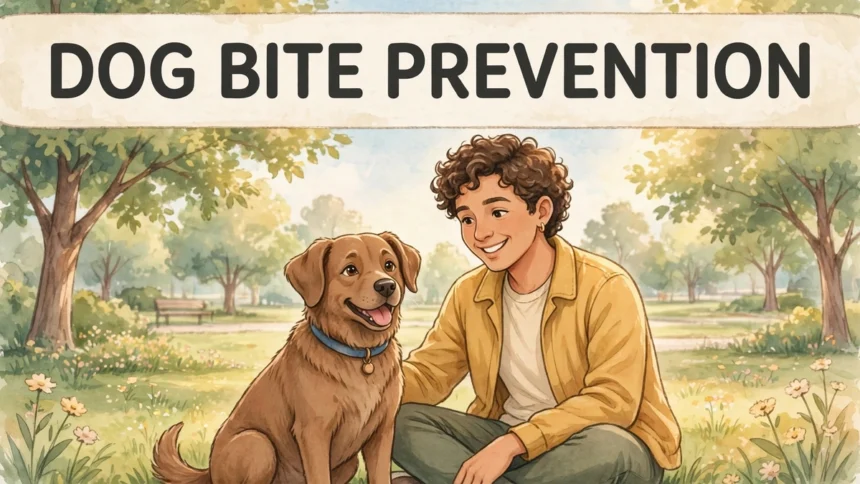
Most dog bites are preventable, and dog bite prevention starts with understanding how dogs communicate. Dogs are part of daily life for millions of families, and most encounters are happy ones — but any dog can bite when it feels scared, nervous, or cornered. This guide brings together practical advice from the Centers for Disease Control and Prevention and the American Veterinary Medical Association so you can stay safe around dogs, your own and anyone else’s.
The scale of the problem is bigger than most people think. The American Veterinary Medical Association reports that more than 4.5 million people are bitten by dogs each year in the United States, and children account for at least half of those injuries. The CDC adds that nearly 1 in 5 people bitten by a dog requires medical attention. The good news, both organizations agree, is that most of these bites never have to happen.
Why Dogs Bite
A dog that bites is usually a dog reacting to a situation it finds stressful, frightening, or uncomfortable — not a dog that is “bad.” The CDC notes that any dog can bite, especially when it is scared, nervous, eating, or playing, or when it is protecting toys or puppies. A dog that is not feeling well may also bite when it wants to be left alone. The AVMA makes the same point: prevention is not about breed, but about understanding behavior and promoting responsible pet ownership.
Dogs usually warn before they bite, but the signs can be easy to miss. According to the AVMA, a dog that turns away, stiffens its body, growls, or tries to move out of reach is signaling discomfort. Respecting those signals — backing off instead of pushing closer — is one of the simplest ways to prevent a bite. As AVMA president Dr. Michael Q. Bailey puts it: “Most dog bites are preventable, and prevention starts with understanding how dogs communicate and teaching children how to interact with them safely.”
How to Prevent Dog Bites at Home
Most bites happen at home, with familiar dogs, during everyday activities. That means owners have the most power to prevent them. The CDC found that adults with two or more dogs in the household are five times more likely to be bitten than people living without dogs at home — so the more dogs in the house, the more the basics matter.
- Choose the right dog for your household. Before bringing a dog home, match its temperament, size, and energy level to your family and lifestyle — choosing a dog that fits your family makes everyday life calmer for everyone.
- Socialize and train your dog. Gradual exposure to new people, places, and situations, plus positive training and basic commands, helps a dog feel comfortable instead of cornered.
- Keep your dog healthy. Pain or illness can make a dog more likely to bite, so regular veterinary care matters. Keeping your dog healthy and comfortable — including simple care like keeping its ears clean and dry — is part of prevention.
- Use a leash in public and a secure fence at home. Responsible pet ownership, including socializing your dog and using a leash in public, is one of the CDC’s core recommendations.
- Give your dog space when it needs it. Never disturb a dog while it is eating, sleeping, or caring for puppies, and do not keep petting a dog that seems scared, sick, or angry.
- Don’t encourage rough play. Never encourage your dog to play aggressively or roughhouse, and never let children play tug of war or wrestling games with a dog.
- Secure your dog when visitors arrive. A dog that is nervous around strangers is calmer in a quiet room of its own than at the front door.
How to Approach a Dog You Don’t Know
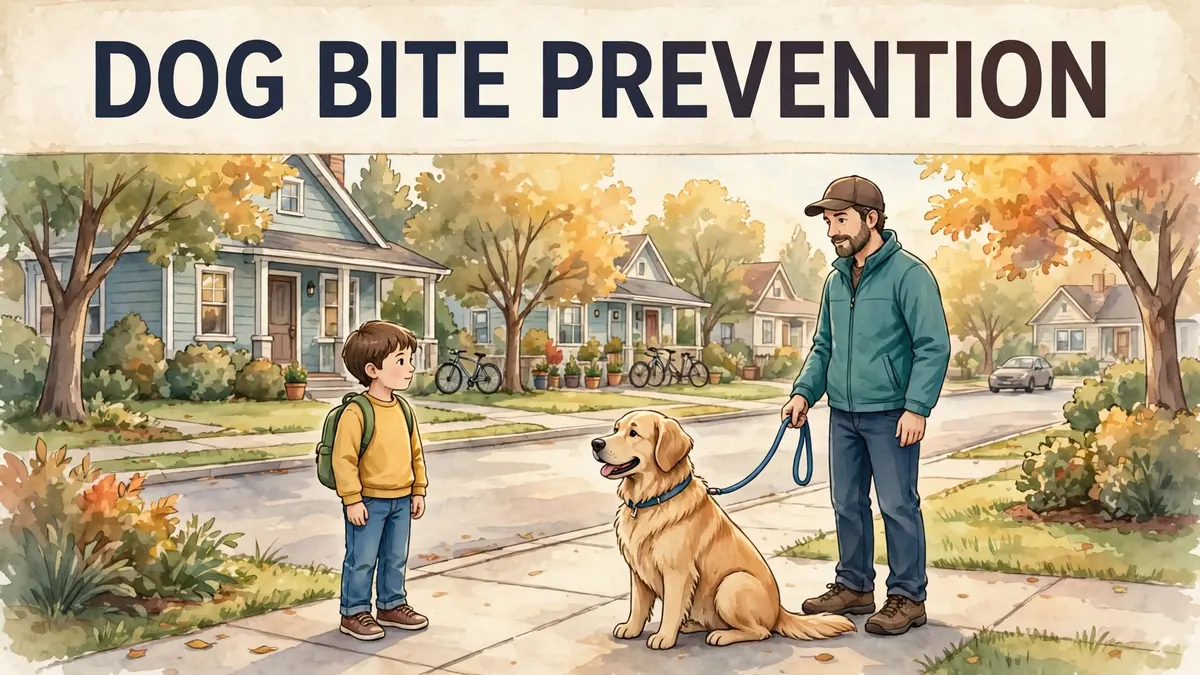
Even a friendly-looking dog can bite a stranger. The CDC’s rules for petting another owner’s dog are simple:
- Always ask the owner first if it is OK to pet the dog — even if the dog looks friendly.
- Let the dog approach you first, and stay still while it does.
- Make sure the dog has seen you and sniffed you before you reach out to pet it.
- Pet gently, on the back or shoulders. Avoid the face, tail, and ears — the AVMA notes that gentle petting on the back or shoulders is safest.
- Do not approach an unfamiliar dog at all, even if it seems friendly or healthy. If you see a dog running loose or in trouble, call animal control instead.
The same rules apply to a dog you meet on a walk or at the park. Move slowly, speak calmly, and let the dog decide whether it wants to come closer.
Keeping Children Safe Around Dogs
Children are more likely than adults to be bitten by a dog, and their injuries tend to be more severe. Most bites affecting young children happen during everyday activities, while interacting with familiar dogs — not strangers’ animals. That is why the AVMA puts children at the center of its prevention advice.
- Never leave a young child alone with a dog, even a familiar family pet. Active supervision lets an adult step in before a situation escalates.
- Teach children to ask permission before approaching any dog, and to let the dog come to them.
- Teach children to pet gently, on the back or shoulders, and never to hug a dog around the neck, pull its ears or tail, or crowd it into a corner.
- Teach children to leave a dog alone while it is eating, sleeping, or caring for puppies.
- Teach children the warning signs: growling, a stiff body, or a dog trying to move away means “give me space.”
The AVMA’s advice is worth repeating to children until it is automatic: even a well-trained family pet can react unpredictably. And dogs deserve the same consideration — a child who has learned to read a dog is a child who is safer around every dog they meet.
What to Do If an Unfamiliar Dog Approaches You
If a loose or unfamiliar dog comes toward you, your first job is to stay calm. Do not panic, do not make loud noises, and never run — running can trigger a chase.
- Stay still, be calm, and avoid direct eye contact with the dog.
- Say “no” or “go home” in a firm, deep voice, and stand with the side of your body facing the dog.
- Slowly raise your hands to your neck with your elbows in.
- Wait for the dog to pass, or slowly back away.
If a dog knocks you over, curl into a ball. Tuck your head and place your hands over your ears and neck. You can also put a purse, bag, or jacket between you and the dog. Stay still and quiet — the dog will usually sniff and move on. Never try to break up a dog fight.
What to Do If a Dog Bites You
Even with every precaution, a bite can still happen. What you do next matters.
- For a minor wound: wash the wound thoroughly with soap and water, apply an antibiotic cream, and cover it with a clean bandage.
- For a deep wound: apply pressure with a clean, dry cloth to stop the bleeding and seek medical attention right away.
- Call 911 or your local emergency services immediately if you cannot stop the bleeding or you feel faint or weak.
- See a healthcare provider if the wound is serious or deep, if it becomes infected, if you do not know whether the dog has been vaccinated against rabies, or if it has been more than five years since your last tetanus shot.
Report the bite to your local animal control agency or police department, especially if you do not know the dog or it appears sick or is acting strangely. If possible, contact the owner and confirm the dog’s rabies vaccination — the license number, the veterinarian who gave it, and the owner’s contact details. Reporting protects the next person the dog meets, and it helps health officials decide whether rabies treatment is needed.
A Safer Walk for Everyone
Dog bite prevention is not complicated, but it does ask something of everyone: owners who train, socialize, and supervise their dogs; adults who ask before they pet; and children who know to give a dog space. Gus, the Boston Terrier behind this blog, is a friendly dog — and even the friendliest dogs deserve to be approached with respect. When we read dogs well and give them room, we keep people safe and dogs in the loving homes where they belong. And safety around dogs is a habit that starts before you even arrive — our guide to dog safety in the car covers the journey, and this guide covers the meeting.