
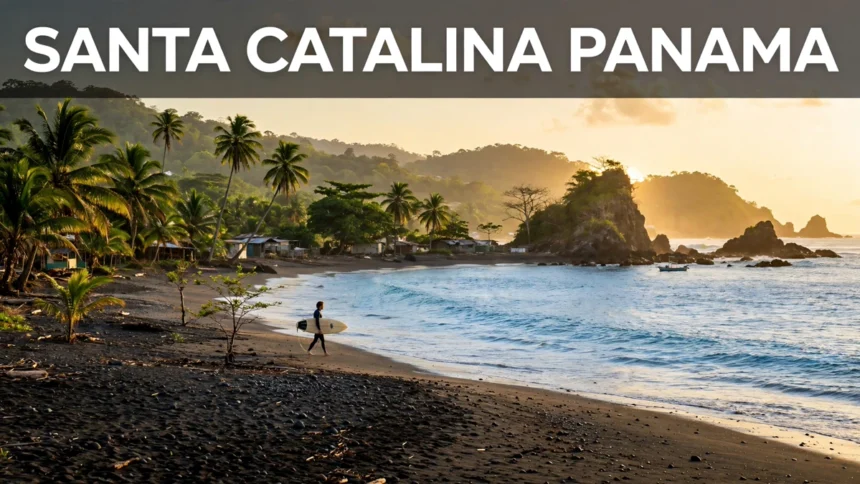
Santa Catalina, Panama is the kind of place you go to slow down. It is a small fishing and surf village on the Pacific coast of Veraguas province, where one paved road ends at the sea, the days revolve around the tides, and the main decision is whether to surf, dive, or do nothing at all. It is also the closest town to Coiba National Park, which is why most visitors come: the boats to one of Central America’s wildest marine parks leave from the beach here. If Santa Catalina is your first stop in the country, it helps to read it alongside our guide to the best places to visit in Panama — but this village deserves its own plan, because getting here takes effort and the town itself is deliberately simple.
Where is Santa Catalina, and what is it like?
Santa Catalina sits on the Pacific coast of Veraguas province, in the district of Soná, about 50 km south of the town of Soná. It is a village of only a few hundred residents, plus a small expat community, spread along one main road with a handful of hostels, dive shops, restaurants, and two small minimarkets. There is no gas station, no hospital or clinic (only a small pharmacy), one ATM that frequently runs out of cash, and wifi that is weak at best. Most small businesses do not accept credit cards, so cash is essential.
That simplicity is the point. Surfers discovered the village in the 1970s and kept it quiet for years, and it still feels like a place the road forgot. The town is stretched across three small areas: the town centre and Playa Santa Catalina at the end of the main road, the Catalina Farms stretch halfway toward the second beach, and Playa El Estero, about 2 km away. You can walk the whole village, both beaches included, in about two hours.
When to go: dry season, rainy season, and whales
The climate is tropical, with temperatures of roughly 24–32°C all year and two clear seasons: dry from December to April, and rainy from May to November. The dry season is the easiest time for a first trip — sunnier days, calmer seas, and the best underwater visibility around Coiba. Afternoon rain is common in the wet season, and September and October bring some of the clearest water of the year in Coiba, so the rainy months are not a write-off if you can be flexible.
Two seasonal windows are worth planning around. The biggest surf swells usually arrive between February and August. And July to October is prime whale-watching season in the waters around Coiba, when humpback whales pass through the Gulf of Chiriquí. Rooms, Coiba boats, and shuttles fill up in the dry season, especially from January to April and around Carnival and Easter, so book ahead if you travel then.
How to get to Santa Catalina
There is no airport in Santa Catalina and no direct public bus from Panama City — every route goes through Soná, and that is the first thing to understand. From Panama City, the drive takes roughly 5 to 7 hours by road. The road from Soná is paved now, but it is potholed, so the 50 km drive still takes about 1 hour and 10 minutes. Fill up your tank in Soná: there is no gas station in Santa Catalina.
- By bus: From Panama City’s Albrook Terminal, take a bus to Soná (around 5 hours, about $10), then a local bus from Soná to Santa Catalina (around 2 hours, $4.65). Buses on the Soná–Santa Catalina route run several times a day, roughly from early morning to late afternoon, and are known to leave early when full — arrive at the stop outside the Farmacia well ahead of the posted time. Fares and timetables change, so confirm the latest times with your accommodation before you travel.
- By shuttle: Shared shuttles run direct from Panama City to Santa Catalina in about 5 hours, typically for around $35 to $60 per person, and similar shuttles connect from Boquete and David. This is the easiest option if you do not want to change buses in Soná.
- By car: A rental car gives you the most freedom, and the paved road from Soná means an ordinary economy car is usually enough. The drive from Panama City is 5 to 6 hours along the Pan-American Highway, then south from Santiago toward Soná.
- By taxi from Soná: If you miss the bus or arrive late, a taxi from Soná costs roughly $30–$40, depending on the time of day and negotiation — but taxis are not guaranteed to be waiting, so do not rely on one.
Allow at least two nights: one for the village and the beaches, and one full day for Coiba. Santa Catalina is not practical as a day trip from Panama City, because the journey takes 5 to 7 hours each way.
Getting around once you are there
On foot is how you get around Santa Catalina. There are no car rentals in town and very few taxis, so plan to walk everywhere. The walk from the town centre to Playa El Estero is about 2 km and takes no more than half an hour. Some hotels lend bikes to guests, which is a good way to cover the village, but there is no formal bike rental shop — ask your accommodation when you arrive.
Surfing: La Punta and Playa El Estero
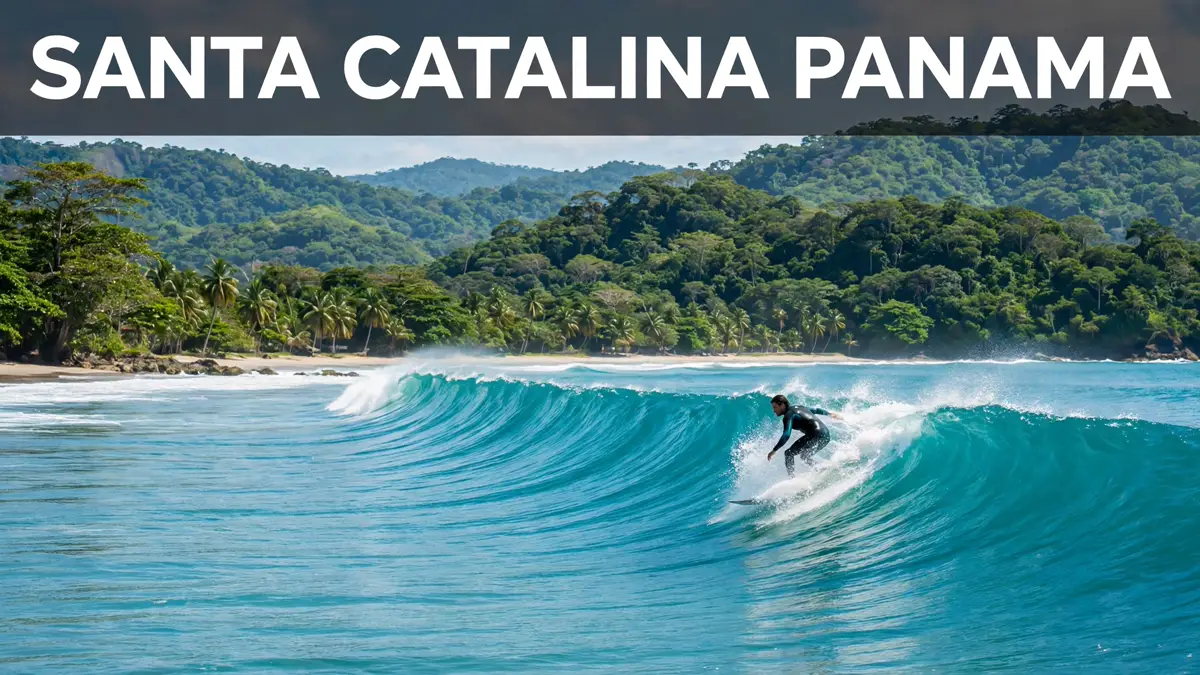
Surfing is what put Santa Catalina on the map, and the village has waves for more than one level. La Punta, the famous point break in front of the village, is a powerful right-hand break over a rocky reef, with long rides in both directions. It works all year, it is best for experienced surfers, and it is strongest from mid to high tide. Beginners should not paddle out at La Punta — the reef is unforgiving.
Playa El Estero, about 2 km from town, is the gentler option: a black-sand beach with smaller, softer waves that suit beginners and intermediates, plus surf camps and basic accommodation nearby. Boards are available to rent from the surf camps and some hotels in town. If you like this kind of low-key surf town, Palomino on Colombia’s Caribbean coast has a similar slow rhythm and a long beach made for learning.
The Coiba National Park day trip
The best thing to do in Santa Catalina is to get out on the water. Coiba National Park protects Coiba Island — the largest island in Central America — plus 38 smaller islands and the surrounding marine area in the Gulf of Chiriquí. The island was a penal colony from 1919 until the early 1990s; it became a national park in 1992, and UNESCO declared it a World Heritage Site in 2005. Because it was closed off for so long, its forests and reefs stayed remarkably untouched, and the park now protects more than 800 marine species, including reef sharks, sea turtles, rays, and clouds of reef fish.
Santa Catalina is the main departure point. The boat ride takes about 1 to 1.5 hours, and a full-day trip usually lasts around 8 hours, leaving early in the morning and returning by mid-afternoon. A typical snorkelling day includes two or three snorkel stops, a visit to the ranger station on Coiba Island, and lunch on a beach. Divers head to deeper sites with the dive shops in town, and Coiba is rated among the best diving in Central America.
A few practical points for the Coiba trip:
- Book through a licensed operator. Only certified guides may run trips into the park. The dive shops and tour operators in town run daily trips in season; book the day before, or earlier in the dry season.
- Budget roughly $70–$150 per person for a shared full-day snorkelling trip, plus the park entrance fee, which is about $20 for foreign visitors (around $5–$6 for Panamanian citizens and residents) and is paid in cash at the ranger station. Diving costs more. Prices vary by operator and season, so confirm the total — including the park fee, gear, and lunch — before you book.
- Bring cash, sun protection, and a dry bag. There is nothing to buy on Coiba, and the sun on an open boat is strong. A wetsuit top helps against jellyfish stings.
- Stay overnight in Santa Catalina the night before. Boats leave early, and the village is quiet the evening before a Coiba day — an early night is part of the plan.
Where to stay
Choose where to stay by how much heat you can handle: it is hot here, and air conditioning (or at least good fans) is worth paying for. The village has options at every level, from backpacker hostels with dorms and palm-thatched huts to mid-range beachfront cabins at Playa El Estero and small boutique hotels on the cliffs above La Punta. Hostels cluster in the town centre and around Catalina Farms; the quieter beachfront stays are out at El Estero. Rooms are simple almost everywhere — the view and the hammock matter more than the furniture — and most places include breakfast or have a restaurant on site. Book ahead in the dry season, and confirm whether your stay includes bike or board rental, since a few hotels lend both free to guests.
Where to eat
Santa Catalina has more than 20 small restaurants, many run by locals and others by chefs from around Latin America and Europe, and opening hours are famously relaxed — places open when they feel like it, and a few close one day a week. The food is simple and fresh: fried fish with patacones (fried plantain), fresh fish ceviche, arroz con mariscos (rice with seafood), and sancocho panameño, Panama’s chicken soup. Natural fruit juices and fresh coconut water are everywhere, along with local coffee and Panamanian beer. Buy any snacks or supplies you need at one of the two minimarkets in town, and expect a limited, unpredictable selection.
Money, safety, and practical tips
A little preparation goes a long way in a village this small:
- Bring cash, and bring more than you think you need. There is one ATM next to the Farmacia and it runs out of money, especially in high season. Most small shops and eateries take cash only; some hotels and dive centres accept cards.
- Pack insect repellent. Mosquitoes and sandflies (chitras) are common, especially at dusk.
- Respect the currents. Swim at Playa El Estero rather than at the main surf break, and do not swim in strong currents unless you are experienced.
- Do not leave valuables on the beach, and be careful on trails and rural roads at night.
- Carry a small first-aid kit. There is no hospital or clinic in town — only a pharmacy — and a real medical emergency means a trip to Soná or Santiago.
- Expect a power cut. Town-wide outages happen, sometimes at least once during a stay, and wifi is weak. Download maps and confirmations before you arrive.
Santa Catalina has the same small-town, walk-everywhere feel as Minca in the hills above Santa Marta — a place where the plan is to have no plan, and the best days are the unplanned ones.
How many days do you need?
Three days is a good first trip: one day to arrive and settle in, surf, and watch the sunset from the beach; one full day for Coiba; and one slow morning at Playa El Estero before the bus or shuttle back to Soná. Add a day if you want to dive Coiba properly or take a boat to nearby Isla Cébaco for snorkelling and fishing. Less than two nights means rushing the one thing Santa Catalina is for — slowing down.
The bottom line
Santa Catalina rewards the traveller who is willing to make the journey and then stop rushing. The surf at La Punta, the reefs of Coiba, and the quiet of a village where the road ends are all here, a 5-to-7-hour drive from Panama City and a world away from it. Arrive with cash, book your Coiba boat the day before, and leave room in your schedule for a hammock and an afternoon rainstorm. That is the whole guide, and it is enough.