
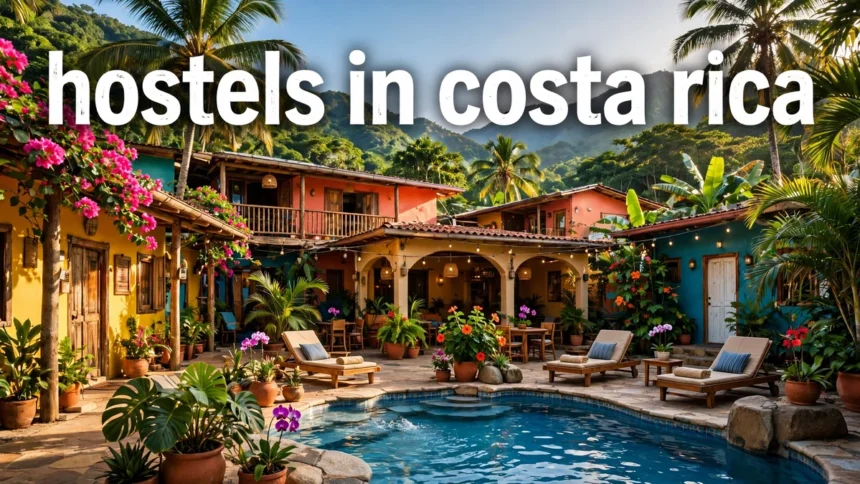
If you are planning a first trip to Costa Rica on a budget, hostels in Costa Rica are the single best way to keep your costs down without giving up comfort or company. The country is built for backpackers: hostels sit in nearly every town a first-timer visits, from the capital San José to the surf beaches of the Pacific and the Caribbean, and most of them offer far more than a bed — shared kitchens, pools, surf lessons, volcano views, and a ready-made group of fellow travelers. This guide covers what hostels cost, what to expect, where to stay, and how to pick the right one.
How much do hostels in Costa Rica cost?
A dorm bed in Costa Rica averages about $17 a night, according to Budget Your Trip’s data drawn from Hostelworld listings, with private rooms in hostels and guesthouses averaging about $22. Top-rated hostels run a little higher — around $19 a night for a dorm bed and $21 for a private room — and prices climb in peak season (roughly December through April) and in the most popular beach towns. A week in a dorm bed averages about $119, which is why hostels are the default choice for backpackers crossing the country.
What you actually pay depends on the room and the place. A basic 6–8 bed dorm in a smaller town can run as low as $10–$12 a night, while a private room with a bathroom in a well-known hostel is more like $42–$57. Some hostels also offer camping or glamping options for even less. Prices are usually quoted in US dollars, and most hostels accept cards, though a few small family-run places are cash-only, so it is worth checking before you arrive.
What to expect from a Costa Rica hostel
A hostel in Costa Rica is usually a small, social guesthouse rather than a big institutional dormitory. Expect shared dorm rooms with bunk beds and lockers, plus private rooms for couples or travelers who want their own space. Nearly all have a shared kitchen, a common area, and free Wi-Fi; many add a pool, a garden, hammocks, and organized activities like pub crawls, yoga, or surf lessons.
The social side is half the point. Hostels are where solo travelers find hiking partners for the next morning, share rides to the beach, and swap tips about which bus actually stops at the trailhead. If you want quiet, look for hostels described as boutique or family-run, and avoid the ones that advertise themselves as party hostels. If you want a social trip, the party hostels in places like Puerto Viejo and Jacó deliver exactly that — so pick your vibe on purpose.
Where to stay: the best hostel areas for a first trip
Costa Rica is small, but its hostels cluster in a handful of places. Here is how the main areas break down.
San José and the airport area
Most trips start in San José, and staying one night near the capital makes sense on arrival or before a flight home. Costa Rica Backpackers in the city center is a solid first stop, with dorms from around $30 a night and a restaurant with an affordable daily menu. Near the airport in Alajuela, Alajuela Backpackers is a cheap, no-frills option about five minutes from the terminal with a free shuttle, and the small family-run Mitamon Hostel is a quiet alternative about ten minutes away.
La Fortuna and Arenal
La Fortuna, at the foot of Arenal Volcano, is the classic first stop after San José, and Arenal Backpackers Resort is the best-known hostel in town — dorms from around $18–$20 a night, private rooms from around $45–$50, a pool, and a resort-style feel that suits solo travelers who still want some comfort. Selina La Fortuna is another popular option, with dorms from around $45. Book ahead here: La Fortuna is one of the busiest towns in the country.
Monteverde
Monteverde Backpackers sits in the middle of Santa Elena, two minutes from restaurants and shops, and it is one of the cheapest well-reviewed hostels in the country — dorms from around $12 a night and private rooms from around $42. It is a social, well-run base for the cloud forest reserves, and an easy stop between Arenal and the Pacific coast.
Tamarindo and the Nicoya Peninsula
Tamarindo is the main surf town on the Pacific side, and its hostels range from budget surf camps to beachfront premium stays. Playa Grande Surf Camp, just north of town, offers dorms from around $60 a night in a group-friendly setup. In town, Casa Aura Premium Hostel is the only beachfront hostel in Tamarindo, with a pool, a secure parking lot, and higher prices to match its location.
Puerto Viejo and the Caribbean coast
Puerto Viejo is the Caribbean-side backpacker hub, and its hostels lean social. Playa 506 Beachfront Hostel is the best-known party hostel in town, with dorms from around $17–$19 a night and private rooms from around $57. It is a good pick if you want a lively scene and a beachfront location, and a poor pick if you want an early night.
Manuel Antonio, Quepos, and Jacó
Around Manuel Antonio National Park, the Wide Mouth Frog Hostel in Quepos is a well-reviewed budget base with a pool, a restaurant, and a location close to the bus station. In Jacó, the most developed beach town near San José, Buddha House Boutique Hostel sits about 100 meters from the beach with a pool, a garden, and a shared kitchen — a good middle ground between a party hostel and a quiet guesthouse.
Tortuguero
If you are heading to Tortuguero National Park on the Caribbean side, Hostel Tortuguero 7BackPackers offers shared rooms only, from around $26 a night, right in the center of town. It is simple, but it puts you a short walk from the boats into the park’s canals.

How to choose the right hostel
With hundreds of hostels in the country, a little filtering goes a long way. Start with location: pick a hostel within walking distance of the beach, the trailhead, or the bus stop you will actually use, because Costa Rica’s towns are spread out and taxis add up fast. Then check the room type — a 4-bed dorm is quieter than a 12-bed one, and a private room is often only a little more than two dorm beds if you are traveling as a pair.
Read recent reviews, not just the rating. Look for comments about cleanliness, hot water, Wi-Fi, and noise after 10 p.m. — the things that decide whether you sleep well. Check what is included: a shared kitchen saves real money in a country where eating out is not cheap, and free breakfast, lockers, and a pool are worth more than a slightly lower bed price. Finally, check the cancellation policy before you book, especially in peak season when the best places fill up.
Practical tips for hostel stays in Costa Rica
Bring a padlock for your locker, earplugs, and a sleep mask — the standard backpacker kit, and genuinely useful here. Pack a light rain jacket even in the dry season, since afternoon showers are common in the mountains. Carry some cash in colones for small hostels, buses, and markets, even though cards work in most places. And book your first night before you land: arriving tired in San José with nowhere to sleep is the one avoidable mistake on a Costa Rica trip.
The bottom line
Hostels in Costa Rica are cheap, social, and everywhere a first-timer needs them — a dorm bed averaging about $17 a night buys you a bed, a kitchen, and a group of people heading the same way you are. Pick your area first, match the hostel to the vibe you want, and book the popular towns ahead in peak season. Costa Rica rewards the slow, curious traveler, and a good hostel is where that trip usually starts. If you like the idea of traveling light and staying close to the action, you will find the same spirit in our other first-trip guides — Santa Catalina, Panama, Amed, Bali, and the best places to visit in Panama.