
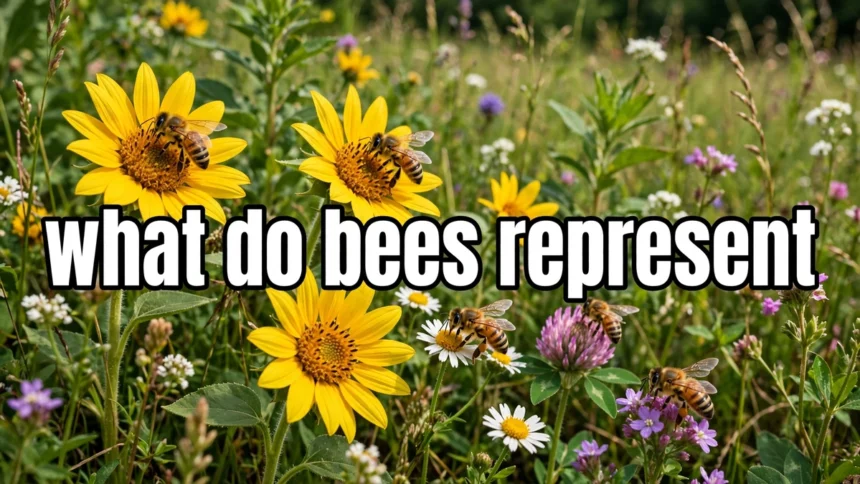
A bee visits hundreds of flowers in a day, carries nectar home, and turns it into honey that feeds a whole colony. That working life is why the bee became one of humanity’s favourite symbols. So what do bees represent? Across cultures, the consistent answers are hard work, teamwork, prosperity, and fertility — dedication that becomes nourishment because it is connected to a larger living system. The real insect behind the symbol is worth knowing too.
The short answer: dedication, cooperation, and prosperity
The most consistent meanings, across cultures and modern spiritual writing, are industriousness and cooperation. A honey bee does not gather for the romance of gathering: a worker visits hundreds of flowers, draws nectar into a honey stomach, carries pollen on branched body hairs, and returns to a colony where other bees receive, process, store, and protect what she brought. Separate effort becomes shared provision — and that is the symbol in miniature.
Three other meanings show up again and again:
- Prosperity and sweetness. Honey is the reward of the work: golden, storable, and sweet. Bees therefore stand for abundance earned rather than found, and for enjoying the results of effort.
- Fertility and renewal. By moving pollen from flower to flower, bees help plants reproduce, which supports gardens, forests, crops, and entire ecosystems. Pollination links the bee to growth and new life.
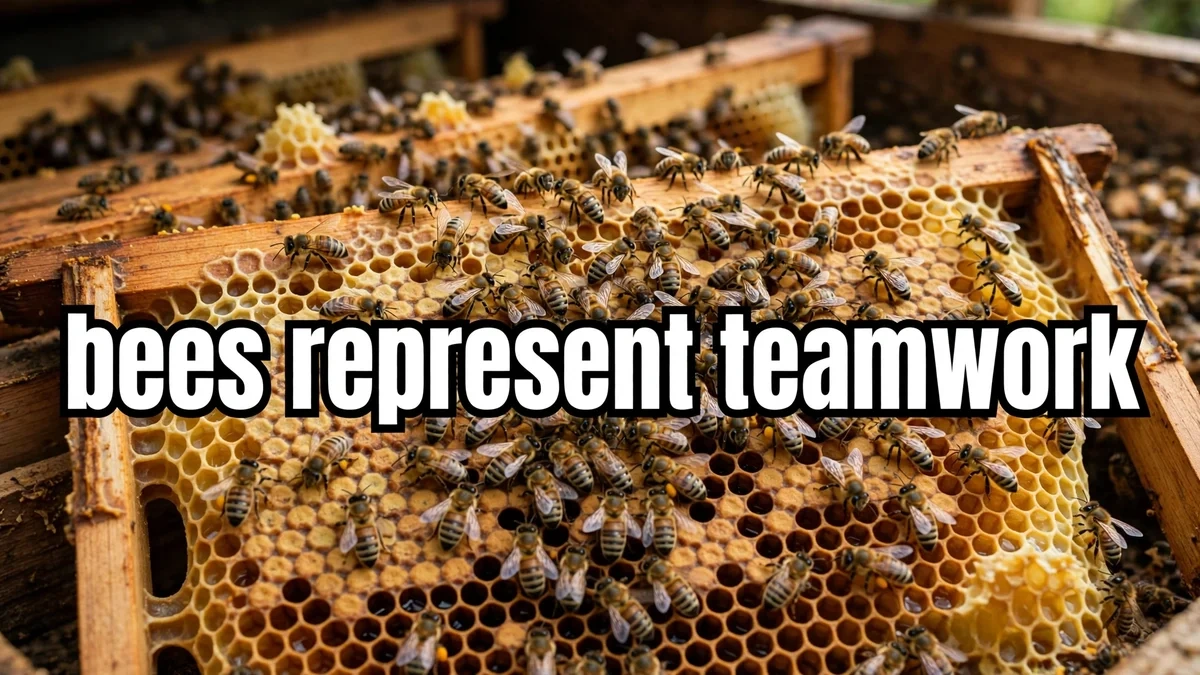
- Community and order. The hive runs on division of labour — queen, workers, drones, each with a role — which made it a favourite image of a well-ordered society, from Roman writers to medieval monks to Enlightenment philosophers.
None of this is a fact about the future. It is symbolism — stories people have told about a remarkable insect for thousands of years. That distinction matters, and it is also why the symbolism lasted: bees really are extraordinary workers, which gave the stories a root in everyday observation.
Why the symbolism fits the insect
Bees are selective workers, not blindly busy ones. A honey bee favours profitable blooms, communicates their location to other bees through the waggle dance, and adjusts its activity to weather, season, and the colony’s stores. Its work is disciplined attention: repetition, a good sense of where nourishment actually is, and a willingness to serve the colony over the self. That combination — tiny size, tireless work, and fierce defence of the hive — is exactly why bees became symbols of doing important work without fanfare.
Their product helps too. Honey keeps, heals minor wounds in folk medicine, and sweetens food without a harvest — a golden store made from attention. In a world where most insects were pests, an insect that produced food, order, and sweetness was always going to attract stories.
What different cultures say
The core theme — devoted work that nourishes a community — stays remarkably consistent, while the details vary:
- Ancient Egypt: the bee belonged to kingship and the ordered world. Royal titulary used the title “He of the Sedge and Bee,” linking the bee with Lower Egypt, and a later myth said bees sprang from the tears of the sun god Ra.
- Greek tradition: the nymph Melissa fed the infant Zeus with honey, and Melissa became a name for priestesses of Demeter and Artemis. Bees were also linked to prophecy, inspired speech, and souls moving between worlds.
- Roman writers: Virgil’s Georgics praised bees for ordered labour, loyalty, defence of the home, and collective devotion to a common good — the hive as a political and moral model.
- Medieval Christian writers: the hive stood for disciplined communal life, diligence, and self-sacrifice for the common good, and monasteries kept hives for wax and honey.
- Celtic and Irish tradition: honey, mead, and bees were connected with inspiration, hospitality, and sovereignty — a bee could bless a kingdom.
- Modern environmental symbolism: the bee stands for biodiversity and ecological balance, a reminder that small creatures hold whole systems together.
Some modern readings also treat a bee entering the home as a sign of good fortune or change. Like all such readings, it is best treated as storytelling, not guidance.
What a bee actually is
Bees are flying insects related to wasps and ants, feeding on nectar and pollen, and they are the main pollinators of many flowering plants. A single worker may visit hundreds of flowers in one foraging trip, and a colony’s combined work supports the reproduction of plants that feed humans and wildlife alike. Pollinators help reproduce about three-fourths of flowering plants and about a third of global food crops, according to the widely cited USDA figure — which is why the bee’s symbolism has a practical root: without bees, much of the sweetness and abundance they symbolise would not exist.
A bee visiting your garden, in plain terms, usually means you have nectar-rich flowers nearby in warm weather, when bees are active. If you want more visits, plant a variety of native flowers that bloom across the seasons, leave some bare ground and hollow stems for wild bees, and avoid spraying pesticides on open flowers. Do not try to handle a bee or disturb a hive — a bee that weighs a fraction of a gram can still sting, and a colony defends its home.
And if you are out walking the dog when a bee hums past, it is one more small outdoor worker to notice — the same kind of everyday moment that makes a walk worth writing about, whether the walk ends at a garden or just around the block, as any reader of why a Boston Terrier will recognise. Small creatures carrying large meanings is a theme this site has touched before, in what a ladybug landing on you means and what do hummingbirds symbolize — and the bee belongs in the same family: small, hardworking, and easy to overlook until you stop and watch.
The bottom line
Bees represent dedication, cooperation, prosperity, and fertility in folklore — and, in reality, a tiny, tireless pollinator whose work feeds colonies, gardens, and much of the food we eat. The symbolism is worth enjoying, the insect is worth protecting, and the best response is the simplest one: plant flowers, leave the hive alone, and take the honey as a reminder that small, steady work adds up.