
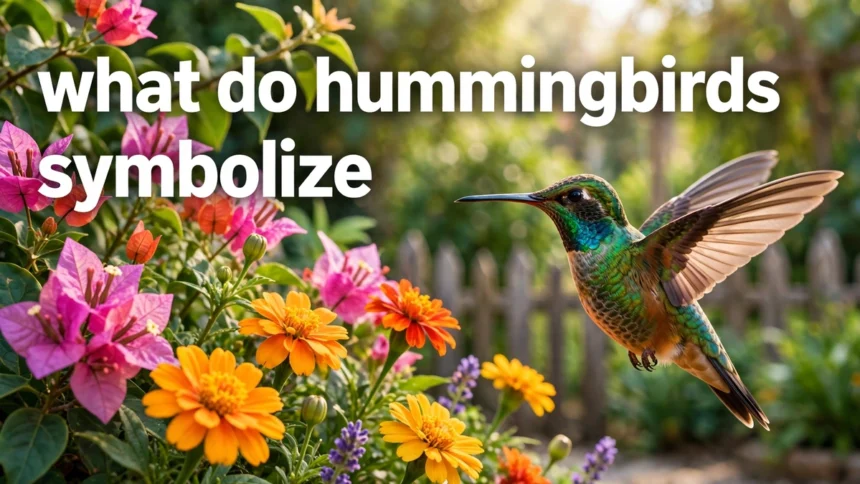
A hummingbird appears at a feeder, hovers for a few seconds, and vanishes — and the moment feels strangely significant. That feeling is old and widespread: in traditions across the Americas, what do hummingbirds symbolize has a consistent answer. Joy, resilience, and renewal head almost every list, with love, healing, and messages from loved ones close behind. The traditions are charming, and the real bird behind them is worth knowing too.
The short answer: joy, resilience, and renewal
The most consistent meanings, across cultures and modern spiritual writing, are joy and lightness of being. Hummingbirds live on nectar — the sweetest food in their world — and their constant search for flowers makes them a natural symbol for noticing life’s small pleasures. Resilience follows close behind: a bird weighing a few grams migrates thousands of miles, defends its feeding territory against much larger birds, and survives on energy reserves that would run out in hours without constant feeding.
Two other meanings show up again and again:
- Love and connection. In several traditions, a hummingbird visit signals love nearby, a deepening relationship, or the presence of a loved one who has passed — the bird as a messenger between worlds.
- Renewal and hope. Because hummingbirds return with the seasons and seem to appear exactly when someone needs a lift, they are read as signs of a new chapter, healing after hardship, or encouragement to keep going.
None of this is a fact about the future. It is symbolism — stories people have told about a remarkable bird for centuries. That distinction matters, and it is also the reason the symbolism lasted: hummingbirds really are extraordinary, which gave the stories a root in everyday observation.
Why the symbolism fits the bird
Hummingbirds are the only birds that can fly backwards, hover in place, and even fly upside down for short bursts. Their wings beat so fast they blur, and their hearts work at a pace no other warm-blooded animal sustains. That combination — tiny size, impossible-seeming flight, and fierce territorial courage — is exactly why they became symbols of doing the impossible and of strength that has nothing to do with size.
Their appearance helps too. Iridescent feathers flash green, blue, and ruby depending on the light, so a hummingbird seems to change colour as it moves. In a world where most small birds are brown and quiet, a jewel-like bird that hovers in mid-air was always going to attract stories.
What different cultures say
The core theme — joy, resilience, and positive change — stays remarkably consistent, while the details vary:
- Aztec and Mexica traditions: the hummingbird was connected to the sun god Huitzilopochtli and to fallen warriors, who were believed to return as hummingbirds and follow the sun across the sky.
- North American Indigenous traditions: among peoples including the Navajo (Diné) and Hopi, hummingbirds are associated with healing, joy, and rain-bringing.
- Caribbean folklore: in Jamaica and Trinidad, the hummingbird — known locally as the “doctor bird” — is thought to carry healing power.
- Modern spiritual writing: a hummingbird visit is commonly read as reassurance — a sign that you are supported, on the right path, or being reminded to find sweetness in the present moment.
Some modern readings also assign meanings by colour: red for passion and bold action, green for healing and renewal, blue for calm and honest communication. These colour associations vary by source and are best treated as storytelling, not guidance.
What a hummingbird actually is
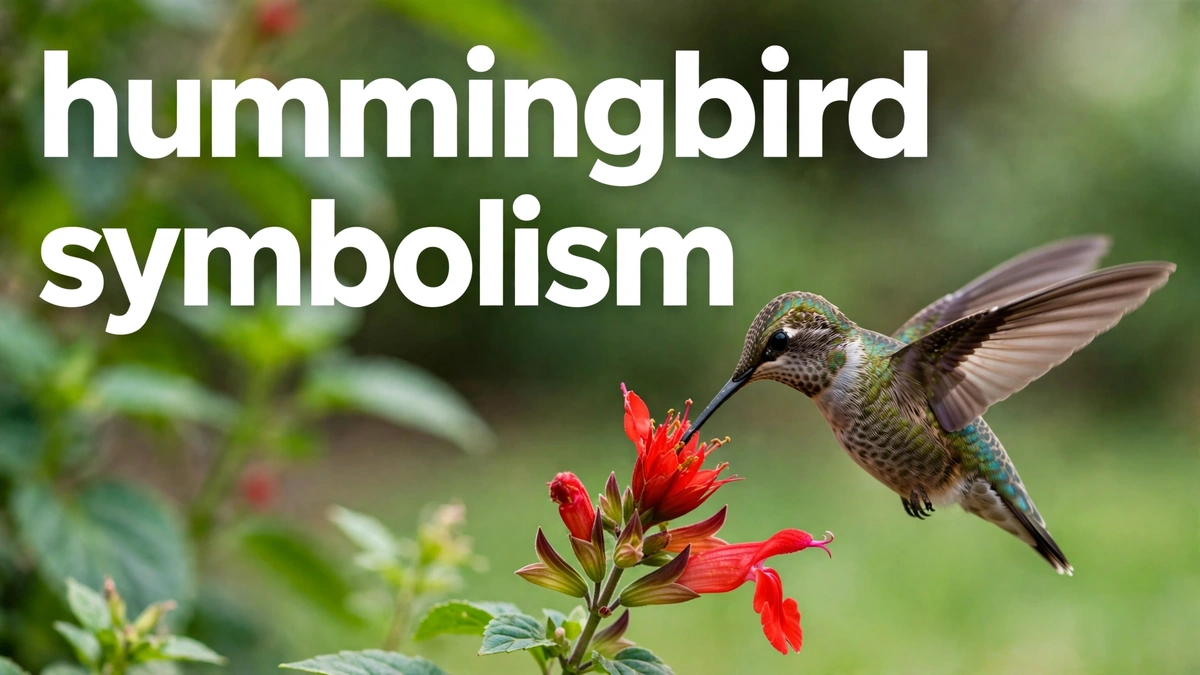
Hummingbirds are a family of birds, Trochilidae, found only in the Americas, from Alaska to the southern tip of South America. Most species measure just 7.5 to 13 centimetres and weigh 2 to 6 grams. They feed on nectar, and in doing so they pollinate the flowers they visit — a practical ecological role that mirrors the symbolism: small visitors with an outsized effect on the world around them.
A hummingbird visiting your garden, in plain terms, usually means you have nectar-rich flowers or a feeder nearby, in warm weather, when hummingbirds are active. Some species migrate remarkable distances — the ruby-throated hummingbird crosses the Gulf of Mexico in a single non-stop flight. None of this makes the moment less pleasant; it just means the meaning, if you want it, is in how you choose to take the moment.
What to do when one visits
The folklore and the practical advice agree for once: watch, enjoy, and leave it alone. If you want more visits, plant nectar-rich native flowers, keep feeders clean and filled with plain sugar water (one part sugar to four parts water, no red dye, no honey), and keep cats indoors during peak visiting hours. Do not try to catch or handle a hummingbird — they are protected in many places, and a bird that weighs a few grams is easily injured by well-meaning hands.
And if you are out walking the dog when one flashes past, it is one more small outdoor surprise to notice — the same kind of everyday moment that makes a walk worth writing about, whether the walk ends at a beach or just around the block with a Boston Terrier who notices every bird before you do, as any reader of why a Boston Terrier will recognise. Even a swim can bring its own small encounters, as Gus swims showed long ago — and small creatures carrying large meanings is a theme this site has touched before, in what a ladybug landing on you means.
The bottom line
Hummingbirds symbolize joy, resilience, and renewal in folklore, love or a message from a loved one in several traditions, and — in reality — a tiny, fierce, iridescent bird doing an extraordinary job of staying alive. The symbolism is worth enjoying, the bird is worth protecting, and the best response is the simplest one: watch it hover, and take the good mood with you.