
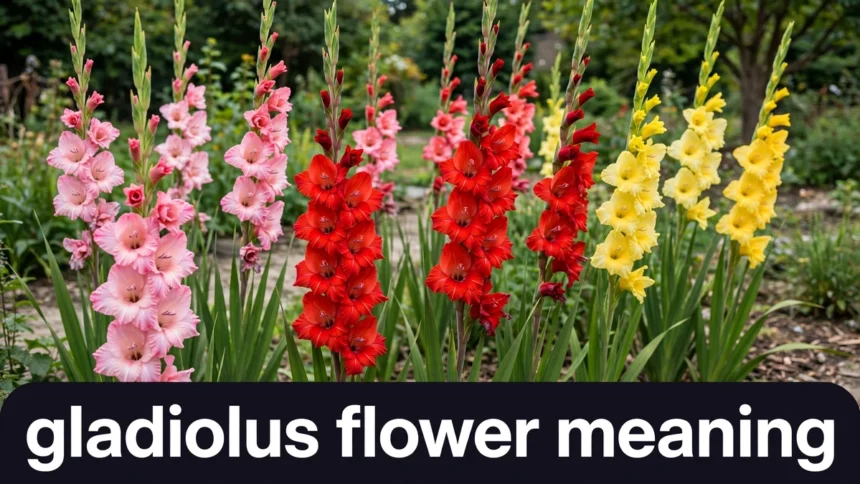
So what is the gladiolus flower meaning? In short: strength of character, integrity, perseverance, and remembrance — with a softer second message, infatuation, that comes from the same sword-shaped plant. The gladiolus is one of the few flowers whose symbolism barely needs explaining once you see it: it stands tall, it does not bend, and it was named for a blade. That upright stance is the whole story, and every meaning that follows grows out of it.
The short answer: strength, integrity, and remembrance
The core meanings, consistent across flower guides, are strength of character, moral integrity, and perseverance. The plant’s tall, sword-like spikes do not bend in the border, and that reads as someone who stands tall under pressure. Farmers’ Almanac sums the flower up in exactly those terms — strength, integrity, and perseverance — and that is the sense in which it appears in lists of flowers that mean strength.
Remembrance sits close beside strength, which is why the gladiolus is a common funeral and sympathy flower in many countries: a tall, dignified bloom that honours a life without fuss. White gladiolus is the usual choice for those occasions, for its association with purity and sincerity.
Why a sword? The name and the gladiator story
The name gives the game away. Gladiolus comes from the Latin gladius, the short sword of the Roman legions, and gladiolus means “little sword” — named for the plant’s long, narrow, blade-like leaves, which grow in a flat fan. The ancient Greeks called it xiphium, from xiphos, also meaning sword. Its English nickname, sword lily, is the same idea in plainer words — though botanically it is not a lily at all.
The gladiator story is the one everyone repeats, and it is worth getting right. Popular lore says gladiators wore gladioli for protection, or that crowds showered fallen fighters with the flowers. The better-attested tradition is the reverse: garlands of gladioli were presented to victorious gladiators as tokens of admiration and honour — a recognition of skill and courage that had prevailed, not a consolation for defeat. Either way, the association stuck: the flower of the arena became the flower of strength.
The softer meaning: infatuation
The same blade that means strength also means love, in the Victorian language of flowers. Giving a gladiolus, the tradition says, told the receiver that their beauty or character had pierced the giver’s heart — infatuation, sudden and overwhelming, before a word was spoken. One honest caveat: the best-known Victorian flower dictionary, Kate Greenaway’s Language of Flowers of 1884, does not list the gladiolus at all, so this meaning belongs to the wider, looser tradition of floriography rather than to one canonical book. It is still the meaning most flower guides repeat, and it is the reason gladioli turn up in romantic bouquets as well as sympathy ones.
What each color means
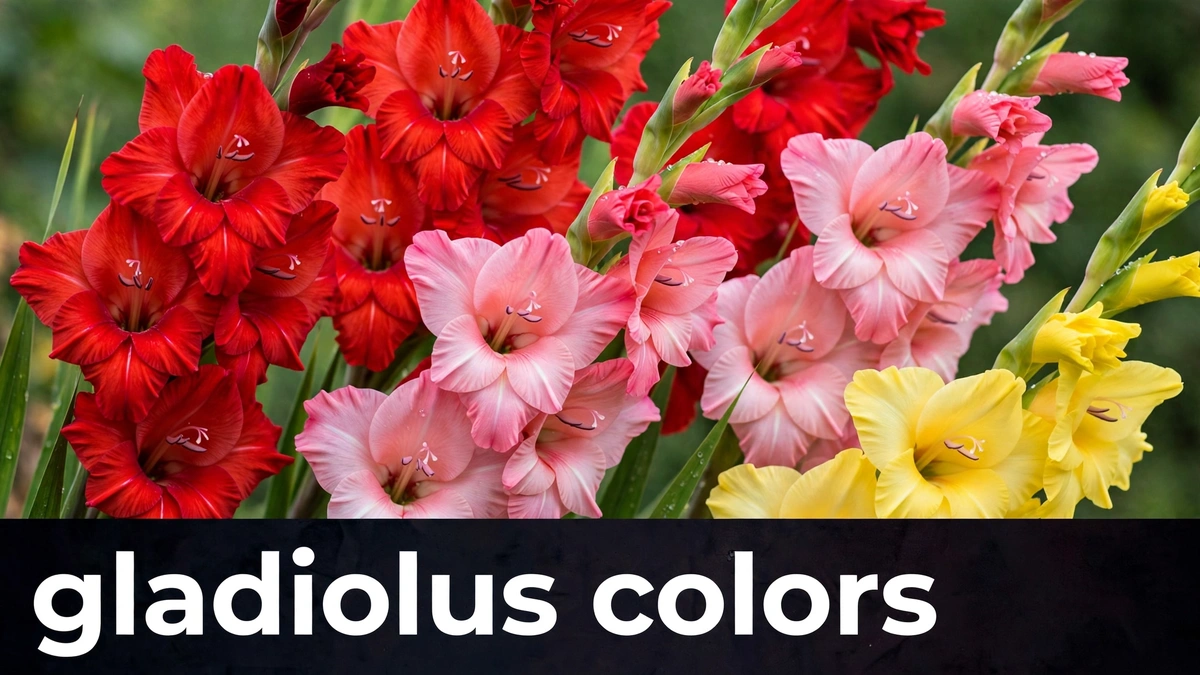
Like most flowers that come in many colors, the gladiolus changes its message with its color:
- Red: love, passion, and deep devotion — the romantic choice.
- Pink: gentleness, admiration, and a mother’s love — a genuinely good pick for Mother’s Day.
- Yellow: happiness, joy, friendship, and cheer.
- White: purity, innocence, and sincerity — the usual sympathy choice.
- Purple: grace, mystery, and elegance.
- Orange: enthusiasm, excitement, and creativity.
If you are choosing for a specific occasion, let the color do the talking: red for a declaration, white for a farewell, pink for thanks to a mother, yellow for a friend who needs cheering up.
Milestones: August birthdays and 40th anniversaries
The gladiolus is the primary birth flower for August, a title it shares with the poppy, and it is the traditional flower of the 40th wedding anniversary. Both milestones suit it: forty years of marriage takes strength, integrity, and perseverance, and an August birthday gets a flower that blooms in the heat of late summer, tall and unbending. It is a flower that suits long stories — which is perhaps why it also suits farewells.
Giving gladioli well
A few practical notes, since this is a flower people actually buy. Gladioli are sold as cut spikes: recut the stems, strip the leaves below the waterline, and keep them out of direct sun and draughts, and the buds will open in sequence up the spike over a week or more. In the garden, they grow from corms planted in spring, in full sun and well-drained soil — and in colder climates the corms are lifted for winter, which is one more small, unhurried job worth doing properly, the same kind of everyday care that makes a garden worth writing about, whether the plant is a gladiolus or a flower with a quieter story, as any reader of what a ladybug landing on you means will recognise. Small things carrying large meanings is a theme this site has touched before, in what do hummingbirds symbolize and what do bees represent — and the gladiolus belongs in the same family, only taller.
The bottom line
The gladiolus means strength of character, integrity, perseverance, and remembrance — and, in the Victorian language of flowers, infatuation: a blade that can declare love as well as courage. Choose the color to match the message, and you have a flower that says something worth saying, whether for an August birthday, a 40th anniversary, or a farewell.