
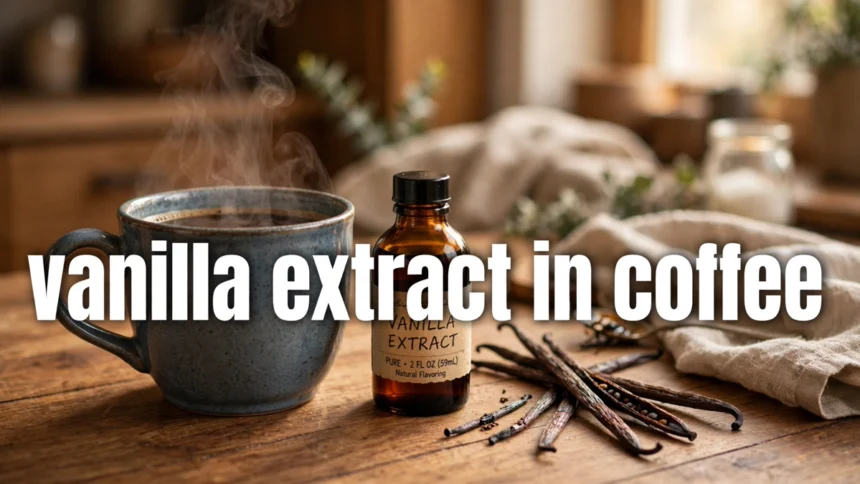
Yes. A few drops of vanilla extract in coffee turn a plain cup into vanilla coffee, with no sugar added and no special equipment needed. It is the cheapest, simplest way to flavour coffee at home — provided you use a small amount, because extract is concentrated and the difference between “just right” and “too much” is only a few drops.
What vanilla extract actually is
Vanilla extract is a liquid made by soaking vanilla beans in water and alcohol, which pulls out the flavour compounds — chiefly vanillin, the compound behind vanilla’s familiar warm aroma — as described in the entry on vanilla extract. In the United States, pure vanilla extract has a legal standard of identity: it must contain at least 35% alcohol by volume and a minimum amount of vanilla beans per gallon. That alcohol content matters for coffee in two ways. First, it means a tiny amount carries a lot of flavour. Second, it means the flavour is volatile: very hot liquid drives the aroma compounds off, which is why timing matters (see below).
Imitation vanilla, sometimes labelled vanilla flavouring, uses synthetic vanillin instead of bean extract. It works in coffee too, but it tastes flatter and more one-note than pure extract, and it is easier to overdo. If you are buying a bottle for coffee, pure extract is the better choice, and a small bottle lasts a long time because the dose is so small.
How much vanilla extract to put in coffee
Start low. The consistent guidance across coffee guides is:
- Single mug (8–12 oz): start with a few drops, up to about 1/8 to 1/4 teaspoon. Taste, then add more drop by drop if you want it stronger.
- Full pot: about 1/2 to 1 teaspoon for a standard pot, added after brewing and stirred well.
- Espresso drinks: a couple of drops per shot is plenty, since the coffee is concentrated and the vanilla does not need to compete with much volume.
The failure mode is one-directional: too little is fixed with a few more drops, but too much cannot be taken out, and an over-dosed cup tastes sharp, medicinal, or boozy rather than vanilla-sweet. Dark roasts and espresso stand up to a little more extract than light roasts, which are easier to overwhelm. If you use a double-fold extract — a stronger, more concentrated bottle — halve these amounts and taste as you go, since the label strength changes the dose.
When to add it
Timing affects how much vanilla flavour survives into the cup. The usual advice is to wait about a minute after brewing, so the coffee is hot but no longer straight off the boil, then stir the extract in. Adding it to coffee at a rolling boil drives off more of the volatile aroma. For iced coffee, stir the extract into the milk rather than the coffee, where it spreads more evenly; for cold brew, add it to the finished drink rather than the grounds, so you can control the dose precisely.
There is a second method worth knowing: adding a drop or two to the dry grounds before brewing. This gives a subtler effect — the vanilla softens the coffee’s bitter edges rather than announcing itself as vanilla flavour. Use about 1–2 drops per 10–12 grams of coffee, stir the grounds lightly, and brew as usual. It works best with medium and dark roasts; with delicate, light-roast coffees, the extract can flatten the very notes you bought the beans for.
What it does to the taste
Vanilla does not sweeten coffee in the way sugar does, but it makes coffee taste sweeter. Vanillin cues the brain to expect sweetness, which softens bitter edges without turning the cup into dessert. That is why extract is popular with people cutting back on sugar: it changes the perception of the cup while adding almost no calories and no sugar at all. If you still want sweetness, add your sweetener separately — extract gives you flavour, and you decide the sweetness on its own terms.
Vanilla pairs best with coffees that already lean chocolate, caramel, or nutty — typical of medium roasts from Brazil or Colombia. It suits those profiles because it rounds and deepens them rather than competing with them. Bright, fruity, or floral coffees, such as light-roast Ethiopians, are a harder match: the vanilla can sit on top of the fruit notes instead of blending in. That is a matter of taste, not a rule — but if your first vanilla coffee disappoints, try it in a different bean before deciding the idea does not work.
Extract vs syrup vs flavoured beans
Three ways to get vanilla coffee, and they are not interchangeable:
- Extract: flavour only, no sugar, dose controlled per cup, cheapest per cup, works in any coffee you already like. The only downside is the small alcohol content and the need to dose carefully.
- Vanilla syrup: flavour plus sugar, in a fixed ratio you cannot separate. Convenient and consistent, but you cannot have the vanilla without the sweetness, and a bottle costs more per cup.
- Flavoured beans: beans coated with flavouring oil after roasting. The flavour is fixed at the roaster and applied to every cup from the bag, whether you want it that day or not, and the coating can go stale faster than the beans themselves.
Extract wins on control and cost, syrup wins on convenience, and flavoured beans win only if you want every single cup to taste the same. For most home brewers, extract is the best default — and it keeps the coffee choice separate from the flavour choice, which matters if you care about the beans themselves. Getting the amount of coffee right is the other half of a good cup, covered in how much ground coffee per cup, and the flavour families vanilla belongs to are explained in coffee flavors, explained.
What to avoid
A few mistakes come up repeatedly. First, do not pour extract straight from the bottle into a mug without measuring — a free pour is easily three times the right dose. Second, do not use extract as a sweetener substitute and expect sweetness: if you want sweet, add sugar or syrup alongside it. Third, do not add it to the grounds of a flavoured bean — the two flavourings clash. Fourth, keep the bottle away from heat and light, and replace it if it smells flat or harsh rather than warm and vanilla-like; extract keeps well, but not forever.
One more note: because pure extract contains alcohol, some people prefer to avoid it entirely, including anyone avoiding alcohol for personal, health, or religious reasons. The amount in a mug is tiny, and much of the alcohol evaporates in hot coffee, but it is not zero — alcohol-free vanilla flavouring exists for exactly this situation, and it works the same way in the cup.
A simple vanilla coffee recipe
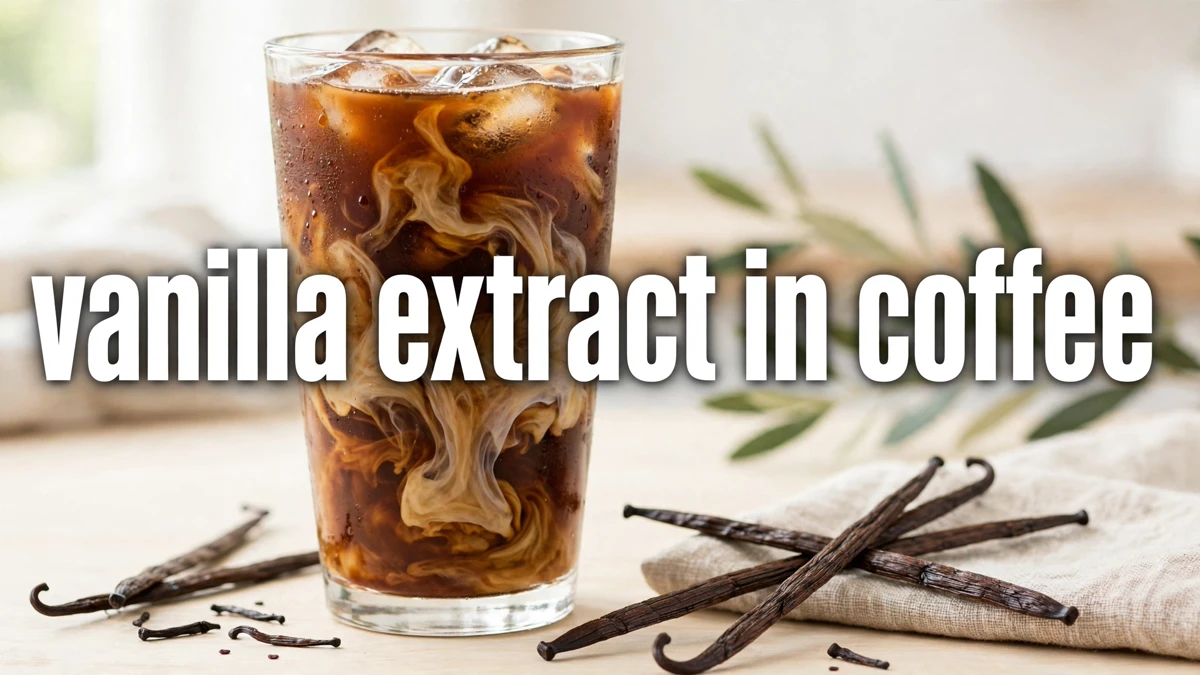
For one mug: brew your usual coffee, medium or dark roast, at your normal strength. Let it sit for about a minute. Add 1/8 teaspoon of pure vanilla extract, stir, and taste. Add a few more drops only if you want it stronger. Add milk if you like, and sweetener separately if you want it. For iced vanilla coffee: brew double-strength coffee, cool it, pour over ice, stir the extract into the milk, and combine. That is the whole recipe — and once you have the dose right for your mug, it becomes a two-second habit.
Drink types change how vanilla shows up, too: the same dose tastes different in espresso, pour-over, and cold brew, as explained in different types of coffee, explained. Start with your usual method, get the dose right there, and then try it in a second method before judging it.
The bottom line
Yes, you can put vanilla extract in coffee — a few drops per mug, added after brewing, in a medium or dark roast, is the reliable starting point. It adds warm vanilla flavour with no sugar, costs almost nothing per cup, and keeps you in control of both the flavour and the sweetness. Start low, taste, and adjust: that is the entire technique.