
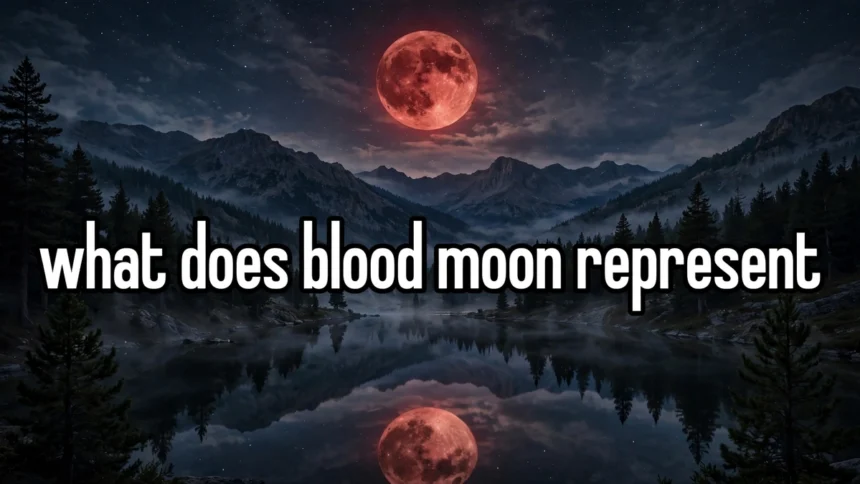
When the full Moon rises the colour of copper, it is hard to look away — and for most of human history, people did not just look. They explained. So what does blood moon represent in the traditions that watched it? Across cultures, the consistent answers are endings and closure, hidden truths coming to light, and transformation — a turning point, rather than a disaster. The astronomy behind it is just as striking, and it is worth knowing too.
The short answer: endings, revelation, and change
The most consistent meanings, across spiritual writing and folklore, are endings and release. A blood moon is a full moon with the volume turned up: where an ordinary full moon is read as a time of completion, an eclipse moon is read as a forced completion — the chapter that has been ending for months finally closing. Revelation follows close behind: because the Moon goes dark and then returns red, it is read as a moment when what was hidden becomes visible, whether that is a truth about a relationship, a decision put off too long, or a pattern finally seen clearly.
A third meaning shows up again and again: transformation and renewal. The Moon is not destroyed during an eclipse; it is temporarily hidden and then returns. That pattern — descent, darkness, return — is why the blood moon is read as a symbol of rebirth as often as of endings. None of this is a fact about the future. It is symbolism — stories people have told about a dramatic sky event for thousands of years. That distinction matters, and it is also why the symbolism lasted: a blood moon really is extraordinary to witness, which gave the stories a root in everyday observation.
What a blood moon actually is
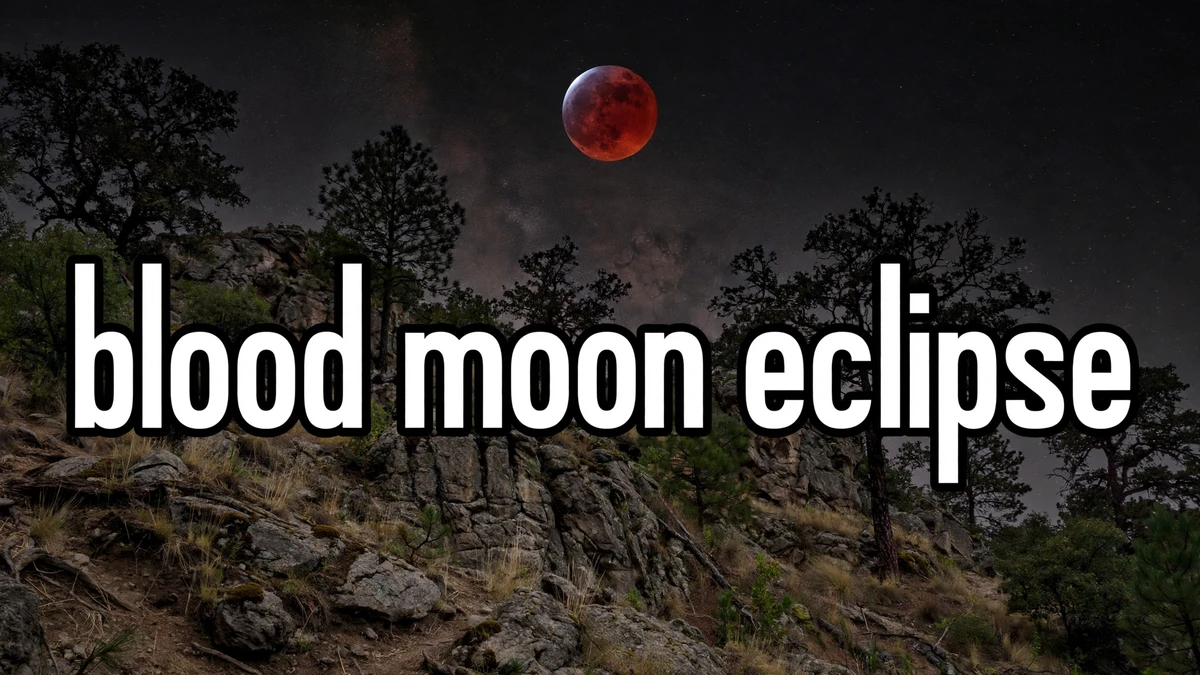
A blood moon is the popular name for a total lunar eclipse, which happens when Earth passes directly between the Sun and the Moon and casts its full shadow over the Moon. The Moon does not go black, because sunlight filtering through Earth’s atmosphere is bent toward it — and the atmosphere scatters away the blue light, leaving the red wavelengths to reach the lunar surface. In other words, the light on a blood moon is the light of every sunrise and sunset on Earth, projected onto the Moon at once.
Total lunar eclipses happen every one to three years somewhere on Earth, and totality can last over an hour. That rarity, combined with the colour, is exactly why blood moons attracted stories: most sky events repeat on a schedule people could learn, but a Moon turning red felt like an interruption of the natural order.
What different cultures said
The core theme — a turning point, not a random event — stays remarkably consistent, while the details vary:
- Mesopotamia: eclipse records from Babylonian astronomers treated a darkened or reddened Moon as an omen for the king and the kingdom, serious enough that rituals were performed to protect the ruler.
- Maya and Aztec traditions: the Moon’s reddening was linked to gods and cosmic battles, and ceremonies were held for protection and balance.
- Indigenous North American traditions: a red Moon marked important changes in the Earth or the seasons, a threshold event rather than a catastrophe.
- Biblical tradition: the Book of Joel speaks of the Moon turning to blood, which is why some Christian readings treat a blood moon as a sign of God’s power and renewal.
- Modern spiritual writing: a blood moon is commonly read as a time to release what no longer serves you, face a hard truth, and set intentions for the next chapter.
Some modern readings also warn against treating an eclipse as a prediction about specific events in your life. That caution is worth keeping: the traditions themselves disagreed wildly about what a blood moon foretold, which is a good sign that the meaning was always in the eye of the watcher.
Is a blood moon good or bad?
Neither, in most readings — and that is the most useful answer in this whole guide. Traditions that feared eclipses and traditions that welcomed them agree on one thing: a blood moon marks a moment when something already in motion speeds up. If a relationship, job, or habit was already ending, an eclipse week is when people tend to notice and act. The eclipse did not cause the ending; it is when the ending became visible.
That is also why blood moons are so often linked to honesty in relationships. The conversation that has been circling for months tends to happen around a dramatic, visible event — not because the Moon caused it, but because people use such moments as permission to say what they already knew.
How to watch the next one
The practical advice is simple: check the date of the next total lunar eclipse visible from your location, find a dark spot away from streetlights, and give your eyes twenty minutes to adjust. No telescope is needed — a blood moon is one of the few astronomical events that looks better, and more dramatic, with the naked eye. Bring warm clothes, because totality is slow, and bring patience, because the most beautiful phase is the gradual reddening as the shadow crosses.
And if you are out walking the dog when the Moon rises red, it is one more small sky surprise to notice — the same kind of everyday wonder that makes a walk worth writing about, whether the walk ends at a beach or just around the block, as any reader of why a Boston Terrier will recognise. Small natural events carrying large meanings is a theme this site has touched before, in what a ladybug landing on you means and what do hummingbirds symbolize — and a red Moon belongs in the same family of moments: striking to see, rich in stories, and best enjoyed for what it is.
The bottom line
A blood moon represents endings and closure, hidden truths surfacing, and transformation in folklore — and, in reality, a total lunar eclipse, when Earth’s shadow turns the Moon copper red with the filtered light of every sunrise and sunset at once. The symbolism is worth enjoying, the astronomy is worth knowing, and the best response is the simplest one: look up, and take the moment for what it is.