
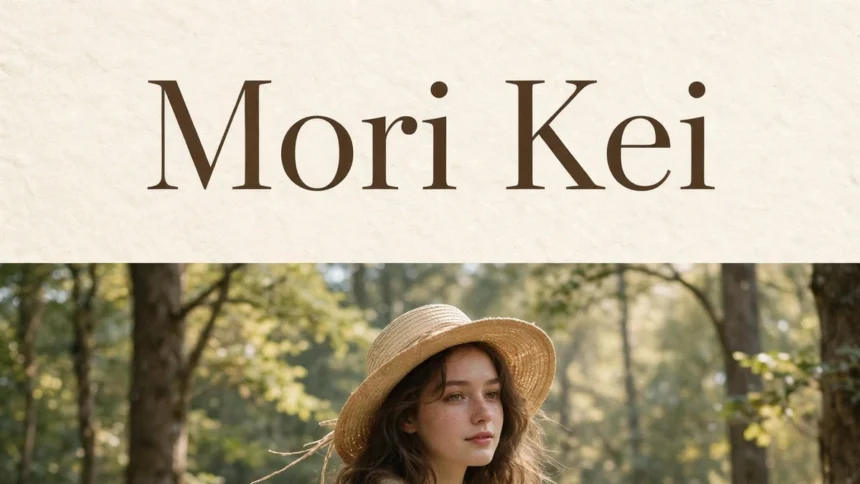
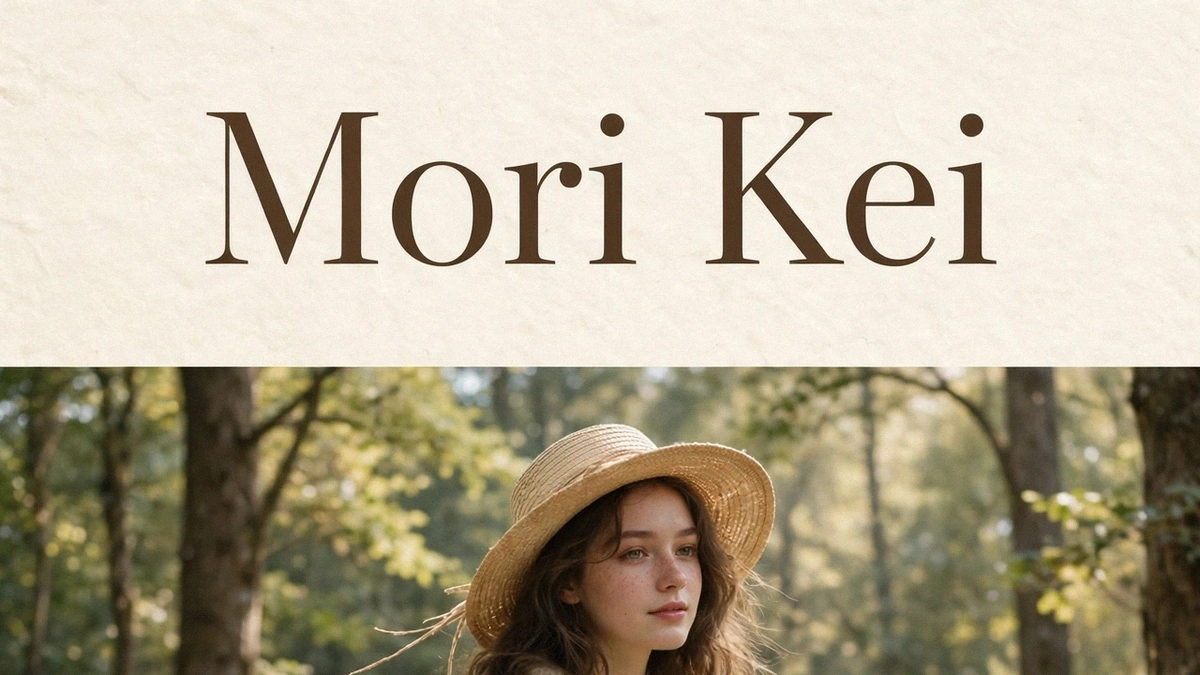
Mori kei means “forest style”: a Japanese fashion aesthetic built on loose layers, natural fabrics and muted earth tones, inspired by the idea of someone living quietly in a forest cottage. It began as a small online community in Japan in 2006, peaked in the early 2010s, and has since found new audiences on Pinterest and TikTok — without ever losing its calm, woodland character.
What Does Mori Kei Mean?
The name breaks down simply. Mori (森) is the Japanese word for forest, and kei (系) is a suffix used in Japanese fashion to mark a style category — the same suffix that appears in visual kei outfits and other named styles. So mori kei literally means “forest style” or “forest type”.
The original name for the look was mori girl (森ガール), and the two terms are still used interchangeably in English-speaking fashion communities. Mori girl was the name of the first community; mori kei became the broader term as the style spread beyond its original female-only following. Among the many different fashion styles to come out of Japan, mori kei is one of the gentlest: nothing about it is loud, fitted or attention-seeking.
At its heart is a daydream rather than a dress code: dress as though you lived in a small cottage at the edge of a forest, even if the nearest trees are in a city park. The clothes should look accumulated over time, not assembled for a photo — soft, slightly worn, and comfortable enough to read a book in.
Where Did Mori Kei Come From?
Mori kei has one of the clearest origin stories in fashion. In 2006, a Tokyo woman posting on the Japanese social network Mixi under the name Choco shared photos of herself in layered cream skirts, a knitted cardigan and a vintage straw hat, photographed among trees. A friend told her she looked like a girl from the forest, and Choco founded a Mori Girl community on Mixi that same year.
The community grew quickly. By the late 2000s, Japanese fashion magazines were running mori girl editorials, and brands shifted parts of their collections toward the look. Choco also wrote a playful list of 62 “rules” for a mori girl — liking ponchos and boleros, flat-soled shoes, pocket watches and fluffy hats, drinking tea, and taking afternoon naps — which captured the lifestyle side of the style: slow, quiet and deliberately apart from the speed of city life.
The peak passed by the mid-2010s, as magazine coverage faded and Mixi itself was eclipsed by newer platforms. But mori kei never disappeared. Tumblr blogs kept it alive through the 2010s, Pinterest gave it a second wind, and in recent years it has reached a new generation through TikTok styling videos — and even as a theme in the game Roblox’s Dress to Impress. Part of its staying power is that it grew out of the wider world of Japanese street fashion, yet offered the opposite of that scene’s loudest looks: softness and restraint instead of spectacle.
What Defines a Mori Kei Outfit?
The look is consistent enough to recognise at a glance. These are its building blocks:
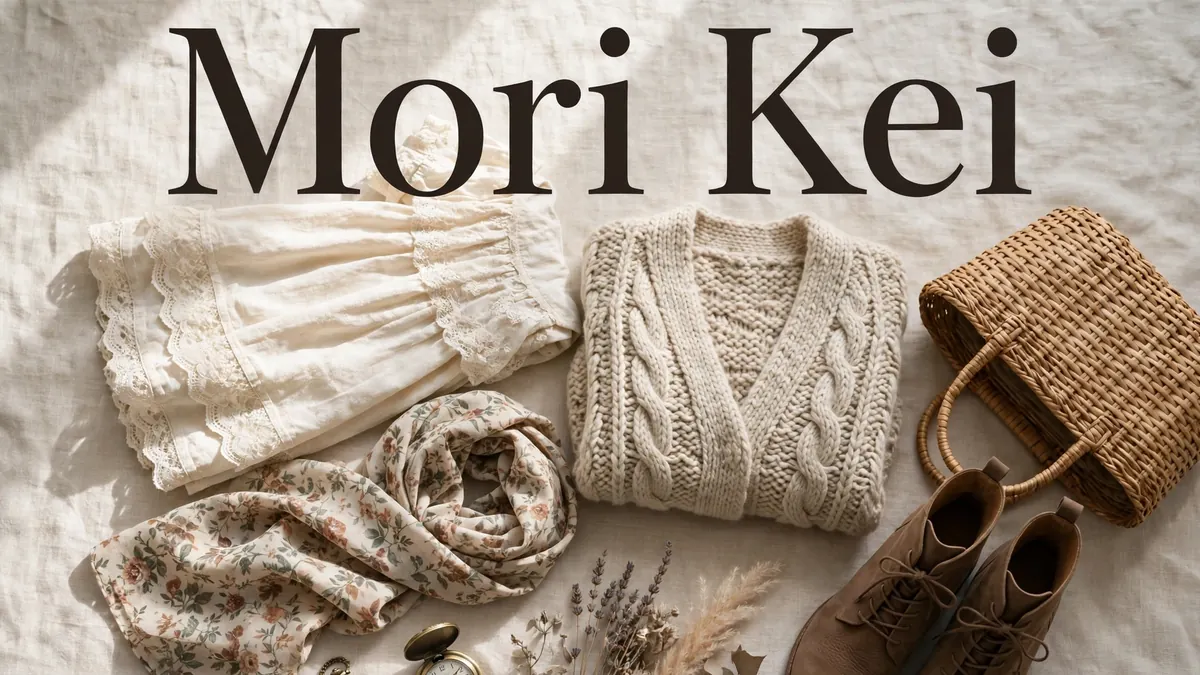
- Loose, layered silhouettes. The base is almost always a dress or a long skirt, rarely fitted — A-line, smock and empire-waist cuts dominate. Layering is the single most important rule: a typical outfit has at least three visible layers, such as a dress, a knit vest or cardigan, and an outer coat, with each layer peeking out at the edges of the one above it.
- Natural fabrics. Cotton, linen, wool, crochet and textured knitwear. The fabrics should look and feel soft and slightly worn — nothing shiny, stiff or synthetic-looking.
- Muted earth tones. Cream, ivory, oatmeal, beige, soft brown, moss green, dusty rose and faded olive. Pure black is rare in classic mori kei, and bright, saturated colours are essentially out. White is fine only when it reads as undyed cotton rather than optical white.
- Vintage and handmade details. Lace trims, embroidery, floral prints, smocking and hand-knitted textures give the outfit its sense of history.
- Flat, worn-in footwear. Ankle boots, oxfords, brogues or simple Mary Janes — almost always flat, and better slightly scuffed than brand new.
- Quiet accessories. Leather satchels and woven baskets instead of handbags, straw hats or knit hats, scarves, round-framed glasses, and small natural jewellery such as wooden beads, pressed flowers or tarnished brass.
- Natural hair and minimal makeup. Hair left loose or lightly waved, sometimes with a small braid; makeup kept to a soft, slightly flushed face, with no contouring or heavy eye makeup.
The mood owes something to older Japanese ideas of beauty, including wabi-sabi — finding beauty in imperfection and in things that are worn in. Nothing matches perfectly, and that is the point: the outfit should read as though it grew over time.
Mori Kei vs Cottagecore: What’s the Difference?
Because both styles love forests, linen and slow living, mori kei is often confused with cottagecore. The two overlap, but they are not the same thing — and mori kei came first by several years.
| Mori kei | Cottagecore | |
|---|---|---|
| Origin | Japan, 2006, Mixi community | Western internet culture, late 2010s |
| Core image | A girl living in a forest cottage | Rural, pastoral and farmhouse life |
| Silhouette | Loose layers that hide the body shape | Flowing dresses, prairie and milkmaid cuts |
| Colours | Muted earth tones, cream, moss green | Soft pastels, sage, butter yellow, floral |
| Key pieces | Oversized cardigans, A-line dresses, ankle boots | Puff-sleeve dresses, aprons, straw baskets |
| Attitude | Quiet, bookish, slightly melancholic | Romantic, nostalgic, pastoral |
In short, cottagecore dreams of the countryside; mori kei dreams of the forest. The styles mix well — a cottagecore dress in a muted tone can work in a mori kei outfit — but mori kei is the more specific, more muted and more deliberately uncoordinated of the two. It also shares a soft, bookish mood with the twee aesthetic, but where twee leans cute and polished, mori kei leans earthy and worn-in.
Like other retro fashion styles, mori kei keeps returning in waves rather than disappearing. Each revival keeps the same core — layers, natural fibres, forest colours — and updates the details for the moment.
Mori Kei Sub-Styles
By the early 2010s, the style had branched into recognised variations:
- Dark mori. The same layering and natural fabrics, but in black, charcoal, deep aubergine and forest green, with long capes, layered black skirts and occult-inspired jewellery. It is the most widely worn variant outside Japan, partly because it overlaps with goth and witchy aesthetics.
- Yama kei (mountain style). The reference shifts from forest to mountain: sturdier boots, heavier knits and more outdoorsy, functional pieces, while the layering and muted palette stay.
- Shiro mori (white forest). The palette inverts toward whites, off-whites and pale pastels, with more lace and delicate accessories. It reads as the most romantic and fragile of the variants.
- Mori boy. The style translated to menswear around 2010–2011, applying the same principles — layering, natural fabrics, muted colours — to oversized knit sweaters, wool overcoats, corduroy trousers and leather backpacks. The loose, dropped silhouettes have a distant echo of 1920s women’s fashion trends, where comfort and a straight, unfitted line also ruled.
How to Wear Mori Kei Today
You do not need a full new wardrobe to try the style. Build it in layers, starting from what you already own:
- Start with a base dress or long skirt. Choose cotton, linen or wool, in a muted natural colour, falling at least below the knee. An A-line or smock cut is ideal.
- Add a knit layer. An oversized cardigan or knit vest in a different muted tone — one that does not match the dress exactly. The slight mismatch is part of the look.
- Add an outer layer. A cropped jacket, a long cardigan, or in cold weather a wool coat. Each layer should be slightly visible at the edges of the one above it.
- Choose flat footwear. Ankle boots with a slightly worn finish, scuffed oxfords or simple Mary Janes work better than anything new and shiny.
- Finish with one or two quiet accessories. A leather satchel or woven basket, a straw hat in summer or a knit hat in winter, and minimal natural jewellery.
Two mistakes ruin a mori kei outfit: over-coordination and over-newness. If everything matches, it reads as a costume. If everything looks brand new, it reads as cosplay. Real mori kei has texture, slight wear, and tones that work together because they share the same softness — not because they technically coordinate.
Where to Find Mori Kei Pieces
Thrift and vintage shops are the natural home of this style, because mori kei actively wants clothes with a history. Look for natural-fibre dresses, oversized knitwear, linen skirts and leather satchels secondhand first; a charity-shop cardigan in oatmeal or moss green is more mori kei than a new fast-fashion copy. When buying new, prioritise cotton, linen and wool over synthetics, and choose pieces you can layer across seasons. Like Douyin fashion, mori kei began as an online community look before magazines and shops picked it up — so its truest versions are still the ones people assemble themselves rather than buy as a set.
Frequently Asked Questions
Is mori kei the same as mori girl?
The terms are used interchangeably in English-speaking communities. Mori girl is the original Japanese name from the 2006 Mixi community, while mori kei (forest style) is the broader term that became more common as the aesthetic spread beyond its original followers.
Is mori kei only for women?
No. The original community was female, but the style translated to menswear as mori boy around 2010–2011, and the core principles — layering, natural fabrics, muted colours — work for anyone.
Can you wear mori kei every day?
Yes — that is rather the point. The clothes are loose, flat-soled and comfortable, and the layering adapts to changing weather. A simple version (long skirt, knit cardigan, ankle boots) works as an everyday outfit in temperate weather.
What types of clothing styles pair well with mori kei?
Cottagecore, vintage and soft retro pieces blend most easily, since they share the natural fabrics and muted palette. Darker variants overlap with goth and witchy styling, while the layering principles sit comfortably alongside other different types of fashion styles from Japanese street fashion, as long as the palette stays muted.
Is mori kei still popular?
It peaked in the early 2010s, quietened for a few years, and has been reviving since the late 2010s through Pinterest, TikTok and new takes such as neo mori girl. Its core idea — dressing slowly, softly and close to nature — keeps finding new wearers each time fashion speeds up.