
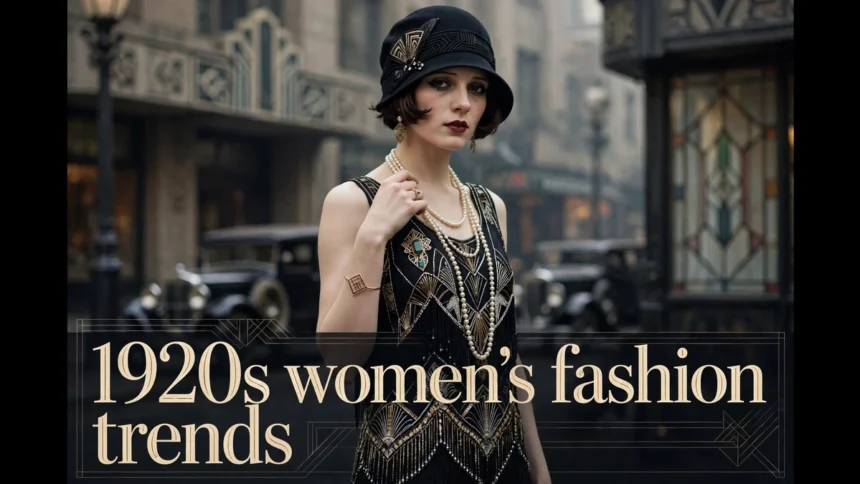
No decade in fashion is as instantly recognisable as the 1920s, and no decade is as often simplified. The popular image — fringe, feathers and jazz parties — captures part of the truth, but 1920s women’s fashion trends were broader and more practical than the party image suggests: a straight, looser silhouette, shorter hair, lower waistlines, and clothes made for movement, work and dancing alike. The changes came from a real social shift, as women who had worked through the First World War and, in the United States, won the vote in 1920, dressed for lives that no longer fit Victorian rules.
What changed, and why
The Victorian and Edwardian silhouette had emphasised curves, structure and length: corsets, bustles, long skirts and elaborate hair. The 1920s silhouette went the other way — straight, slender and boyish by the standards of the time, with a low waistline that made the torso look longer. Corsets were largely discarded in favour of looser chemises and early brassieres, and hemlines rose: from ankle length at the start of the decade to just below the knee at the mid-decade peak, then lengthening again towards the ankles as the decade closed. Even at their shortest, fashionable hemlines stayed below the knee for most women; bare knees belonged to dancers and performers, not to everyday dress.
The point was freedom of movement. Women danced, drove cars, played sports and worked in jobs that a long, structured skirt made harder, and the new clothes matched those lives. Fashion followed the body in motion, not the body on display.
The flapper
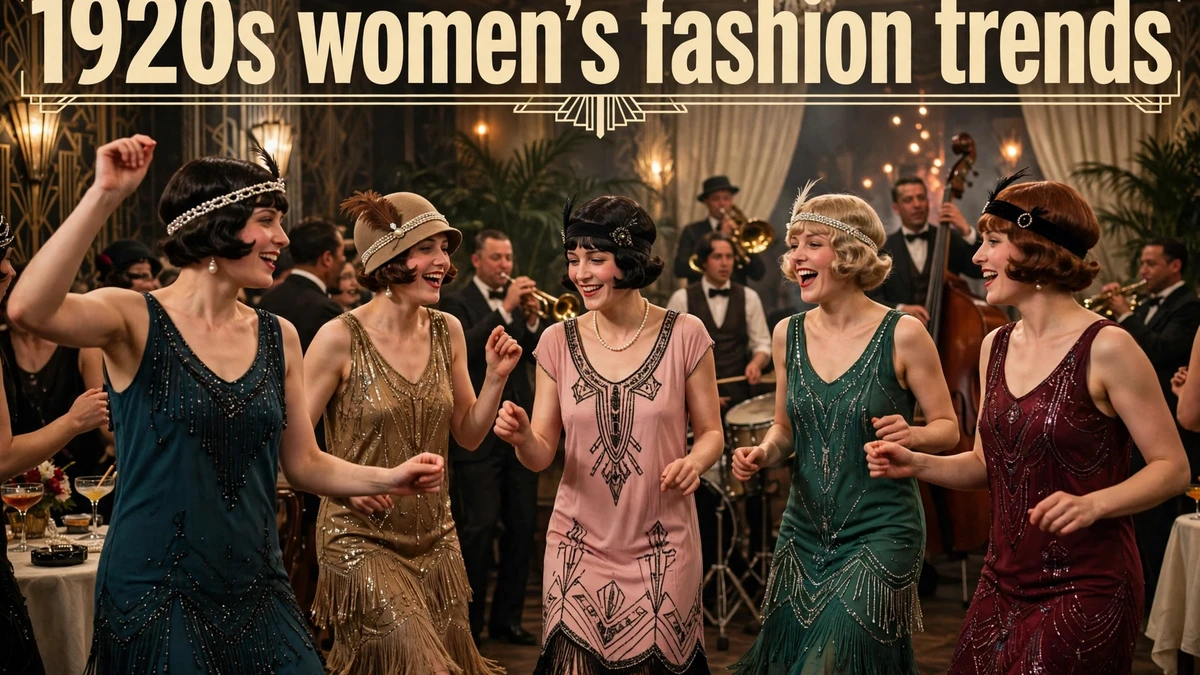
The flapper is the look most people picture, and it was deliberately attention-grabbing: a short, straight, tube-like dress, often beaded or decorated with geometric Art Deco patterns, worn with long pearl necklaces, headbands or bandeaus, and short, strappy shoes. The dress was designed to move and catch the light while dancing to jazz, which is why beading, sequins and spangles mattered more than the fringe people now associate with it. Fringe did appear, but usually on the edge of a shawl or a dress hem, not covering a whole garment — a detail the costume version of the decade often gets wrong.
The flapper was a youthful, rebellious figure, but she was not the whole decade. Most women adapted the new silhouette in quieter forms: a straight day dress, a simple coat, a practical hat.
The garçonne and the little black dress
The garçonne look pushed the same liberation further towards menswear: blouses, oversized jackets and straight-legged trousers, worn with a bob haircut and a confident, boyish air. Coco Chanel, who emerged as a leading designer of the decade and often wore suits of her own design, championed this look. She also designed the little black dress in the 1920s: a simple, versatile black dress intended to be stylish for women of all shapes and suitable for many occasions, and it has remained a wardrobe staple ever since.
The broader lesson of both looks is one that still applies to getting dressed today: a simple, well-cut piece you can wear many ways beats a complicated one you can wear once. Dressing for a working day has always balanced polish with practicality, as with take your dog to work day, where what you wear has to survive a real day, not just a photograph.
Hair, hats and accessories
Hair got shorter along with hemlines. The bob — chin-length or shorter, sometimes waved with finger waves or Marcel waves — became the defining haircut of the decade, and it needed a new kind of hat: the cloche, a close-fitting bell-shaped hat worn low over the forehead, perfect for a woman driving a car or walking city streets. Headbands and bandeaus, often decorated with jewels, feathers or flowers, completed the evening look.
Jewellery followed Art Deco: bold geometric shapes, long pearl necklaces, brooches and bracelets, often in strong, graphic combinations rather than delicate Victorian clusters. Shoes became more visible as skirts shortened: strappy, short-heeled shoes for evening, and two-tone brogues and Oxfords for day. Gloves stayed thin and white for dress occasions, and handbags grew more practical as women carried money themselves rather than relying on billfolds alone.
Daywear, evening wear and swimwear
Daywear in the 1920s was simpler than the party image suggests: straight dresses or skirt suits in wool or rayon, coats cut just below the knee, often with fur collars in winter, and practical hats for every outing. Evening wear was where the decoration lived: beaded dresses, silk, velvet and lace, with longer necklaces and more dramatic accessories. The same woman might wear a plain, straight frock by day and a beaded dress by night, and the contrast was part of the decade’s pleasure.
Swimwear changed too, becoming shorter and more practical as swimming grew popular as a leisure activity, though it remained far more modest than modern swimwear. The shift from heavy, concealing bathing costumes towards lighter, more mobile suits mirrors the decade’s wider move towards clothes you could actually move in — a change anyone who has watched a dog take to the water will appreciate, as in Gus swims.
Designers and influences
Three French designers reshaped the decade: Coco Chanel with her clean lines and the little black dress, Jeanne Lanvin with elegant, often embellished dresses and a millinery atelier for the decade’s hats, and Jean Patou with sporty, modern designs. Behind them lay wider cultural forces: the Harlem Renaissance and jazz, which gave the decade its music and its dancing; Art Deco, which gave it its geometry; and the “new woman” herself, a figure who expected to work, vote, drive and dance, and dressed accordingly.
Dressing up remained a pleasure throughout, not just a statement. A fun accessory chosen for a party — a tie, a hat, a piece of jewellery — has always been a way of marking an occasion, much like a dog dressed for a celebration, as in stay classy gus.
Why the 1920s keep coming back
The 1920s return in fashion every few decades because the silhouette is so adaptable: a straight dress, a bob, a cloche and a strand of pearls read instantly, whether in a costume drama, a wedding theme or a modern collection borrowing Art Deco geometry. The late 1950s and early 1960s revived the decade, the “Swinging Sixties” echoing the “Roaring Twenties,” and designers have returned to it since. What survives is not just the party dress but the underlying idea: clothes cut for movement, a waistline that does not pinch, and a look that a woman could wear to work, to dance or to dinner without changing her whole identity. For the wider history, see 1920s in fashion and the story of the flapper herself.
The bottom line
1920s women’s fashion was a break with the past in silhouette, hair and attitude: drop-waist dresses, bobs and cloches, beaded evening wear, Art Deco jewellery, and Chanel’s little black dress. The flapper was its most famous figure, but the decade’s real legacy is broader — simpler, straighter clothes for women living fuller, freer lives — and that is why its look still feels modern a century later.