
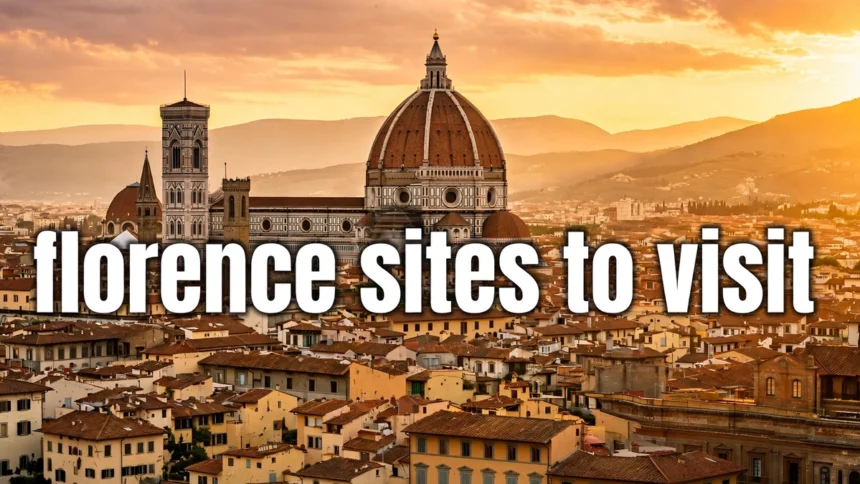
Florence is difficult for a first-time visitor for one reason: almost everything sounds essential. The Uffizi. David. The Duomo. Palazzo Pitti. Boboli Gardens. Santa Croce. The Bargello. The good news is that the historic centre is compact — about ten square kilometres — and most major sights sit within a twenty-minute walk of each other. So if you are choosing florence sites to visit for a first trip, start with the six below, then add the rest only if you have days to spare.
1. The Duomo and Piazza del Duomo
The Cathedral of Santa Maria del Fiore — the Duomo — is Florence’s anchor, and its dome by Filippo Brunelleschi, built between 1420 and 1436, remains the largest masonry dome in the world. The cathedral itself is free to enter, but it closes to visitors on Sundays and religious holidays, so plan around that. The dome climb is a separate, timed ticket: 463 steps between the dome’s inner and outer shells to the lantern at the top, with a view straight down into the cathedral on the way.
The same piazza holds Giotto’s Bell Tower (414 steps, and arguably the better view of the dome itself), the Baptistery of San Giovanni with its famous bronze doors, and the Opera del Duomo Museum. Together they form one complex, and the combined Brunelleschi Pass covers the dome, bell tower, Baptistery, museum, and crypt over three calendar days — worth it if you plan to climb both towers.
2. The Uffizi Gallery
The Uffizi is Florence’s great treasury of Renaissance painting: Botticelli’s Birth of Venus and Primavera, Leonardo’s early works, Michelangelo’s Doni Tondo, and Caravaggio’s Medusa, among others. It is also the city’s most crowded museum, so go at opening time or late in the afternoon, and book ahead — the queue without a booking can eat half a day.
A practical tip: the Uffizi rewards a route, not a wander. Pick the rooms you care about (Botticelli and Leonardo first for most visitors), see them while you are fresh, and then enjoy the rest at leisure. The rooftop café, with its view over the Palazzo Vecchio, is a good midpoint break.
3. Michelangelo’s David at the Accademia
The Accademia Gallery exists, for most visitors, for one statue: Michelangelo’s David, carved from a single block of marble when the artist was in his twenties. The museum is open Tuesday to Sunday, and the first slot of the morning is the calmest — booking ahead saves a long wait, and the rooms beyond David (including the unfinished Prisoners, figures half-emerged from marble) are worth the extra half hour.
Visitors aged 18 to 25 from the EU pay a reduced rate at state museums like the Accademia, so bring ID; under-18s go free at many sites. Check current prices before you go, since they change.
4. Piazza della Signoria and Palazzo Vecchio
Florence’s civic heart is an open-air sculpture gallery: the Piazza della Signoria holds a copy of David in its original outdoor position, Cellini’s Perseus, and the Loggia dei Lanzi’s statues, all free to view at any hour. Behind it stands the Palazzo Vecchio, the town hall whose tower has defined Florence’s skyline since the 1300s, with frescoed chambers inside and a tower climb for those who want another view.
This is the best place in Florence to simply stand and absorb the city — no ticket, no queue, and the full weight of Florentine history in one square.
5. Ponte Vecchio and the Arno
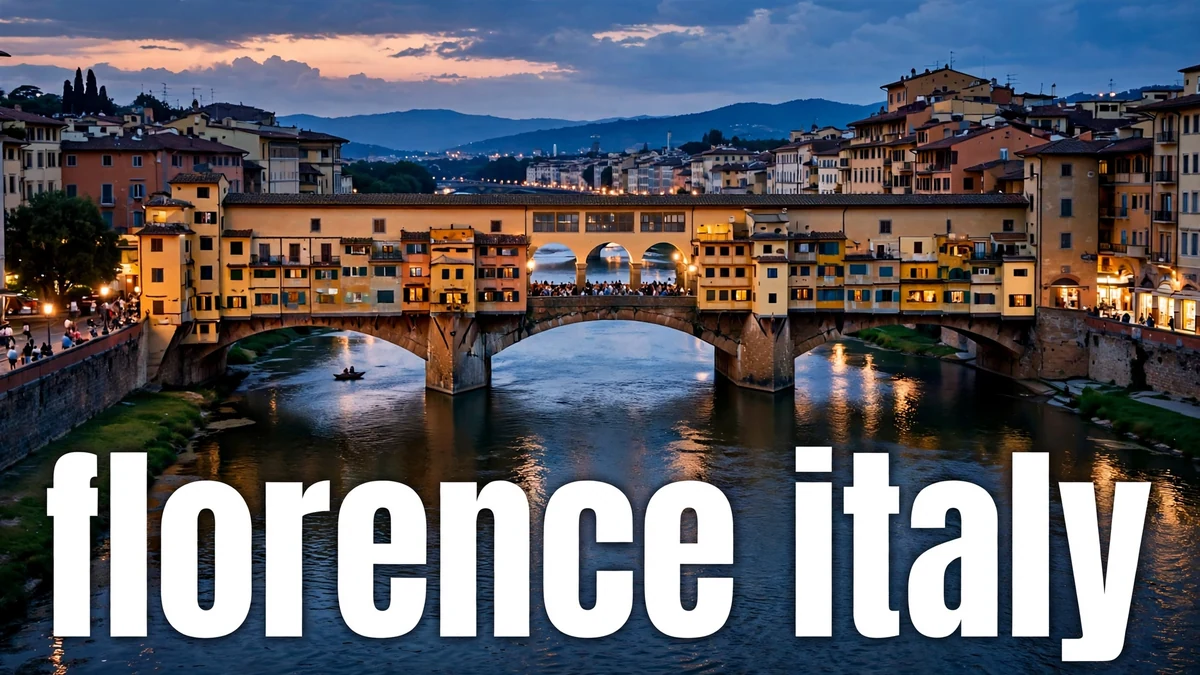
The Ponte Vecchio, the medieval bridge lined with goldsmiths’ and jewellers’ shops, is the most photographed spot in Florence — and the most crowded at midday. Go early in the morning for the bridge nearly empty, or at dusk for the lights on the river. The best view of it is not from the bridge itself but from the next bridge downstream, the Ponte Santa Trinita, or from the riverbank walk along the Lungarno.
Crossing the Ponte Vecchio also takes you into the Oltrarno, the artisans’ quarter across the river, where small workshops still operate and the pace drops noticeably from the centre’s crowds.
6. Piazzale Michelangelo and San Miniato al Monte
For the view that defines Florence, walk up to the Piazzale Michelangelo — from San Niccolò, or by bus — and look back over the whole city turning gold at sunset. A short walk further up brings you to San Miniato al Monte, a Romanesque church that is quieter, older in feel, and often more moving than the crowded centre below. The two together make the perfect end to a first trip: the panorama first, then the peace.
If you have a third day
With three days, add in this order: Palazzo Pitti and the Boboli Gardens across the river (the Medici family’s grand residence and its hillside gardens — allow half a day, not an hour); Santa Croce, the burial church of Michelangelo, Galileo, and Machiavelli; and the Bargello, Donatello and Michelangelo sculpture in a medieval courtyard, rarely crowded. Beyond that, Santa Maria Novella (Masaccio’s Trinity and the old pharmacy next door), the Museo Galileo, and San Marco’s frescoed friars’ cells reward the curious without demanding a full day each.
Planning notes: tickets, days off, and seasons
Nearly everything worth seeing in Florence has its own ticket, its own day off, and — for the busiest sites — its own booking slot. The big state museums close on Mondays; the cathedral closes to visitors on Sundays; dome climbs run on fixed time slots you cannot change. April, May, September, and October are the easiest months: warm enough to walk all day, with long opening hours. July and August are hot and crowded. November to February is quieter and cheaper, but days are short and some gardens close early.
Three days covers the centre comfortably: day one around the Duomo (dome in the morning, Baptistery and bell tower, Accademia after lunch, Ponte Vecchio at dusk); day two for art and power (Uffizi in the morning, Piazza della Signoria and Palazzo Vecchio after it, Santa Croce in the afternoon); day three across the river (Pitti and Boboli in the morning, Piazzale Michelangelo and San Miniato for sunset). And like any good trip, the planning is part of the pleasure — the same spirit as choosing best places to visit in panama for a first trip there, or remembering a walk like our trip to San Francisco, where the city’s shape mattered as much as any single sight. City centres also reward comparison: how a compact historic core works versus a spread-out modern city is part of what town vs city explores.
The bottom line
On a first trip to Florence, visit the Duomo complex, the Uffizi, David at the Accademia, Piazza della Signoria, the Ponte Vecchio, and Piazzale Michelangelo with San Miniato — in roughly that order, over two to three days, with bookings made ahead and Mondays and Sundays planned around. Everything else is a bonus, and Florence has bonuses to spare.