
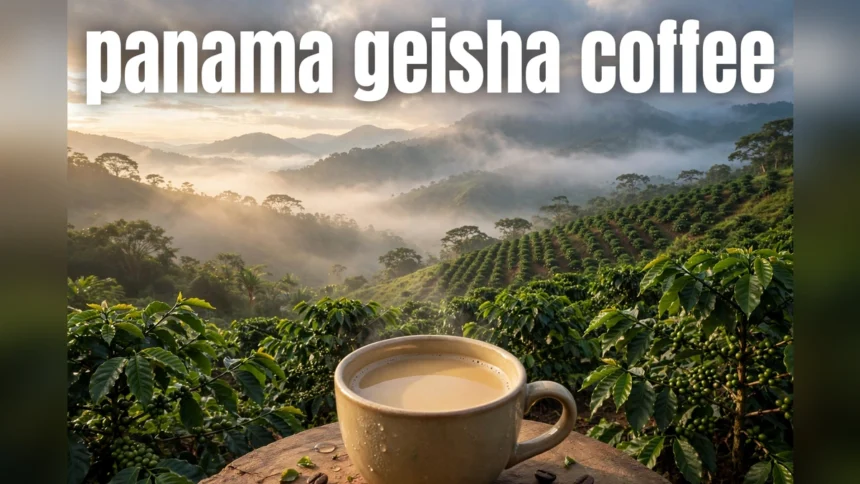
Few coffees inspire the kind of devotion — and the kind of prices — that Panama Geisha coffee does. It is an Arabica variety that tastes more like fine tea than like a morning brew: floral, bright, and delicate, with jasmine and bergamot aromas and notes of peach and citrus. It is also one of the most expensive coffees on earth, with top lots selling at auction for thousands of dollars per pound. Here is what makes it different, where it came from, and how to try it without wasting money.
What Geisha coffee actually is
Geisha — also spelled Gesha — is a variety of Coffea arabica, the species behind most specialty coffee. It is not a brand, a roast style, or a flavored coffee. The name comes from the Gesha area of southwestern Ethiopia, where the original plants were collected in the 1930s. Early germplasm records used the spelling “Geisha,” and that spelling stuck in Panama, which is why both spellings appear today. When a bag says “Panama Geisha,” it means this variety, grown in Panama.
The variety is a tall plant with relatively brittle branches, and it yields less than many commercial varieties. That low yield is part of the story of its price — but it is not the whole story. The other part is what is in the cup.
From Ethiopia to Panama
Geisha’s journey took decades. Plants collected in Ethiopia in the 1930s passed through research stations in Africa and Central America, arriving in Costa Rica in 1953 and reaching Panama in the 1960s, where it was planted partly for its tolerance to coffee leaf rust. For years, farmers found it unremarkable to grow: the plants were not especially productive, and nobody yet knew what the cup could be.
That changed in 2004. At Panama’s Best of Panama competition, a lot from Hacienda La Esmeralda in Boquete — from plants the Peterson family had separated out on their farm — scored unprecedented marks and broke auction price records. The cup was unlike anything judges had tasted: intense jasmine florals, bergamot complexity, and a tea-like elegance. Within a few years, Geisha plantings spread across Panama’s highlands and then to Colombia, Costa Rica, Guatemala, and back to Ethiopia itself, where Gesha Village and other producers now grow it.
Boquete, in Panama’s Chiriquí highlands, remains the variety’s spiritual home. Its best lots grow at very high altitude — roughly 1,550 to over 2,000 meters — in rich volcanic soil, in a humid, misty microclimate. That combination of altitude and climate is widely credited with producing the variety’s vivid aromatics.
What it tastes like
A good Panama Geisha does not taste like most people’s idea of coffee. Expect a light, silky body, bright and juicy acidity, and a strong floral aroma. Common tasting notes include:
- Floral: jasmine, bergamot, rose, and orange flower
- Fruit: peach, mandarin, mango, and tropical fruit
- Sweet: honey, and sometimes a black-tea-like sweetness
- Texture: light and tea-like, rather than heavy or syrupy
Top lots regularly score above 90 points on the 100-point specialty scale, where 80 marks the threshold for specialty coffee. Processing changes the cup: washed Geishas tend to be the most floral and tea-like, with bright clarity, while natural and newer anaerobic-processed lots are fruitier and heavier. If you try two Geishas and they taste quite different, processing is often why.
Why it costs so much
Four factors stack up:
Low yield and difficult growing. Geisha plants produce less than commercial varieties, and the best quality comes only from high-altitude farms where picking and processing are done by hand. More labor per kilo means higher costs before any auction bidding starts.
Tiny, separate lots. The best Geishas are not bulk coffee. Farms separate small microlots from specific plots, process them carefully, and enter them in competitions. There simply is not much of the very best coffee to sell.
Auction competition. Buyers from around the world — especially in Asia and the Middle East — bid against each other for lots of a few kilos. Part of the price is rarity and prestige, not just flavor. In 2025, a washed Geisha lot from Hacienda La Esmeralda was reported to sell for a record $30,204 per kilogram at the Best of Panama auction — a reminder that auction records reflect bidding for a single lot, not the price of everyday Geisha.
Everyday Geisha is cheaper than the headlines. Most Geisha sold by roasters is not a record auction lot. A bag from a good farm, or a Geisha blend, costs far more than everyday coffee but far less than auction prices. The record figures describe the top of the market, not what you will pay for a bag.
How to brew it
Geisha rewards gentle brewing. To taste what makes it special:
- Buy light roast. A dark roast would bury the floral notes that justify the price.
- Brew it black. Milk and sugar hide exactly the delicacy you paid for.
- Use a pour-over. A V60 or similar dripper gives a clean, clear cup that shows off aroma and acidity.
- Grind fresh and measure carefully. Freshly ground beans and a consistent coffee-to-water ratio matter more with a delicate coffee than with a bold one — the measuring guide in how much ground coffee per cup is a good starting point.
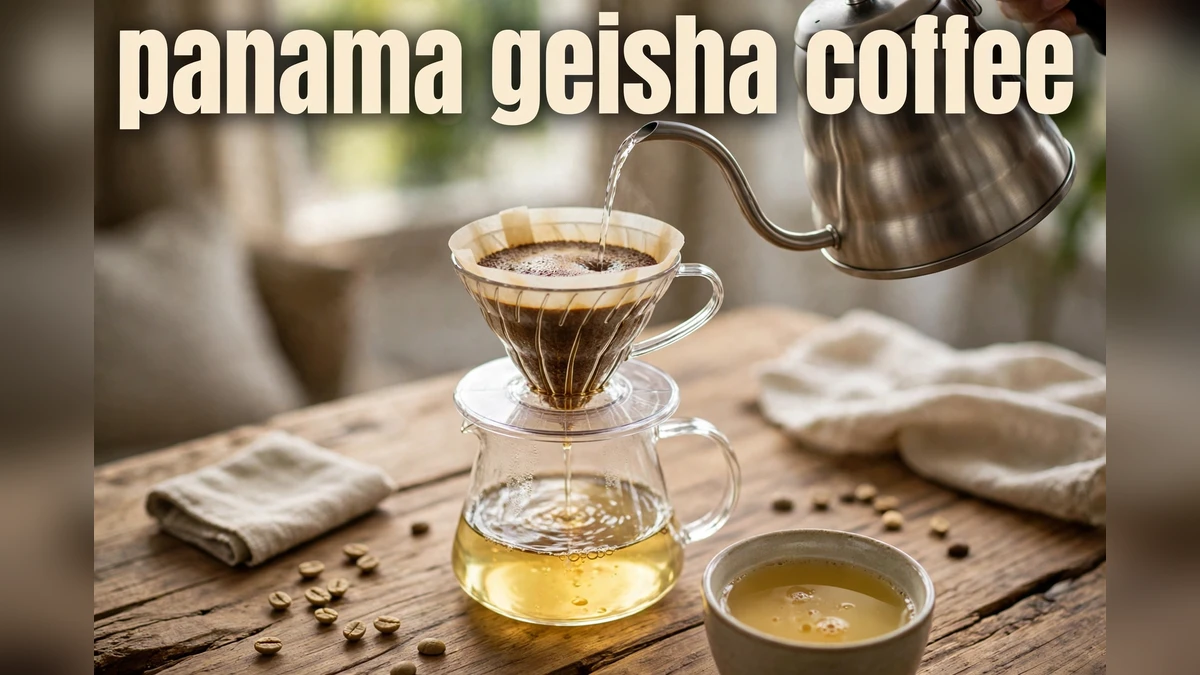
Serve it in a small cup, let it cool for a minute, and smell it before you sip. The aroma — jasmine, bergamot, citrus — is a large part of the experience, and it fades as the cup cools too far.
Is it worth it?
That depends on what you value. If you love bright, floral, tea-like coffees and you enjoy tasting a variety with a real story, a bag of Panama Geisha is a memorable treat — especially shared, so the cost per cup stays reasonable. If you take coffee with milk, prefer bold and chocolatey cups, or mostly drink coffee for caffeine, Geisha’s delicacy will be lost on you, and your money is better spent on a coffee you actually enjoy.
A few buying tips help avoid disappointment. First, check the label: single-farm or single-lot Geisha costs more than a blend, and the label should say which it is. Second, buy a small bag and check the roast date — delicate aromatics fade with age, and the signs of beans past their best are covered in do coffee beans go bad. Third, be skeptical of very cheap “Geisha”: the variety is sometimes blended in small proportions, and a low price usually means a low proportion.
It is also worth remembering that Geisha is a plant, not a miracle. Growing coffee at home is a different, slower pleasure — starting a plant from seed and waiting years for cherries, as described in how to grow coffee beans — and no home plant will taste like a Boquete microlot. Geisha’s magic is in the combination of variety, altitude, farming, and processing, not in any single secret.
The bottom line
Panama Geisha coffee is an Ethiopian variety made famous in Panama: floral, tea-like, and grown at high altitude in tiny, labor-intensive lots. Its record auction prices reflect rarity and bidding as much as flavor, but the flavor itself is real — jasmine and bergamot, peach and citrus, in a cup lighter than most coffee drinkers expect. Try it light-roasted, black, and poured over, and you will understand why a quiet Panamanian farm lot changed what the coffee world thought a cup could taste like.