
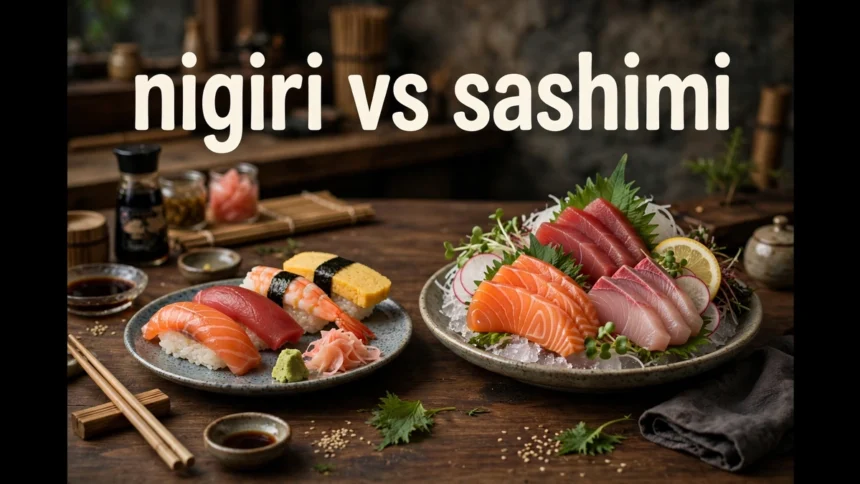
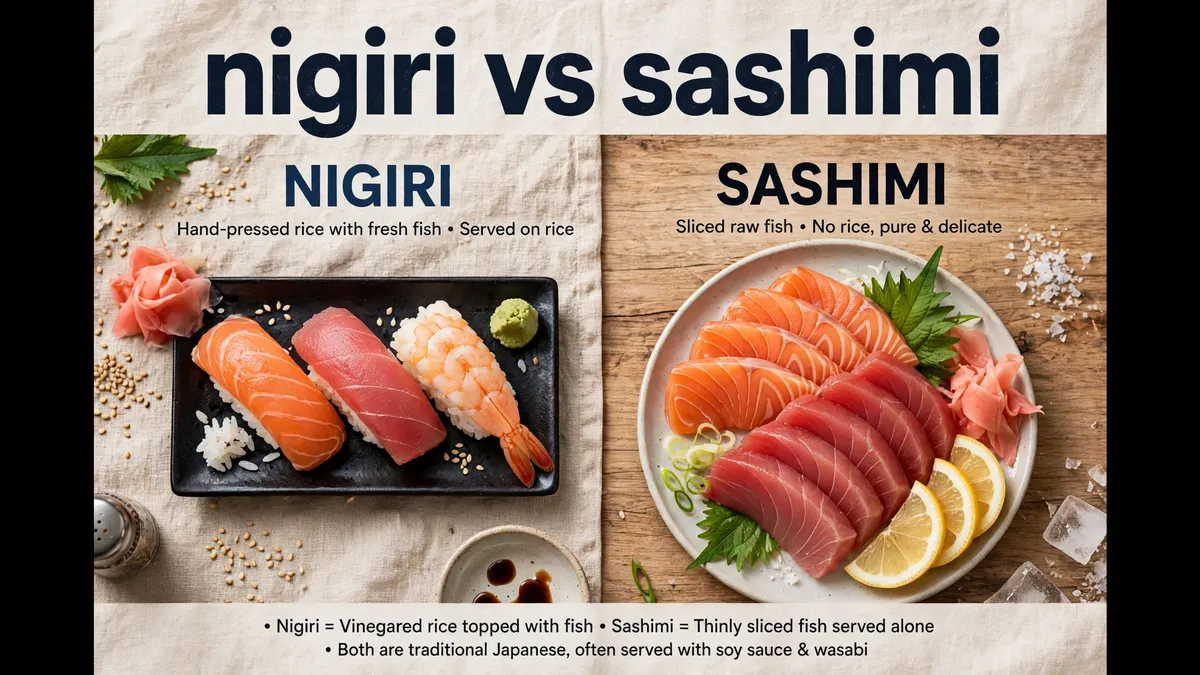
If you have ever stared at a sushi menu and wondered whether to order nigiri or sashimi, you are not alone. Both often feature beautiful slices of raw fish, but they are different dishes. The short version of nigiri vs sashimi is this: nigiri is a small mound of vinegared rice topped with fish or seafood, while sashimi is thinly sliced raw fish or seafood served on its own, with no rice at all.
That one difference — rice or no rice — changes the flavour, the texture, and how full you will feel afterwards.
At a glance
| Nigiri | Sashimi | |
|---|---|---|
| Rice | Yes — a small hand-pressed mound of vinegared rice | None at all |
| Main part | One slice of fish, seafood, or egg over the rice | Slices of raw fish or seafood, served alone |
| Served with | Wasabi, pickled ginger, soy sauce | Soy sauce, wasabi, ginger, often radish and shiso |
| Flavour | Rice, topping, and wasabi work together in one bite | The fish itself carries the whole dish |
| How filling | More filling, because of the rice | Lighter per piece |
| Best for | A first visit, or classic bite-sized sushi | Fish lovers, and anyone skipping rice |
What is nigiri?
Nigiri (more fully, nigirizushi) is sushi in its most classic form: a small oblong mound of vinegared rice, shaped by hand, topped with a slice of raw or cooked seafood or sweet rolled omelette, often with a dab of wasabi between rice and topping. Nigiri is a type of sushi, and it is the piece most people picture when they think of a sushi bar.
The rice is not an afterthought. Good nigiri rice is lightly seasoned and pressed just firmly enough to hold together until you pick it up. Getting the base right matters as much as the topping — the same lesson behind making frozen pupsicles for Gus, where the frozen base is what holds the whole treat together.
Nigiri is usually eaten in one bite. If you dip it in soy sauce, dip the fish side only and briefly — soaking the rice will make it fall apart and over-salt the bite.
What is sashimi?
Sashimi is not sushi at all, in the strict sense, because it contains no vinegared rice. It is simply very fresh raw fish or seafood, sliced with care and served on its own. The quality of the fish, and the skill of the cut, are the whole dish. You can read more about its background on the sashimi page, which traces it as a traditional Japanese way of serving raw seafood.
Because there is no rice to soften or balance it, sashimi puts the fish under a spotlight. A good slice is clean, smooth, and slightly cool, and a skilled chef chooses the cut that suits each fish’s firmness and fat content. A sashimi set is often shared, or ordered alongside rice, soup, or other dishes, because the fish is so rich in flavour.
Common fish for each
Many of the same fish appear in both dishes, but the experience differs because of the rice. Salmon is buttery and forgiving, often the easiest first choice in either form; as nigiri, the rice rounds out its richness, while as sashimi its soft texture is the star. Tuna ranges from clean, lean cuts to richer, fattier ones — a difference especially obvious as sashimi. Yellowtail is mild, slightly sweet, and a little firmer than salmon, a good middle ground if you are unsure what to try next. Cooked shrimp nigiri is a gentle entry point for anyone nervous about raw fish, and tamago (sweet egg omelette) is served as nigiri only — chefs often say you can judge a sushi bar by its tamago.
How to eat each one
Nigiri and sashimi share the same accompaniments but use them slightly differently:
- Soy sauce. Dip sashimi lightly and freely; dip nigiri by the fish side only, and only briefly.
- Wasabi. In nigiri, wasabi is usually already under the topping, so extra is optional. With sashimi, mix a little into the soy sauce, to taste.
- Pickled ginger. Eat a piece between different fish to reset your palate, not on top of the sushi.
- Chopsticks or fingers. Either is fine for nigiri — eating it by hand is traditional. Sashimi is normally eaten with chopsticks.
Eat slowly. The differences between fish are subtle at first and become clearer with each piece, which is why a mixed set beats a large portion of a single fish for a first order.
Calories and how full you will feel
Neither dish comes with a fixed calorie count — it depends on the fish, the portion, and what else you order — but the general pattern is simple. Sashimi, with no rice, is lighter per piece and lower in carbohydrates, since it is essentially fish alone. Nigiri adds a small mound of rice to each piece, so it is more filling, which makes it a better choice if sushi is your whole meal.
If you want a light lunch, sashimi may suit you. If you want a satisfying meal from sushi alone, nigiri — or nigiri plus a roll — will keep you fuller for longer. Neither is inherently “healthier” than the other; it depends on the fish, the portion, and the rest of your meal.
How to order with confidence
A first visit is much easier if you decide on a simple plan before you sit down:
- Start with a mixed set. A chef’s selection or a small mixed nigiri set lets you taste several fish without committing to a large portion of one.
- Add one sashimi to compare. Order a small sashimi portion of a fish you already like as nigiri — salmon is ideal — and taste the two side by side.
- Ask one question. “What is freshest today?” invites the chef to steer you toward what is at its best.
- Pace yourself. Order a modest amount first. You can always add more, and sushi is best eaten fresh and unhurried.
Trying an unfamiliar menu can feel like arriving in a new city without a map, but a little advance reading turns a confusing first visit into an enjoyable one — much as planning our trip to San Francisco made the unfamiliar parts of that journey fun rather than stressful.
Freshness and safety
Because both dishes feature raw fish, freshness is everything. Choose a reputable restaurant that specialises in sushi, serves it regularly, and stores its fish properly cold. Fresh fish should look glossy and firm, not dull or dry, and smell clean and sea-like rather than strongly fishy. If anything looks or smells off, do not eat it.
Freezing is also part of the safety picture: fish intended to be eaten raw is commonly frozen first to control parasites, and reputable suppliers and restaurants follow established handling practices for this. People who are pregnant, have weakened immunity, or have been advised by a clinician to avoid raw seafood should follow that advice and choose cooked options instead.
Judging freshness takes the same kind of attention you use outdoors: before Gus swims, for example, you check the water first rather than jumping straight in. With sushi, that check is simpler — look, smell, and trust a restaurant that takes its fish seriously.
Which should you choose?
Choose nigiri if you want the classic sushi experience in a single bite, if sushi is your whole meal, or if you are new and want the rice to balance the fish. Choose sashimi if you love the taste of fish itself, want a lighter meal, or are skipping rice. If you cannot decide, order both: a few pieces of nigiri and a small sashimi portion of the same fish is the tastiest way to learn the difference first-hand.
Nigiri is a small, complete composition of rice and topping. Sashimi is the fish alone, with nothing to hide behind.