

So what does the colour grey symbolise? The short answer is neutrality, balance, and compromise — grey sits exactly between black and white, and everything it means grows out of that in-between position. But grey is also the most two-faced of colors: the same shade that reads as calm sophistication in a tailored suit reads as flat and lifeless on a hospital wall. To understand grey, you have to hold both readings at once.
The short answer: the middle ground
Grey symbolises balance, neutrality, and compromise above all. It is the diplomatic color, negotiating all the distance between black and white, and that is why we read it as moderate, reasonable, and impartial. It is the color of the middle ground in argument as well as on the spectrum: the “grey area” is, by definition, a place without a clear answer, where things are neither one thing nor the other.
That neutrality is also why grey reads as calm. It does not overstimulate the way bright colors do, and it evokes a sense of cool tranquillity — a room painted grey recedes rather than demands attention. In professional and formal settings, that restraint reads as reliability and seriousness, which is why grey suits, grey offices, and grey branding are everywhere.
The positive side: calm, dignity, wisdom, stability
At its best, grey carries a quiet dignity. Grey hair is associated with ageing gracefully into wisdom, and grey has long been tied to maturity, experience, and restraint — the sort of wisdom that comes with time rather than noise. The color expert Leatrice Eiseman put it memorably: the greys represent solid strength and longevity, an association stemming from granite and gravel, stone, slate, and rock — ancient monuments, pillars, and temples that have withstood the ravages of time.
Grey also means stability. It projects solidity precisely because it is such a neutral baseline, and in design it is the color that lets other colors speak. A grey suit, a grey stone wall, a grey winter sky over the sea: none of them shouts, and that is the point.
The darker side: detachment, dullness, gloom
Grey’s shadow side is the mirror of its calm. Because it has so little emotional charge of its own, it can read as distant, disconnected, or emotionally muted — and research on color and emotion consistently ranks grey among the lowest colors for both pleasure and arousal. Overused, grey can feel like an absence of color altogether: a world without color is depressing, and a room full of nothing but grey can create exactly that feeling.
Grey also carries moral ambiguity. It is the color of morally questionable matters as much as of impartiality — the “grey area” cuts both ways, covering both fair compromise and convenient evasion. Grey skies precede storms, grey skin tone signals illness, and grey light means overcast days: the color’s associations with gloom are as old as its associations with wisdom.
Grey in culture and language
Grey has made its way deep into language. The phrases “grey area” and “in the grey” describe ambiguity itself. “Grey matter” is the brain’s darker tissue, and Agatha Christie’s Hercule Poirot popularised the phrase “little grey cells” for the detective’s powers of deduction — grey as intellect. In pagan belief, “grey magic” is a neutral form of spiritual power lying between white magic and black magic, neither to do good nor to cause harm.
In fiction, grey marks the wise guide who refuses simple sides: Gandalf the Grey, in Tolkien’s The Lord of the Rings, carries wisdom and good magic in a grey cloak, not a white or black one. After both World Wars, grey became a popular color in men’s fashion, particularly in suits, symbolising post-war conformity — and in modern tech branding, grey is the color of sleek, understated competence.
Across cultures the reading shifts slightly. In Western cultures, grey is professionalism, formality, and maturity. In Taoist thought, it reflects the space between opposites, where truth often exists beyond rigid black-and-white thinking. In Buddhism, it can symbolise simplicity and mindful reflection. In Christian tradition, it is sometimes associated with modesty, human limitation, and quiet contemplation.
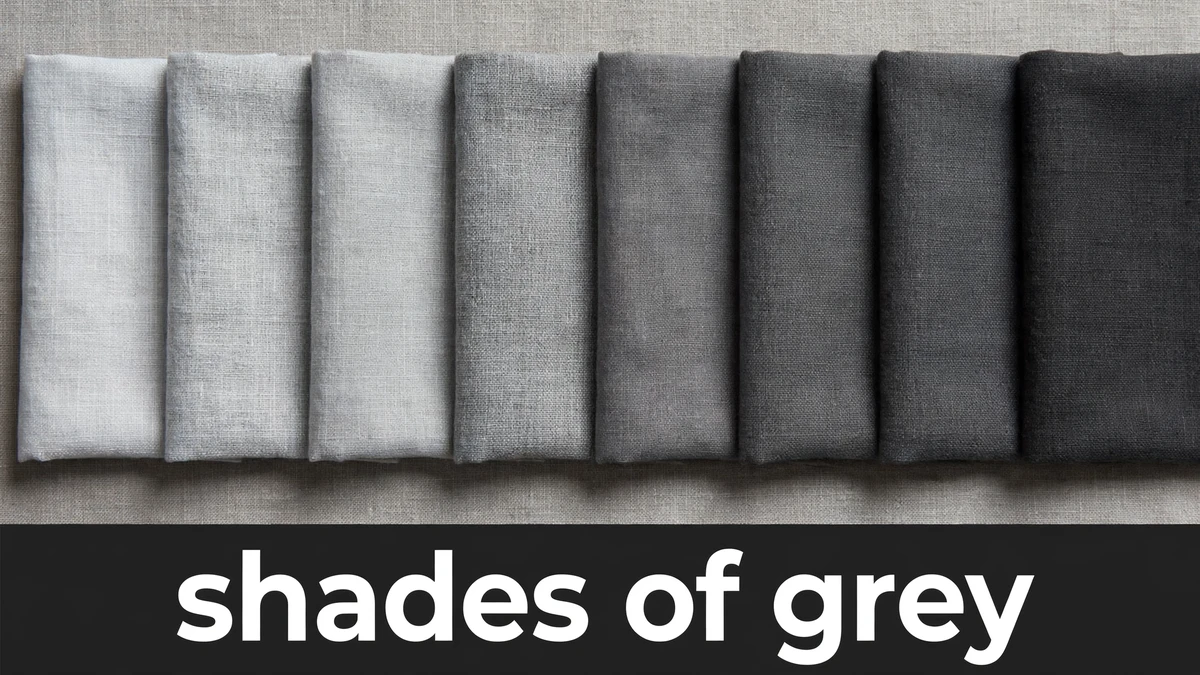
Using grey well
Grey’s meanings flip with context, so use it deliberately. In a home, grey works best as a base with warmer accents — wood, plants, a single strong color — rather than alone, where it can flatten a room. In clothing, charcoal grey reads as authority without the severity of black, while pale grey reads as soft and approachable. And in writing or design, grey is the color of the footnote, the aside, the thing that supports rather than leads — which is a useful role, as long as it is chosen rather than defaulted to.
The same care with context applies to symbols generally, and this site has explored that idea before: one bird can mean wisdom in one culture and a bad omen in another, as in what does the symbol of an owl represent, and one night can mean different things in different traditions, as in what does a blood moon represent — and grey belongs in the same family of meanings that change with their setting, as what does a blue jay symbolize shows for a single color worn by a single bird.
The bottom line
Grey symbolises neutrality, balance, and compromise — the middle ground between black and white — and with it calm, dignity, wisdom, and stability. Its shadow side is detachment, dullness, and gloom, and which reading wins depends entirely on context. Grey is not a color that tells you what to feel; it is a color that waits to see what surrounds it, and then agrees.