


Igari makeup is a Japanese beauty trend built around one idea: blush worn high, under the eyes and across the bridge of the nose, so the face looks softly flushed — as though you have just come in from the cold or woken from a good sleep. It is often called “hangover makeup” or “drunk blush”, but the look itself is gentle and fresh rather than messy: dewy skin, soft eyes and a blurred lip, with the blush doing almost all of the work.
What Is Igari Makeup?
Igari makeup is a Japanese blush style. Instead of sweeping blush onto the apples of the cheeks and blending it upward toward the temples, the colour is placed higher — directly under the lower lash line, across the upper cheeks, and lightly over the bridge of the nose, joining the two sides into one continuous flush. The result is a diffused, youthful glow that draws attention to the centre of the face rather than sculpting its angles.
The style is also known as drunk blush, because the flush imitates the rosy colour that rises to the cheeks after a drink — the “hangover” in the nickname is a joke about the colour, not the condition. The aim is not to look tired or unwell. It is to capture the brief, natural flush of someone who is flustered, warm, or just out of a hot bath, and to wear it on purpose.
The rest of the face stays deliberately quiet. The base is sheer, the eyes are soft and neutral, and the lips are tinted rather than lined — so nothing competes with the blush. Where Western makeup often uses contour to sharpen the cheekbones, igari does the opposite: it softens the face and makes it look rounder, younger and more approachable.
Where Did Igari Come From?
The look is named after Japanese makeup artist Shinobu Igari, who championed the high-blush placement and turned it into a signature style in Japan. The trend first emerged around 2018 and spread from Japanese beauty magazines and social media to a global audience, helped along by TikTok tutorials and the wider interest in J-beauty — Japanese beauty — that grew through the early 2020s.
Igari belongs to a family of Japanese styles that value softness over structure. Like mori kei, which imagines a quiet life in a forest cottage, igari makeup is gentle, understated and a little dreamy. It also shares the J-beauty preference for skin that still looks like skin: light coverage, visible texture, and colour that seems to come from within rather than sitting on top.
The Japanese word behind the “hangover” nickname is futsukayoi (二日酔い), which literally means a two-day intoxication — a hangover. The name stuck because the flush it describes sits exactly where igari blush sits: high on the cheeks and across the nose.
What Defines the Igari Look?
The look is consistent enough to recognise at a glance. These are its building blocks:
- High blush placement. Cream or liquid blush in soft pink, peach or a gentle red, dabbed just beneath the eyes, across the upper cheeks and over the nose bridge, then blended until the edges disappear.
- Sheer, dewy skin. A BB cream, CC cream or skin tint instead of heavy foundation, so the skin’s natural texture stays visible and the blush melts into it.
- Soft, minimal eyes. Neutral cream shadow or a light shimmer, a smudged brown pencil if any liner at all, and a light coat of mascara. Nothing sharp or heavily defined.
- Blurred, tinted lips. A lip tint, balm or soft gloss in a shade that matches the blush, dabbed on and blurred at the edges with a fingertip rather than drawn on precisely.
- Cream textures throughout. Cream and liquid formulas blend into dewy skin far better than powders, which can sit on top and look chalky against the soft finish.
- No contour, no heavy highlight. The face is not sculpted or sharpened. The blush is the structure.
Igari vs Douyin Makeup and Regular Blush
Igari is often confused with other blush-heavy looks, especially Douyin makeup — the Chinese beauty trend that also leans on pink blush. The two share a soft, youthful mood, but they are not the same look.
| Igari makeup | Douyin makeup | Regular blush | |
|---|---|---|---|
| Origin | Japan, named after Shinobu Igari | China, from the Douyin app | No single origin |
| Blush placement | High — under the eyes and across the nose | On the apples of the cheeks, often with glitter | Apples of the cheeks, blended upward |
| Eye makeup | Minimal and neutral | Defined — liner, lashes, sometimes drawn lower lashes | Any style |
| Lips | Blurred tint matching the blush | Gradient or glossy, often pink | Any style |
| Overall feel | Soft, flushed, slightly dazed | Polished, doll-like, sparkly | Depends on the rest of the makeup |
Douyin fashion and igari makeup both grew out of East Asian beauty trends that prize a youthful, flushed face, and the two are often worn together — igari blush placement with a Douyin-style eye, for example. But igari on its own is the simpler of the two: fewer products, softer edges, and no glitter or drawn-on detail.
How to Do Igari Makeup
You need very few products — a light base, one cream blush, a neutral eye shadow, mascara and a lip tint. The whole look takes about five to ten minutes.
- Prep the skin. Cleanse, moisturise lightly and apply sunscreen. Hydrated skin helps cream products blend smoothly instead of catching on dry patches.
- Apply a light base. Use a BB cream, CC cream or skin tint, blended with your fingers or a damp sponge. Keep the coverage sheer so your natural skin texture shows through. Tap a little concealer only where you need it — under the eyes or over redness — and keep it light.
- Place the blush high. Choose a cream blush in soft pink, peach or a gentle red. Dab it directly beneath your eyes, across the upper cheeks and lightly over the bridge of your nose. Start with less than you think you need — you can always add more.
- Blend until it melts. Use your fingertips or a damp sponge to tap and diffuse the edges until the colour fades into the skin with no hard line. The blush should look like a flush, not a stripe.
- Keep the eyes soft. Sweep a neutral cream shadow or a light shimmer over the lids. If you want definition, smudge a brown pencil along the upper lash line. Finish with one light coat of mascara.
- Blur the lips. Dab a lip tint or balm in the same shade family as your blush onto the centre of your lips and blur the edges with your fingertip. A little gloss on top keeps the finish dewy and ties the look together.
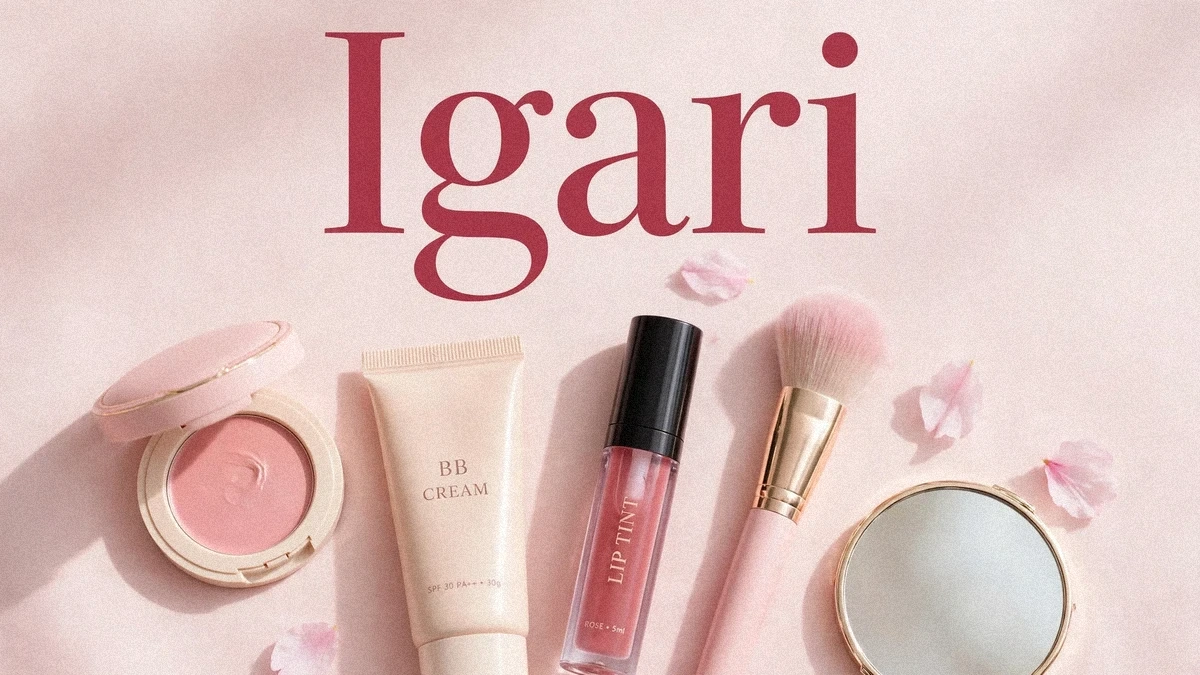
Common Mistakes to Avoid
Three mistakes ruin an igari look more than anything else:
- Too much blush at once. The most common error is loading on the colour in one go. Build it slowly in thin layers; a heavy first pass turns the soft flush into a painted stripe.
- Powder blush on dry skin. Powder formulas can look chalky and sit on the surface, which breaks the dewy finish the look depends on. Cream or liquid blush is the safer choice, especially for beginners.
- Heavy foundation or contour underneath. A full-coverage base and sculpted cheekbones fight the whole idea of igari. If the skin looks masked and the cheekbones look carved, the blush has nowhere soft to land.
A smaller mistake is placing the blush too low. If the colour sits on the apples of the cheeks, it reads as ordinary blush. The igari effect only appears when the colour sits high, just under the lower lash line, and crosses the nose.
Is Igari Makeup Still Popular?
Yes. The look first emerged around 2018 and has stayed in circulation ever since, carried by TikTok tutorials, J-beauty communities and the wider appetite for soft, minimal makeup. It suits the current mood in beauty — skin-first, low-effort, and a little undone — and it keeps resurfacing each time blush trends come around again.
Like other retro fashion styles, igari returns in waves rather than disappearing, and each revival keeps the same core — high blush, sheer skin, soft eyes — while updating the details. It also adapts easily: the technique works on every skin tone, since it is about placement rather than a particular shade, and deeper skin tones can use richer berry or warm terracotta blushes to the same effect. The only adjustment is the shade, never the placement.
Frequently Asked Questions
What is igari makeup?
Igari makeup is a Japanese beauty trend that creates a soft, flushed look by placing blush high under the eyes and across the bridge of the nose. It is also called “hangover makeup” or “drunk blush” because the flush imitates the rosy colour that appears on the cheeks after a drink.
Who created igari makeup?
It is named after Japanese makeup artist Shinobu Igari, who popularised the high-blush placement in Japan. The trend first emerged around 2018 and spread worldwide through social media and J-beauty communities.
What makes igari different from regular blush?
The placement. Regular blush sits on the apples of the cheeks and is blended upward toward the temples. Igari blush sits higher — directly under the eyes and across the nose — and is blended into one continuous flush, with sheer skin and minimal eye makeup around it.
Can you use powder blush for igari makeup?
You can, but cream or liquid blush works better. The look depends on a dewy finish and colour that melts into the skin, and powder can sit on top and look chalky. If you only have powder, apply it over a moisturised base and blend it well.
Does igari makeup suit all skin tones?
Yes. Igari is a technique, not a shade, so it works on every skin tone. Fair skin suits soft pink and peach; medium skin suits rose and coral; deeper skin suits berry and warm terracotta. The placement stays the same — only the blush shade changes.
Is igari makeup beginner-friendly?
Yes. It needs only a handful of products, takes about five to ten minutes, and is forgiving: the whole point is a soft, imperfect finish, so a slightly uneven blend still looks right.
Igari makeup is proof that one small change — moving the blush a little higher — can change the whole face. Keep the base sheer, the eyes soft and the lips blurred, let the colour sit where a real flush would, and the look takes care of itself.