
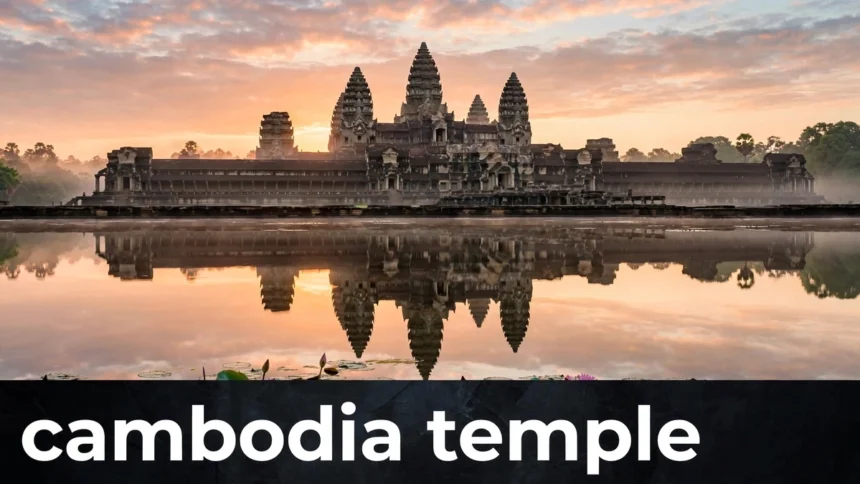
When people search for a Cambodia temple, they almost always mean Angkor Wat — and with good reason. It is the largest religious monument in the world, the symbol on Cambodia’s flag, and the centrepiece of a temple park so large it takes days, not hours, to see properly. But Angkor Wat is only the beginning: the same park holds a city of stone faces, a temple swallowed by jungle trees, and quieter ruins most visitors never reach. This guide picks what to see first and how to fit it into a short trip.
Why Angkor Wat matters
Angkor Wat was built in the early 12th century by King Suryavarman II, at the height of the Khmer Empire. It began as a Hindu temple dedicated to Vishnu and later became a Buddhist site, which is why it carries layers of both traditions today. The complex covers about 162.6 hectares, is surrounded by a wide moat, and was designed as a model of Mount Meru, the home of the gods in Hindu cosmology — its five lotus-shaped towers represent the mountain’s five peaks. It was inscribed, with the wider Angkor Archaeological Park, as a UNESCO World Heritage Site in 1992. The central tower rises 65 metres, and the upper level, the Bakan, is the most sacred part of the temple, with strict access rules.
That scale is the point, and the trap. Visitors who try to see everything in a single morning leave exhausted and having seen very little properly. Angkor rewards a slower pace: one great temple in the morning light, a long lunch out of the heat, and another in the late afternoon.
The temples to see first
Angkor Wat itself. Arrive for sunrise if you can stand the early start — the crowds gather at the northern reflection pond, so walk a little further along the water for a quieter view. Then go inside: the outer bas-relief galleries are the highlight, above all the east gallery’s Churning of the Ocean of Milk, a 49-metre panel showing gods and demons churning the cosmic ocean. Allow three to four hours for the main temple alone.
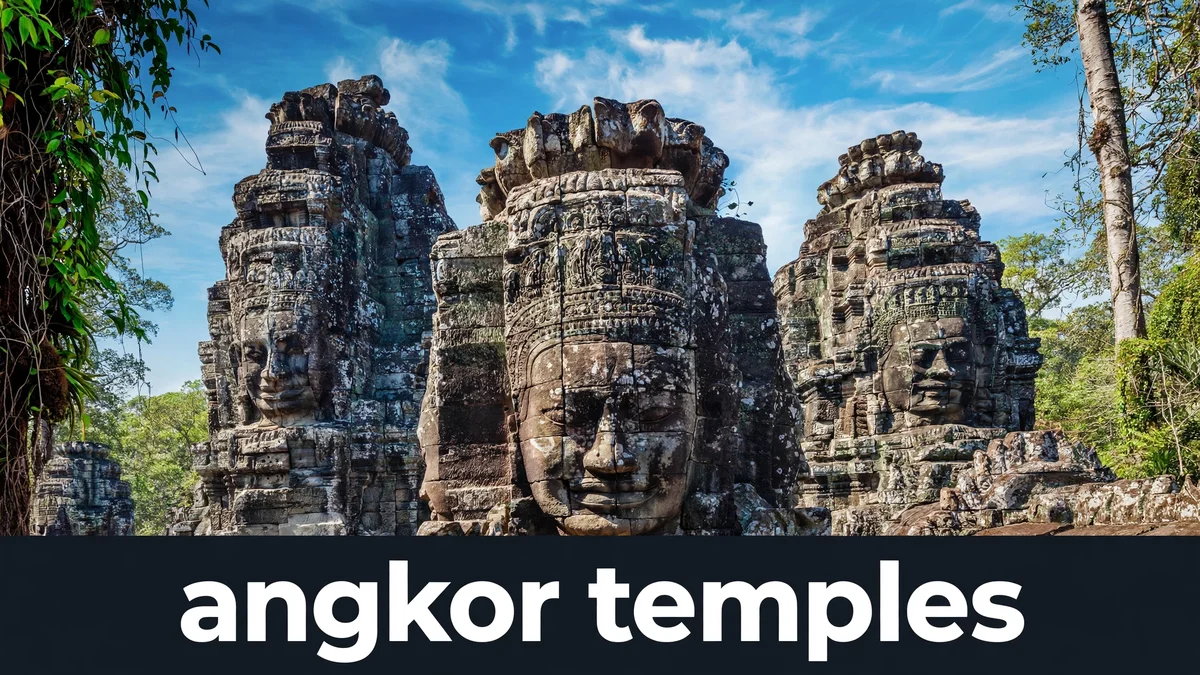
Bayon, in Angkor Thom. A short drive north, Bayon is the temple of faces: more than 200 serene stone faces gaze out from its towers, best photographed in morning light. Angkor Thom, the walled city around it, is worth the drive in its own right, entered through gates topped with more carved faces.
Ta Prohm. The famous “jungle temple,” where silk-cotton and strangler fig trees grow through the stonework. It is the most atmospheric temple in the park, and the most crowded after Angkor Wat itself — go late in the day, when tour groups thin out.
Banteay Srei. Smaller, further out, and carved from pink sandstone so fine it looks like jewellery work. If you have a second day, this is the temple to add: it is quieter, exquisitely detailed, and a complete contrast to the giant sites.
Passes, transport, and when to go
You need an Angkor Pass for the park, bought at the ticket office or online. Passes are currently listed at US$37 for one day, US$62 for three days, and US$72 for seven days; the three-day pass does not require consecutive days, which makes it the best value for a two- or three-day visit. Check the current price before you travel, since fees can change.
The temples sit about 6 kilometres north of Siem Reap, the base town for the park. Most visitors get around by tuk-tuk for the day, by bicycle if they are fit and the weather allows, or by private car. The dry season, roughly November to February, is the most comfortable time: cooler days, firm paths, and the best light. The temples open at 5:00 AM and close at 5:30 PM.
Dress modestly — shoulders and knees covered — or you may be refused entry to the upper levels and sacred areas. Wear shoes you can walk in, carry water, and expect heat even in the cooler months.
A simple 2-day route
Day 1 — the classics: sunrise at Angkor Wat, the main temple until late morning, Bayon and Angkor Thom after lunch, Ta Prohm in the late afternoon, and sunset from Phnom Bakheng if you arrive early enough for its strict capacity limit.
Day 2 — wider and quieter: Banteay Srei in the morning, then the Grand Circuit temples — Preah Khan, Neak Pean, and Pre Rup — at a slower pace, with time to stop at the smaller ruins between them rather than ticking off a list.
Add a third day for the outlying temples — Beng Mealea, half-ruined and half-jungle, is the favourite — or simply for a second, unhurried morning at Angkor Wat itself.
Etiquette worth knowing
These are living religious sites, not just ruins. Keep your voice down inside the galleries, do not climb on carvings or walls, and ask before photographing monks or worshippers. At sacred spots, follow the lead of local visitors: remove shoes where others do, and leave offerings and shrines untouched. And if you are out walking the dog back home after a trip like this, it is one more small reminder that the best journeys mix a plan with unplanned wandering — the same balance that makes a first trip work, whether the destination is a Cambodian temple park or a Philippine island, as in Palawan Island, Philippines, a Mediterranean harbour, as in Paphos, Cyprus, or a Colombian mountain village, as in Minca, Colombia.
The bottom line
A Cambodia temple trip works best as a slow two days: Angkor Wat at sunrise, Bayon and Ta Prohm in between, Banteay Srei if you have the time, and the heat of midday spent resting, not sightseeing. Come in the dry season, buy the three-day pass if you stay more than a day, and let the temples set the pace.