
Order too little soil and the bed ends up shallow, the lawn patchy, and the delivery truck has to come back. Order far too much and you are left with a mound of topsoil on the driveway that nobody wants to move. A soil yard calculator exists to avoid both mistakes: it turns your area and your depth into cubic yards — the unit bulk soil is sold in — and tells you how much to order. The maths is simple, and this guide walks through it step by step.
The formula
For a rectangular bed or lawn, the calculation has three steps:
- Measure the area. Length × width gives square feet.
- Convert depth to feet. Depth in inches ÷ 12 gives depth in feet.
- Divide by 27. Cubic yards = length × width × depth in feet ÷ 27, because one cubic yard is 27 cubic feet — a cube three feet on every side.
A shortcut used by many calculators skips the feet conversion: cubic yards = length × width × depth in inches ÷ 324, since 27 × 12 = 324. Both formulas give the same answer; use whichever you find easier.
For a circular bed, use radius instead of length and width: cubic yards = π × radius² × depth in inches ÷ 324. For irregular beds, split the shape into rectangles, work out each one, and add them together.
How deep should the soil be?
Depth is where most people go wrong, because the right depth depends on the job — and depth is invisible until you start filling. Typical depths, always subordinate to your supplier’s advice for your soil type:
- New lawn on bare soil: 4–6 inches of quality topsoil over the subgrade, so grass roots have somewhere to go.
- Topdressing an existing lawn: ½–1 inch spread over the surface, or 1–2 inches when overseeding or patching.
- New garden bed: 6 inches for a basic bed; 12 inches is the usual working depth for vegetables and perennials.
- Raised bed: 8–12 inches of blended soil mix.
- Levelling a low spot: 2–3 inches of fill or topsoil.
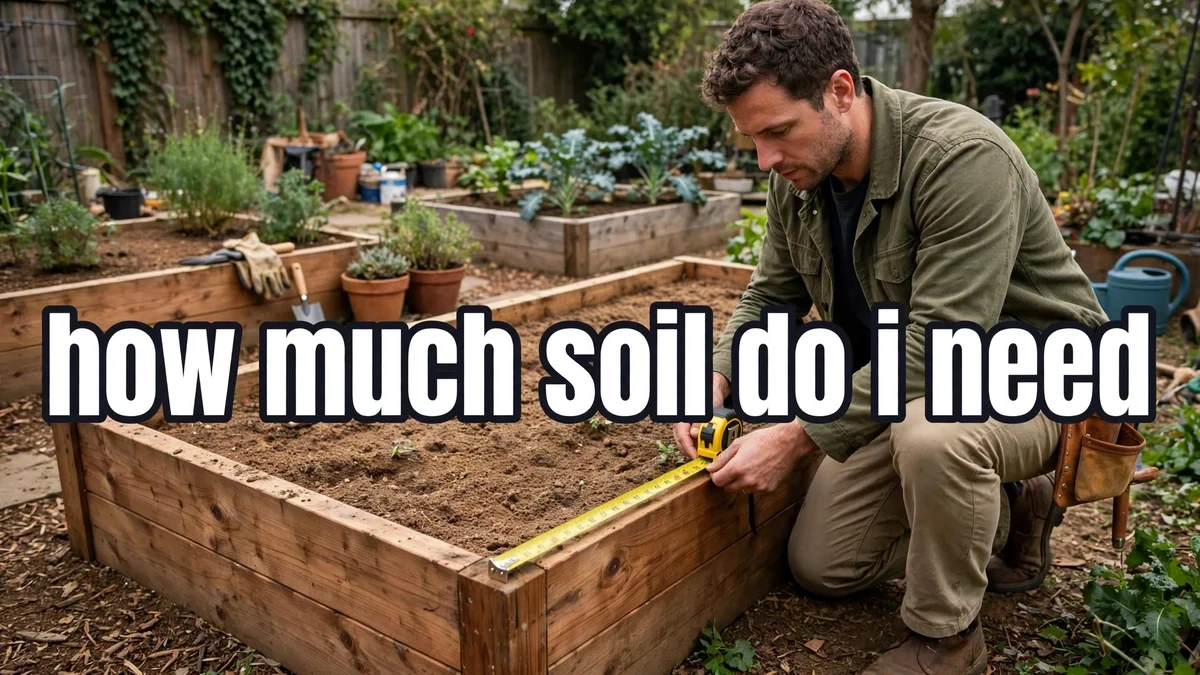
A bed that looks like it needs a few bags usually needs a yard: a single 4 × 8 raised bed filled 12 inches deep takes about 1.2 cubic yards — 32 cubic feet — which is most of a pickup load for one bed.
Worked examples
Example 1 — new bed, 20 ft × 10 ft, 6 inches deep: 20 × 10 × 6 ÷ 324 = 3.70 cubic yards. Order 4 yards, or 3.7 plus about 10% extra for settling and uneven ground.
Example 2 — raised bed, 4 ft × 8 ft, 12 inches deep: 4 × 8 × 12 ÷ 324 = 1.19 cubic yards, about 1.2 yards. In bags, that is 32 of the 1 cubic foot bags, or about 22 of the 1.5 cubic foot bags.
Example 3 — lawn topdressing, 50 ft × 30 ft, 2 inches deep: 50 × 30 × 2 ÷ 324 = 9.26 cubic yards. At 2 inches, one cubic yard covers about 160 square feet, so the arithmetic checks: 1,500 ÷ 160 ≈ 9.4 yards.
Example 4 — small bed, 10 ft × 10 ft, 4 inches deep: 10 × 10 × 4 ÷ 324 = 1.23 cubic yards. For a job this size, bags may beat bulk: 1.23 yards is about 33 cubic feet, or 33 of the 1 cubic foot bags.
Cubic yards, bags, and weight
Bulk soil is sold by the cubic yard, but two conversions matter when you order:
- Bags: one cubic yard is 27 cubic feet, so it equals 27 of the 1 cubic foot bags, about 18 of the 1.5 cubic foot bags, or about 13.5 of the 2 cubic foot bags. For jobs over about 2 cubic yards — roughly 54 bags — bulk delivery is usually much cheaper than bags.
- Weight: dry screened topsoil weighs roughly 1 to 1.1 tons per cubic yard (about 2,000–2,200 lb), and wet soil weighs noticeably more — 20–30% more by some estimates. A half-ton pickup safely carries about one yard at a time; the box fills long before the truck is legal to drive with more.
Order about 10% extra to cover settling and uneven ground. Soil settles after watering and rain, and a bed measured generously still loses volume to compaction.
Mistakes a calculator cannot fix
A calculator gives you a volume, not a finished bed. Four mistakes still ruin results:
- Guessing the depth. Depth is the number people estimate worst. Measure it — a bed that needs 6 inches and gets 3 will not support the plants you put in it.
- Ignoring the material. Topsoil, fill dirt, compost, and blends weigh and behave differently. Compost is lighter (about 0.6 tons per yard) and settles more; fill dirt is cheaper but poor for planting. Quote the material, not just the yards, when you order.
- Skipping the settling allowance. Fresh soil compacts. Without the extra 10%, the bed ends up low within weeks.
- Ordering bags for a bulk job. Two cubic yards is 54 bags to haul, open, and spread. Bulk delivery costs less and saves your back.
The bottom line
A soil yard calculator is just length × width × depth ÷ 324: measure the area, pick the depth for the job, divide, add about 10% for settling, and order in cubic yards. Get the depth right and the material right, and the soil does the rest — the same measuring habit that pays off elsewhere around the house, from sizing firewood in the firewood cord calculator to working out seed rates in the grass seed calculator, and the same patience it takes to grow anything from seed, as described in how to grow coffee beans at home.