
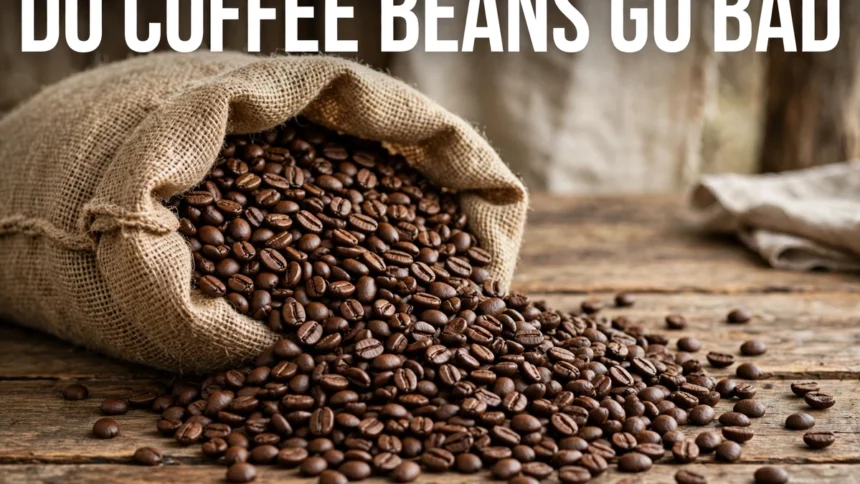
Open an old bag of coffee and the question comes fast: are these beans still good, or have they gone bad? The short answer to do coffee beans go bad is that dry beans rarely spoil in an unsafe way — what they mostly do is go stale. Their aroma fades, their oils oxidise, and the cup turns flat and papery long before the beans become anything to worry about. Moisture is the exception: beans that got wet can grow mould and should be thrown out.
Stale is not the same as spoiled
Think of freshness as a slope, not a cliff. The beans themselves are the roasted seeds of the coffee plant, as described on the Coffee page. Fresh beans smell sweet, nutty or fruity; as they age, that smell dulls, sweetness drops, and the coffee tastes hollow — bitterness without sweetness, or acidity without fruitiness. That is staleness, and stale coffee is disappointing rather than dangerous.
True spoilage looks and smells different. Beans that were exposed to water may smell musty, damp or sour, feel damp or clumped, or show visible mould. Very old oily dark roasts can also turn rancid, with a stale, greasy, paint-like smell. If you notice any of those signs, throw the beans out and wash the container thoroughly. If the beans stayed dry and smell normal, they are almost always safe, even if they are past their best.
How long do coffee beans last?
How long beans stay lively depends on whether they are whole or ground, and whether the bag is opened or sealed. Whole beans last longer because less surface is exposed to oxygen; once beans are ground, the staling clock runs much faster.
| Coffee | Best flavour window | Still usable? |
|---|---|---|
| Whole beans, opened, cool pantry | A few weeks | Often a couple of months if kept dry |
| Ground coffee, opened | Days to about two weeks | Often a month or so if kept dry |
| Whole beans, unopened and sealed | A few months from roast | Drinkable longer if kept cool and dry |
| Beans frozen in airtight portions | Months | Yes, if thawed sealed (see below) |
These are practical ranges, not guarantees: roast level, packaging and storage all shift them. The most useful date on a bag is the roast date, not a best-by date, which is a freshness promise rather than a safety deadline. A bag can be within its best-by date and still taste tired, while an older bag that stayed dry and sealed can still brew a decent cup.
The 60-second freshness check
Smell first. Aromatic, sweet or nutty means the beans are likely fine; flat, dusty or papery means stale; musty, damp or sour means do not use them. Then look: dry-looking beans are normal, a shiny or oily coating suggests older beans or a very dark roast, and any dampness or clumping points to a moisture problem. Finally, taste: stale beans brew thin, hollow coffee, and espresso shots may run fast and taste weak. If you opened a bag on Monday and it sat on the counter all week, it will probably still be drinkable on Saturday — it just will not taste like it did on Monday.
How to store coffee beans so they last
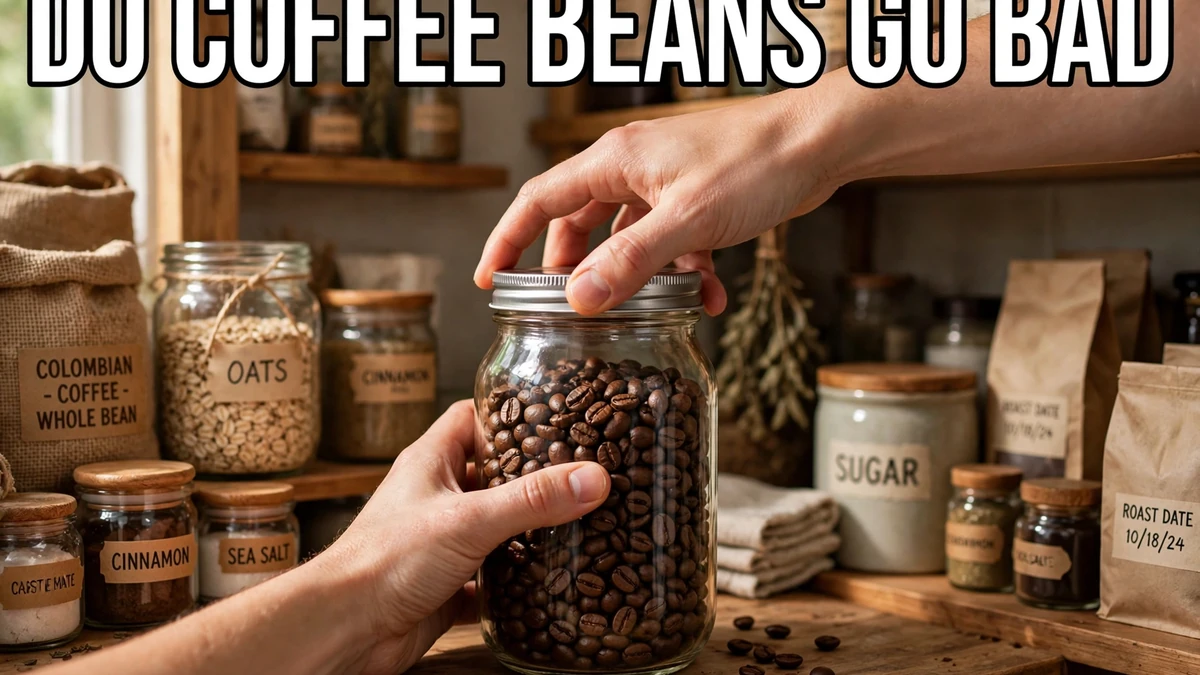
The goal is stability: cool, dark, sealed and dry. Keep beans in an airtight, preferably opaque container in a cool cabinet, away from the oven, dishwasher and sunny windows. Scoop quickly and close the lid straight away, and grind right before brewing when you can — that single habit does more for flavour than any fancy container. Buying smaller bags more often also helps, since an open bag ages every day it sits around. This is the same kind of small, regular attention that keeps a daily brew tasting right, as with getting the amount right in how much ground coffee per cup.
The fridge is not the best option for most people. Refrigerators have humidity swings and strong food odours, and coffee absorbs both. If you do refrigerate beans, keep them in a truly airtight container and open it as rarely as possible.
Should you freeze coffee beans?
Freezing works well if you do it to avoid repeated air exposure — for example, when you buy in bulk or want to save a special bag. Portion the beans into small airtight bags or containers, squeeze out excess air, and freeze. The crucial step is thawing: let a portion come fully to room temperature before opening it, so condensation does not land on cold beans. Once thawed, treat that portion like a normal open bag and finish it before it fades. Ground coffee can be frozen too, but it is even more sensitive to oxygen once thawed, so portion it small and use it quickly.
What to do with stale beans
Stale beans still have uses, just not ones that show off delicate flavour. Cold brew smooths out flat flavours, baking (brownies, tiramisu, coffee syrups) hides dullness well, and mocha drinks let chocolate cover what is missing. Skip stale beans for espresso dialling-in or black pour-over, where nuance matters and the coffee will taste thin no matter what you adjust. And if you ever wonder whether the beans themselves are the problem or the plant they came from, the journey from seed to cup starts with growing the plant itself, as covered in how to grow coffee beans at home.
Choosing beans well in the first place matters too: knowing what kind of coffee you actually like — bean, roast and brew method — makes it easier to buy a bag you will finish while it is fresh, as explained in different types of coffee, explained.
The bottom line
Coffee beans do go bad in the sense that matters most to drinkers: they lose aroma and flavour. They rarely become unsafe, and the calendar is a poor judge — smell, look and taste tell you far more than a date stamp. Keep beans sealed, cool and dark, grind as you brew, freeze extras in small airtight portions, and throw out anything damp, musty or mouldy. Do that, and the only surprise in your cup will be a good one.