

You can grow coffee beans at home — but it helps to know what you are signing up for. The short version of how to grow coffee beans is this: start with fresh, unroasted seed, germinate it in a warm, damp medium, grow it as a houseplant in bright indirect light, and wait several years for flowers and cherries. The plant itself is the reward along the way: glossy, deep-green leaves and a compact shape make it an attractive houseplant long before it ever fruits.
Start with the right seed
This is the step most people get wrong. Roasted coffee beans from a bag will never sprout — roasting kills the seed. You need one of these:
- Fresh coffee cherries from a ripe plant, with the seed inside.
- Unroasted green coffee beans from a reputable supplier, from a recent harvest. Seed viability drops with age, so buy the freshest you can find.
If you want to skip the slowest part, buy a young seedling or rooted cutting from a nursery instead. You lose the satisfaction of growing from seed, but you gain months or even a year.
Germinate the seed
Coffee seed germinates slowly and unevenly, so patience starts here:
- Soak the seeds in clean water for 24 hours. Discard any that float — they are usually defective.
- Sow in a damp medium such as vermiculite or well-drained sand, flat side down, lightly covered. Keep the medium moist but never waterlogged, with good drainage.
- Keep them warm — around 27–29°C (roughly 80–84°F) is ideal — and humid. A plastic bag over the tray works as a mini-greenhouse.
- Wait. Fresh seeds typically take six weeks to four months to sprout; older seeds can take up to six months.
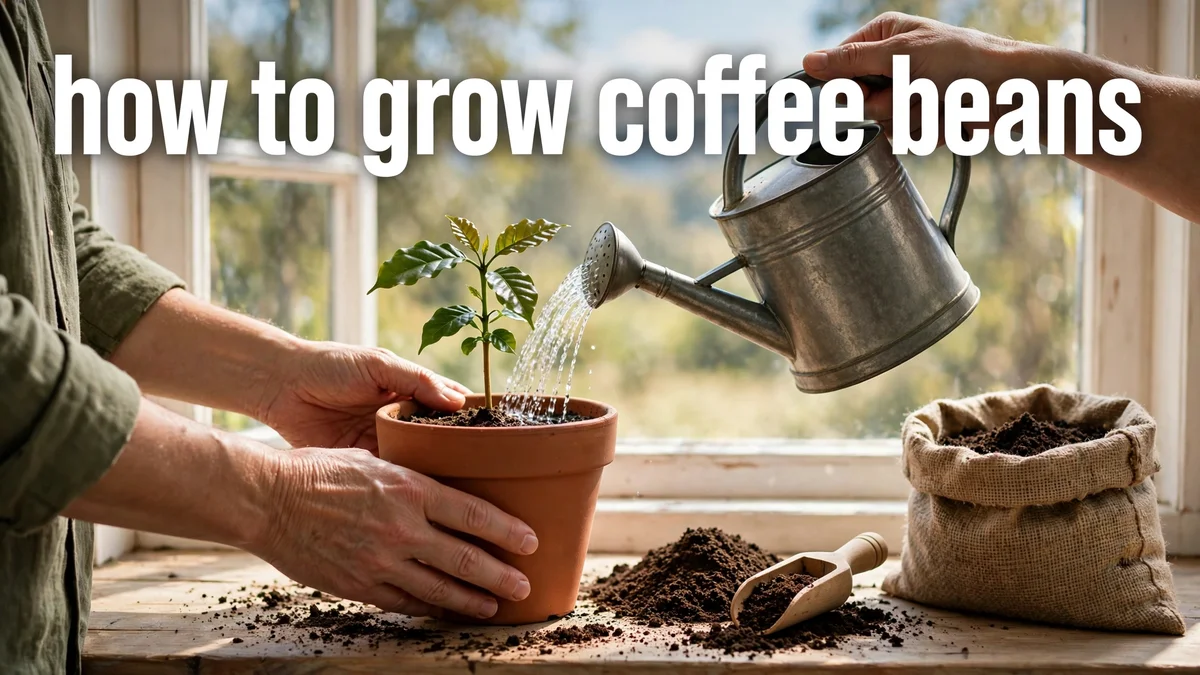
When seedlings have a few true leaves, move each one into its own small pot of loamy, slightly acidic, humus-rich potting mix. Water with a sprayer at first so the fragile roots are not disturbed.
Give it the right home
Coffea arabica is a tropical shrub, and it thrives when its indoor conditions resemble its native highlands. The Coffea arabica page notes it is the dominant cultivated coffee species, and its needs are straightforward:
- Light: bright, indirect light. An east-facing window or a spot a little back from a south-facing window suits it. Direct midday sun can scorch the leaves.
- Temperature: roughly 18–24°C (64–75°F) day to day. Keep it away from cold drafts and frost, which can damage or kill it, and away from blasts of forced-air heating.
- Humidity: coffee likes humidity. Mist the leaves regularly, or stand the pot on a tray of pebbles filled with water.
- Pot and soil: a pot with drainage holes, filled with loam-based, peat-free compost that drains freely. Repot every two to three years in spring, stepping up one pot size at a time.
Water and feed
Coffee plants are thirsty but hate sitting in water. Water thoroughly until it drains from the bottom of the pot, then let the top of the soil dry slightly before watering again. In practice, that usually means watering once or twice a week, more in summer and less in winter.
Feed lightly during the growing season, every two weeks or so, with a balanced liquid feed or one suited to acid-loving plants. Overfeeding causes leaf burn, so less is more — a weak, regular feed beats an occasional strong one. Used coffee grounds can help keep the soil slightly acidic, but they are a supplement, not a substitute for proper feeding.
Pruning and shaping
Young coffee plants grow slowly at first, then faster after about a year. Prune in spring: remove dead or leggy branches to encourage a bushier shape, and pinch back the growing tips if the plant gets too tall for its spot. Indoors, a coffee plant kept in a 5-gallon or larger pot typically reaches 3–6 feet, which is the size needed for serious fruiting.
Pruning is also how you keep a houseplant looking good rather than straggly — the same kind of regular attention that keeps a daily routine pleasant, like the small rituals around a morning cup explored in different types of coffee, explained.
Flowers, cherries, and harvest
This is the long game. A home-grown coffee plant usually flowers after three to five years, and the fruit takes roughly nine months to ripen after flowering. The flowers are white, fragrant, and short-lived; the fruit ripens from green to bright red (occasionally yellow, depending on variety) and is called a cherry. Each cherry typically contains two seeds — the coffee beans.
To encourage blooming on a mature plant, some growers reduce watering at the start of winter, then water generously and give plenty of light in spring. Even with good care, a home harvest is small: a single indoor plant yields a modest handful of cherries, not a daily supply. Think of it as a fascinating project and a conversation piece, not a replacement for buying coffee — a realistic expectation that also applies to measuring your daily brew, covered in how much ground coffee per cup.
Common problems
- Brown leaf edges: usually low humidity or overfeeding. Raise humidity and ease off the fertiliser.
- Yellow leaves: often overwatering or poor drainage. Check that the pot drains freely and let the soil dry more between waterings.
- Leggy growth: not enough light. Move to a brighter spot, still out of direct midday sun.
- Pests: aphids, mealybugs, and spider mites are the usual visitors. Wipe them off, or treat with neem oil or insecticidal soap, and isolate the plant until clear.
- No flowers after several years: the plant may simply be too young or too small. Keep it healthy, step up the pot size, and give it another season.
Can you grow enough coffee to drink every day?
Honestly, no — not from one or two houseplants. A mature indoor plant produces a small annual harvest, enough for a celebratory cup or two rather than a daily habit. Commercial coffee comes from farms with thousands of plants in ideal tropical conditions. Home growing is worthwhile for the plant, the learning, and the novelty of brewing a cup from cherries you grew yourself — and that first home-grown cup tastes better for the wait.
A new plant also changes a home’s daily rhythm in small ways — watering, misting, watching for new leaves — much like the way a new arrival reshapes a household routine, as it did when Gus came into daily life and inspired take your dog to work day.
The bottom line
Grow coffee beans at home from fresh seed, germinate warm and damp, give the plant bright indirect light, steady warmth, and humidity, and be patient: flowers in three to five years, cherries about nine months after that. The plant is beautiful from the start, the harvest is a bonus, and the whole project costs little more than a pot, some soil, and attention.