
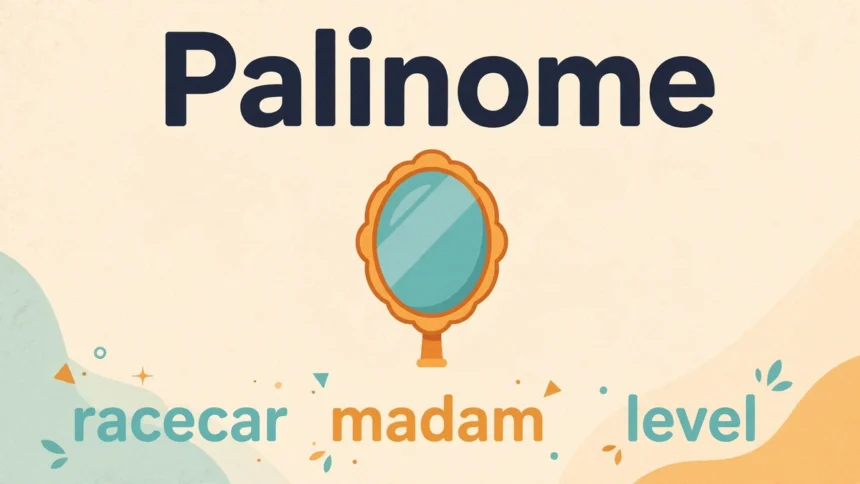
A palindrome is a word, phrase, number, or sentence that reads the same backward as forward. “Racecar” is a palindrome. So is “madam,” “level,” and the famous sentence “A man, a plan, a canal: Panama.” Once you know the trick — ignore the spaces, punctuation, and capital letters, then read it in reverse — you start spotting palindromes everywhere, from names like Anna and Hannah to dates like 22/02/2022.
What Does Palindrome Mean?
The word comes from the Greek palindromos, meaning “running back again” — from palin (“back, again”) and dromos (“running, direction”). The English word was introduced by the poet and writer Henry Peacham in 1638, though the idea itself is far older: the earliest known examples date to the 1st century, including the Latin Sator Square, a word square found as graffiti at Pompeii. You can read the full history in Wikipedia’s article on palindromes.
In plain terms, a palindrome is any sequence of letters or numbers that stays identical when you reverse it. The test is simple: write it out, flip it, and compare. If nothing changes, it is a palindrome.
Palindrome Word Examples
The most familiar palindromes are single words. Here are the ones you are most likely to meet:
- eye — the shortest common palindrome, just three letters
- mom and dad — two of the first palindromes most children learn
- pop, wow, noon, gig — short, everyday words
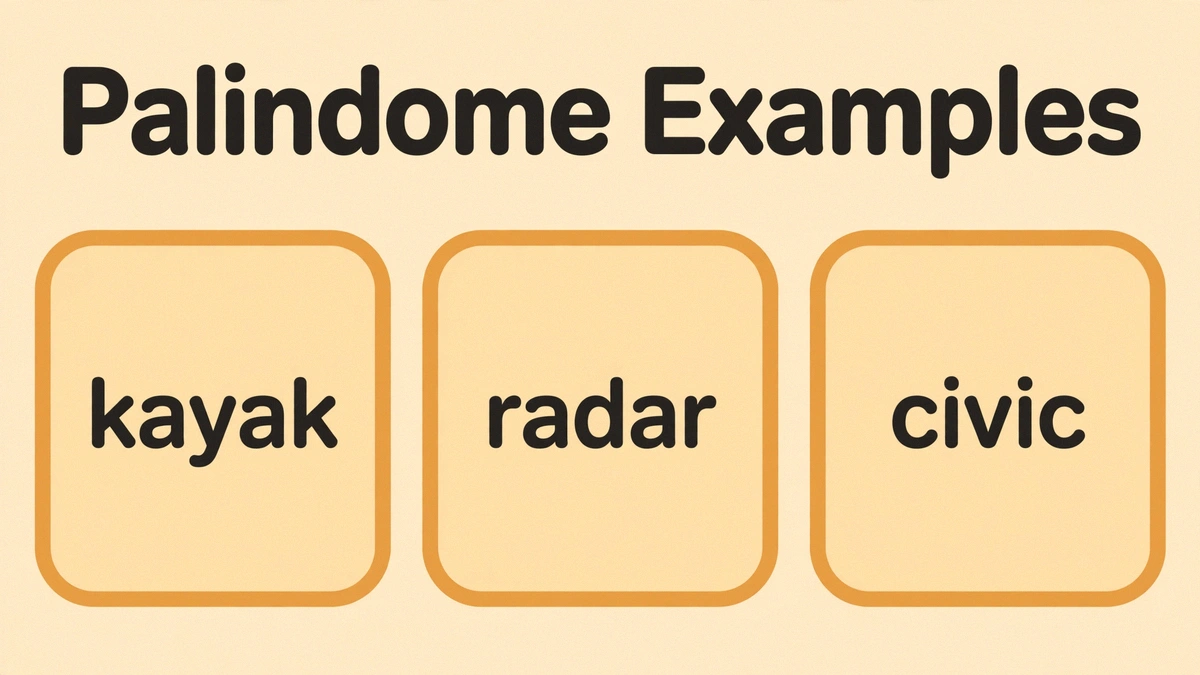
- level, radar, civic, refer, kayak — five-letter classics
- madam, tenet, solos, stats, sagas — a little longer, just as neat
- racecar, rotator, deified, reviver — seven letters, the longest common ones
- redivider — nine letters, and a real word for something that divides again
Names can be palindromes too: Anna, Hannah, Ava, Eve, Bob, and Otto all read the same in either direction.
Palindrome Phrases and Sentences
Whole phrases can be palindromes once you ignore spaces and punctuation. These are the famous ones:
- “A man, a plan, a canal: Panama”
- “Never odd or even”
- “Madam, I’m Adam”
- “Was it a car or a cat I saw?”
- “Step on no pets”
- “Do geese see God?”
- “No lemon, no melon”
- “Mr. Owl ate my metal worm”
- “Go hang a salami, I’m a lasagna hog”
Punctuation matters less than you might think. A semicolon or a comma inside a palindromic sentence is simply skipped when you test it — only the letters count.
Number Palindromes
Palindromes are not only words. Numbers can read the same backward too:
- 1881 and 1991 — years that read the same in reverse
- 121, 676, 1221 — everyday number palindromes
- 22/02/2022 — a full date that reads the same backward as forward
Dates like these are sometimes called palindrome days, and they make popular choices for weddings and celebrations precisely because the date itself is symmetrical.
The Longest Palindromes
How far can a palindrome go? Further than most people expect:
- The longest single-word palindrome in the Oxford English Dictionary is tattarrattat, a 12-letter word coined by James Joyce in Ulysses (1922) for the sound of a knock on the door.
- The longest palindromic word in everyday use is the 19-letter Finnish word saippuakivikauppias, meaning a soapstone vendor.
- The longest palindromic sentence on record runs to 21,012 words — a number that is itself a palindrome.
How to Spot a Palindrome in 3 Steps
- Strip it down. Remove spaces, punctuation, and capital letters. “A man, a plan, a canal: Panama” becomes “amanaplanacanalpanama.”
- Reverse it. Read the stripped version backward, letter by letter.
- Compare. If the reversed version matches the original exactly, you have a palindrome.
Try it on “racecar”: strip nothing, reverse it, and you get “racecar” again. Try it on “hello” and you get “olleh” — not a match, not a palindrome.
Words That Look Like Palindromes But Are Not
Some words fool people. These are not palindromes, even though they look close:
- peaked — reversed it reads “dekaep,” which is not a word at all.
- wore — reversed it reads “erow.” The past tense of wear is not symmetrical.
- faring and fairing — these two sound alike and are easy to confuse, but neither one reads the same backward. Faring means getting along or travelling; a fairing is a cover on a vehicle.
- their or thier — neither is a palindrome, and “thier” is not even a word: it is a common misspelling of “their.”
The rule never changes: if reversing the letters gives you something different, it is not a palindrome, however balanced the word looks at first glance.
Using Palindromes in Writing
Palindromes are a small piece of wordplay, and wordplay makes writing memorable. A palindrome can add a playful touch to a card, a message, or even a formal letter that needs a light opening line. They also make fun puzzles for children: ask a child to find the palindromes in a list of words, and the test above gives them a method they can use on their own. And if you are writing a message to someone you love, a little wordplay goes a long way — these brother quotes for sister show how a few well-chosen words can carry real feeling.
Frequently Asked Questions
What is a palindrome in simple words?
A palindrome is a word, phrase, or number that reads the same backward as forward. “Racecar,” “madam,” and “level” are palindromes; “hello” is not.
What is the most famous palindrome?
“A man, a plan, a canal: Panama” is the most famous palindromic sentence. Among single words, “racecar” and “madam” are the best known.
Is “mom” a palindrome?
Yes. “Mom” reversed is “mom.” So is “dad,” “pop,” and “wow.”
Are palindrome dates real?
Yes. A date like 22/02/2022 reads the same backward as forward when written as numbers, which is why it is called a palindrome day.