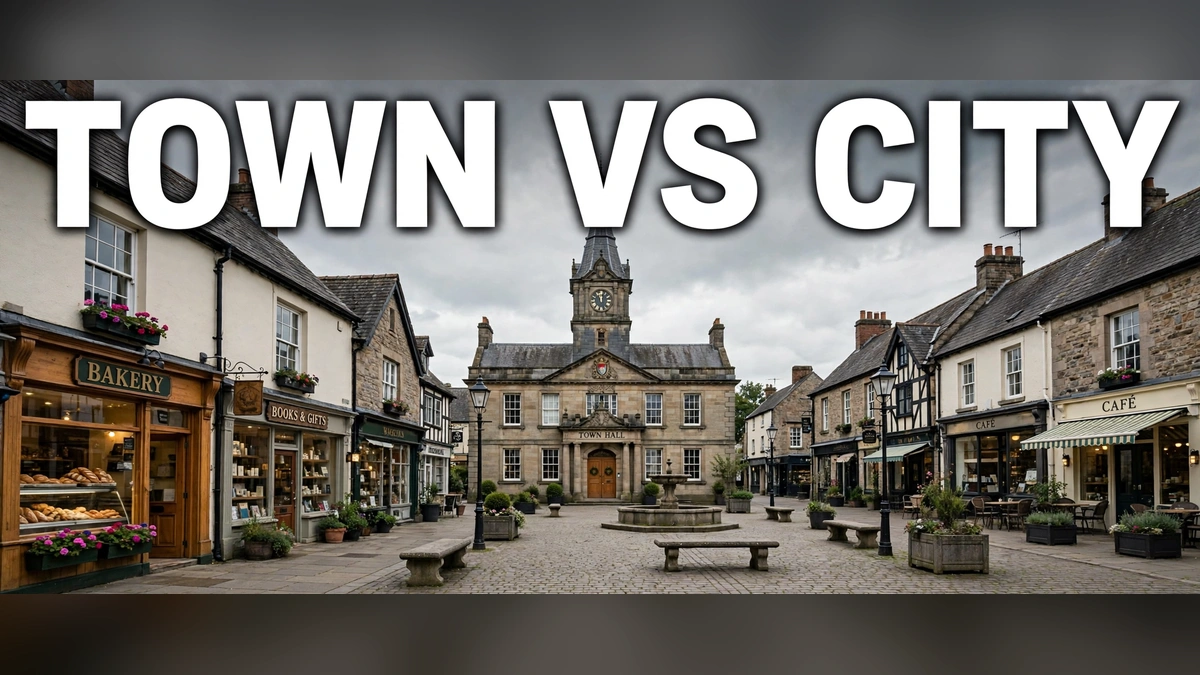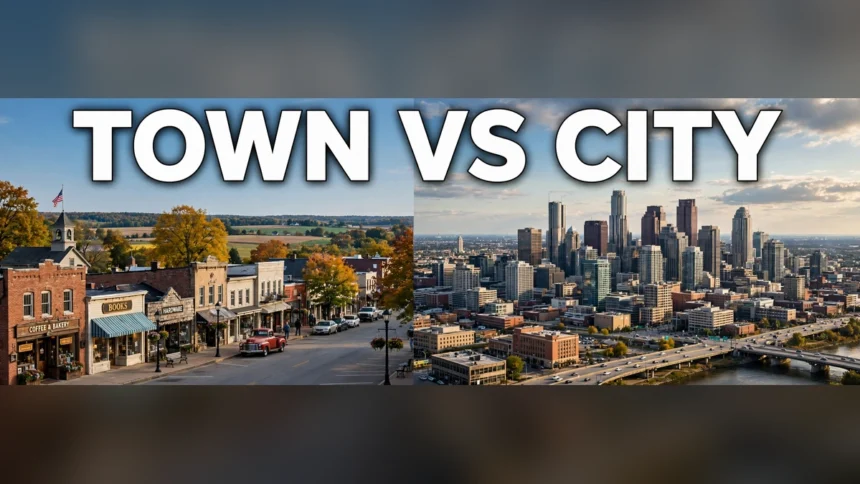
The simplest answer to the town vs city question is that a city is bigger and busier than a town — but that answer misses the part that actually matters. In many places, whether somewhere is called a town or a city is a legal decision, not a measurement. A small place can legally be a city, and a large place can still be a town, depending on where in the world it sits.
What a town is
A town is generally a settlement larger than a village but smaller than a city, with its own local services and some form of local government. Expect a town centre with shops, a handful of schools, a doctor’s surgery or clinic, and a town council or board handling local matters. The pace is slower than a city, and most daily needs are close by — which is one reason a trip to a big city can feel like such a change of gear after small-town days.
What a city is
A city is a larger, denser settlement that acts as a hub for its region. Cities typically have universities, large hospitals, major transport links, and a wider range of jobs, entertainment, and cultural institutions. They are usually governed by a mayor and city council with broader powers over zoning, taxes, and utilities than a town board holds. Where a town serves its own residents, a city serves a whole surrounding area.
Town vs city at a glance
| Town | City | |
|---|---|---|
| Size | Smaller, often tens of thousands of residents or fewer | Larger, often well over 100,000 residents |
| Density | Moderate, with room to breathe | High, with people living close together |
| Government | Town council or board, narrower powers | Mayor and city council, broader powers |
| Services | Everyday essentials: shops, schools, clinics | Everything a town has, plus universities, large hospitals, airports, and major venues |
| Legal status | Often incorporated as a municipality, sometimes unincorporated | Usually incorporated by charter, formally recognised |
These are tendencies, not rules. Real places break them all the time, which is why the next section matters.
Why the label differs by place
There is no single worldwide population line that turns a town into a city. In the United Kingdom, city status has traditionally come from a royal charter rather than from headcount, so some very large towns are not cities at all, while some small places hold city status. In the United States, the decision is left to individual states, and definitions vary: a place’s status depends on how it incorporated, not on a federal minimum size. Elsewhere, population thresholds, infrastructure, and the share of residents in non-agricultural work can all play a part. The practical lesson is to check how a particular country or state uses the words, rather than assuming a number.
Which one fits you
Choosing between town and city life comes down to what you value day to day. Towns tend to offer shorter commutes, closer neighbours, and easier access to open space, at the cost of fewer specialist services and job options. Cities offer variety, opportunity, and convenience, at the cost of higher prices, crowds, and noise. Even work changes shape: becoming a dog sitter in a dense city means short walks between many clients, while in a town it may mean longer drives and fewer, closer relationships. And the small pleasures differ too — a quiet evening making pupsicles on a town porch is a different kind of summer from a city rooftop at sunset. Neither is better in itself; the right choice is the one that fits how you actually live.