

Opening the washer to find clothes still sitting in water is frustrating, but it rarely means the machine is finished. The short answer to why is my washer not draining is usually one of a short list: a clogged drain pump filter, a kinked or blocked drain hose, too much detergent, a faulty lid switch or door latch, or a failed drain pump. Most of these can be checked at home in under half an hour, starting with the easiest.
Before you touch anything, unplug the machine. The pump runs on mains voltage, and standing water plus electricity is a combination to avoid. Keep towels and a shallow pan nearby — opening a filter or lowering a hose will release water.
Check first: the drain pump filter
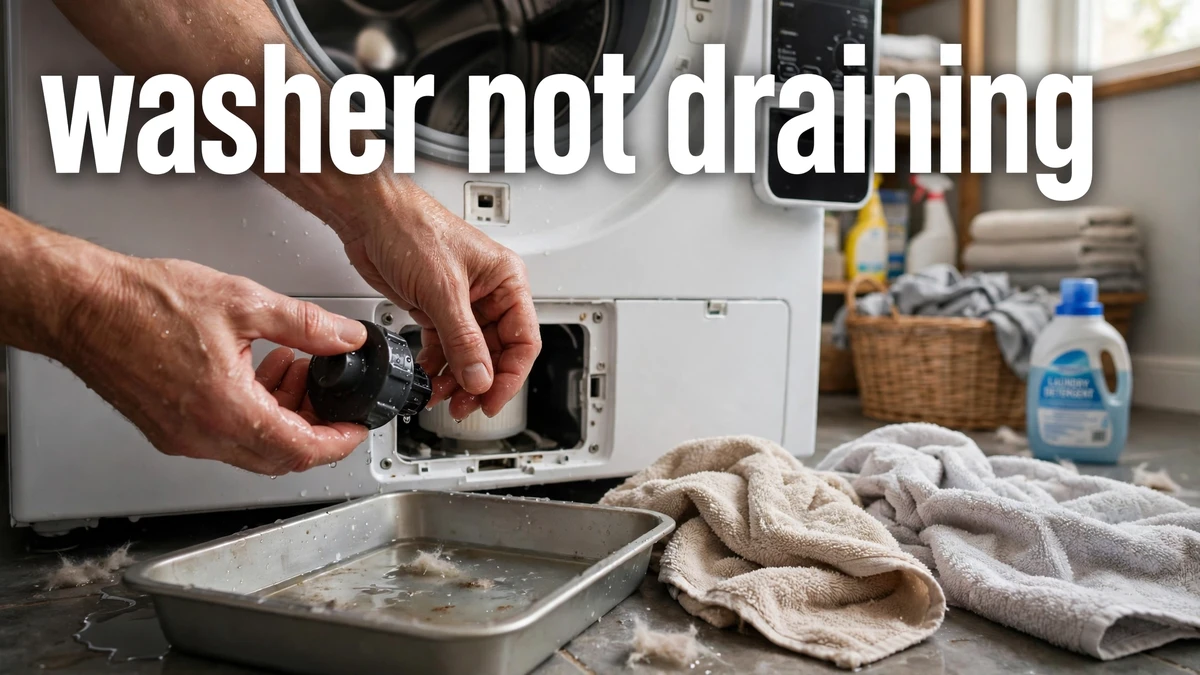
On most front-load washers, the drain pump filter sits behind a small access panel at the bottom front of the machine. It catches coins, hair ties, buttons, and lint before they reach the pump, and it is the single most common cause of a washer that will not drain.
- Place a shallow pan and towels under the access panel.
- If your machine has a small emergency drain hose beside the filter, pull it out, remove its cap slowly, and let the water drain into the pan.
- Turn the filter counterclockwise, pull it out, and rinse it under running water. Remove any trapped objects.
- Refit the filter firmly, replace the drain hose cap, and close the panel.
If the filter was full of debris, run a short rinse-and-spin cycle. In many cases, that alone fixes the problem. Make filter cleaning a habit every few months — the same kind of routine check that keeps everyday life running smoothly, like the regular care behind becoming a dog sitter, where small consistent habits prevent bigger problems.
Check second: the drain hose
The drain hose carries water from the machine to your household drain. If it is kinked, crushed, or blocked, water cannot get out no matter how well the pump works.
- Pull the washer slightly away from the wall and look at the full length of the hose. Straighten any kinks or sharp bends, and make sure the hose is not pinched between the machine and the wall.
- Disconnect the hose over a bucket (with the machine unplugged) and check for blockages. If it is clogged, flush it out with a garden hose.
- Reconnect it firmly, with the end seated properly in the standpipe or drain. A hose that has slipped out of the drain will leave water on the floor rather than in the tub, so check the connection too.
Check third: too much detergent
Excess detergent creates excess suds, and a tub full of suds can confuse the machine’s sensors and interfere with draining and spinning. If you open the washer and see a thick layer of foam rather than just water, this is a likely culprit.
Run a rinse-and-spin cycle with no detergent at all, and repeat if suds remain. Going forward, use the amount recommended for your machine and water hardness — high-efficiency machines need far less detergent than older top-loaders, and soft water needs less still.
Check fourth: the lid switch or door latch
A washer will not advance to drain and spin if it thinks the lid or door is open. On top-load machines, the lid switch sits under the lid; on front-load machines, the door latch does the same job.
- On a top-loader, press the lid switch down with a finger and listen for a click. No click, or no “lid closed” light, points to a failed switch.
- On a front-loader, check that the door closes and latches fully, and that nothing — a stray sock, a bent hinge — is stopping it.
- A failed switch or latch is a cheap part, but replacing it involves the machine’s wiring, so many owners leave this one to a technician.
Check fifth: the drain pump itself
If the filter and hose are clear and the lid switch works, the pump is the next suspect. A washing machine drain pump is a small motor with an impeller that pushes water out through the hose. Listen during the drain cycle:
- Humming but no water moving usually means the impeller is jammed by a small object.
- Nothing at all — no hum, no vibration usually means the pump motor has failed.
- Grinding noises suggest something hard caught in the pump, or worn bearings.
A jammed impeller can sometimes be cleared after removing the pump, but a failed motor means replacement. Because the pump involves mains voltage and water connections, replacement is a job for a technician unless you are confident working on appliances.
Check sixth: the household drain
Sometimes the washer is fine and the plumbing is not. If water backs up out of the standpipe, or other drains in the home are slow at the same time, the blockage is in the household drain rather than the machine. A plumber’s snake may clear a shallow clog, but a deeper drain problem is a plumbing job, not an appliance repair.
A quick test separates the two: disconnect the drain hose from the standpipe, point it into a bucket, and run a spin cycle. If water pumps out strongly into the bucket, the machine drains fine and the household drain is the problem.
When to call a professional
Call a technician if any of these apply:
- The filter and hose are clear but the washer still holds water.
- You hear humming, grinding, or smell burning from the pump area.
- The breaker trips when the washer runs.
- An error code keeps returning after a full power reset (unplug for a few minutes, then plug back in).
- Water is flooding from under the machine or backing up into other fixtures.
When you call, have the brand and model number ready (usually inside the door or on the back panel), note whether it is a front-load or top-load machine, describe what the washer does when you start it, and list what you have already tried. That information saves a diagnostic visit.
Preventing the next drain problem
Most drain failures are preventable with small habits:
- Empty pockets before every load — coins, hair ties, and small objects are the filter’s worst enemies.
- Clean the drain pump filter every few months.
- Use the right amount of detergent for your machine.
- Leave a little clearance behind the washer so the hose cannot kink.
- Run a regular hot cleaning cycle to keep residue from building up.
Sorting a household problem methodically beats guessing — the same approach that works when planning a busy day around the house, like the careful preparation behind take your dog to work day, where checking the details in advance avoids a stressful surprise. And when a fix turns into a community effort, it is worth remembering how much a little organised help can achieve — the spirit behind my pet food drive, where many small contributions added up to a big result.
The bottom line
Work in order: filter, hose, detergent, lid switch or door latch, pump, household drain. Most washers that will not drain are fixed at the first two steps, and the whole diagnostic takes less than half an hour. If you reach the pump or the plumbing and the problem persists, that is the point to call a professional rather than keep guessing.