
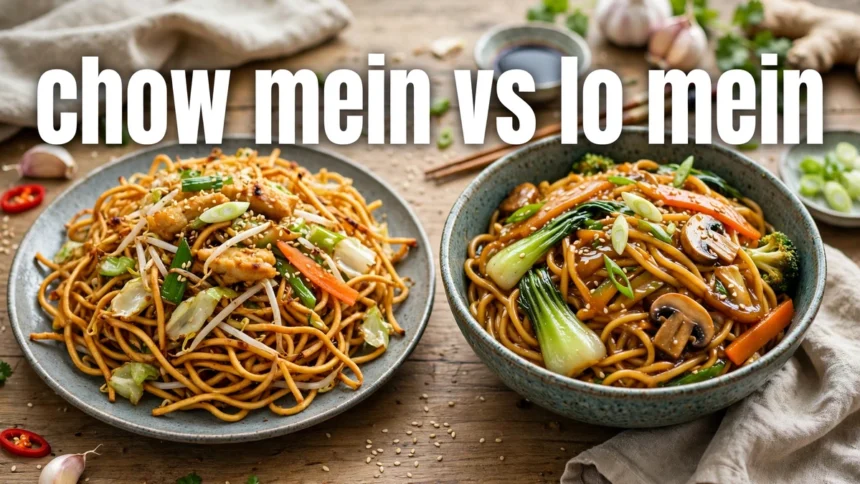
Chow mein and lo mein look alike on a takeout menu — both are Chinese egg-noodle dishes with vegetables and often meat or seafood — but they are not the same dish. The short answer to chow mein vs lo mein is in the names: “chow” means stir-fried, and “lo” means tossed. Chow mein noodles are fried in a wok; lo mein noodles are boiled, then tossed with sauce. That single difference in cooking changes the texture, the amount of sauce, and the whole eating experience.
At a glance
| Chow mein | Lo mein | |
|---|---|---|
| Name means | Stir-fried noodles | Tossed noodles |
| Noodle cooking | Par-boiled, then stir-fried in the wok | Fully boiled, then tossed with sauce |
| Texture | Browned, chewy, sometimes crispy at the edges | Soft, slippery, chewy |
| Sauce | Light coating | Generous — coats every strand |
| Noodle type | Often thinner dried egg noodles | Usually thicker fresh egg noodles |
| Best for | Texture and crunch | Saucy, comforting noodles |
What is chow mein?
Chow mein is a dish of Chinese stir-fried noodles with vegetables and sometimes meat or tofu, as described on the chow mein page. The noodles are first par-boiled or soaked to soften them, then stir-fried in a hot wok with vegetables, protein, aromatics, and sauce. The high heat gives the noodles browned edges and a lightly crisp bite, and the smoky wok flavour known as wok hei.
There are two main styles. Steamed (soft) chow mein is stir-fried just until tender, so the noodles stay soft with a little chew. Crispy chow mein, also called Hong Kong-style, is pan-fried longer until the noodles form a crisp, golden cake, often served with vegetables and protein spooned over the top. In both styles, the fried noodle texture is the star of the dish, and the sauce is a light coating rather than a pool.
What is lo mein?
Lo mein starts with the same kind of egg noodle, but the cooking is gentler. The noodles are fully cooked in boiling water first, then added late and tossed with sauce, vegetables, and protein. Because the noodles are never fried, they stay soft and supple, and they carry a generous amount of a savoury, soy-based sauce.
Lo mein is the saucier, softer, more comforting of the two. The sauce clings to every strand, the vegetables and protein are mixed evenly through, and the dish eats more like a saucy noodle bowl than a fried one. If you have ever twirled a forkful of glossy, slippery noodles at a takeout table, you were probably eating lo mein.
Why they taste different
The difference is not the ingredients — both dishes commonly use egg noodles, cabbage, bean sprouts, carrots, onions, and a protein such as chicken, pork, beef, shrimp, or tofu. The difference is what heat and timing do to the noodles:
- Chow mein gets high heat and oil, so the noodles brown, firm up, and pick up toasted, smoky notes. The sauce stays light because a heavy sauce would soften the crisp edges.
- Lo mein gets a full boil and a gentle toss, so the noodles absorb sauce and stay tender. The sauce is the point, and there is plenty of it.
Think of it like the difference between a toasted sandwich and a saucy pasta: same family of ingredients, completely different texture. Getting a base element right changes the whole dish — the same lesson behind making frozen pupsicles for Gus, where the frozen base is what holds the treat together.
Which should you order?
Choose chow mein if you want texture: browned, slightly crisp noodles with a lighter sauce, where the noodles themselves are the attraction. It is the better pick if you like a bit of crunch and do not want a heavy, saucy plate.
Choose lo mein if you want comfort: soft, saucy noodles that are easy to eat and generously coated. It is the better pick if you love sauce, want something milder, or are ordering for people who prefer soft textures.
A few ordering tips help either way:
- Ask how the chow mein is cooked. Some restaurants serve soft stir-fried chow mein by default and crispy chow mein only on request.
- Say what texture you want. “Crispy” or “soft” is clearer than the dish name alone, since menus use the names loosely.
- Check the protein and vegetables. Both dishes take the same fillings, so pick the one whose texture you prefer and add your favourite protein.
- Order one of each for a group. A table with both dishes side by side is the fastest way to learn which you prefer.
Trying an unfamiliar menu is easier with a little advance reading — much as planning our trip to San Francisco made the unfamiliar parts of that journey fun rather than stressful.
Can you make them at home?
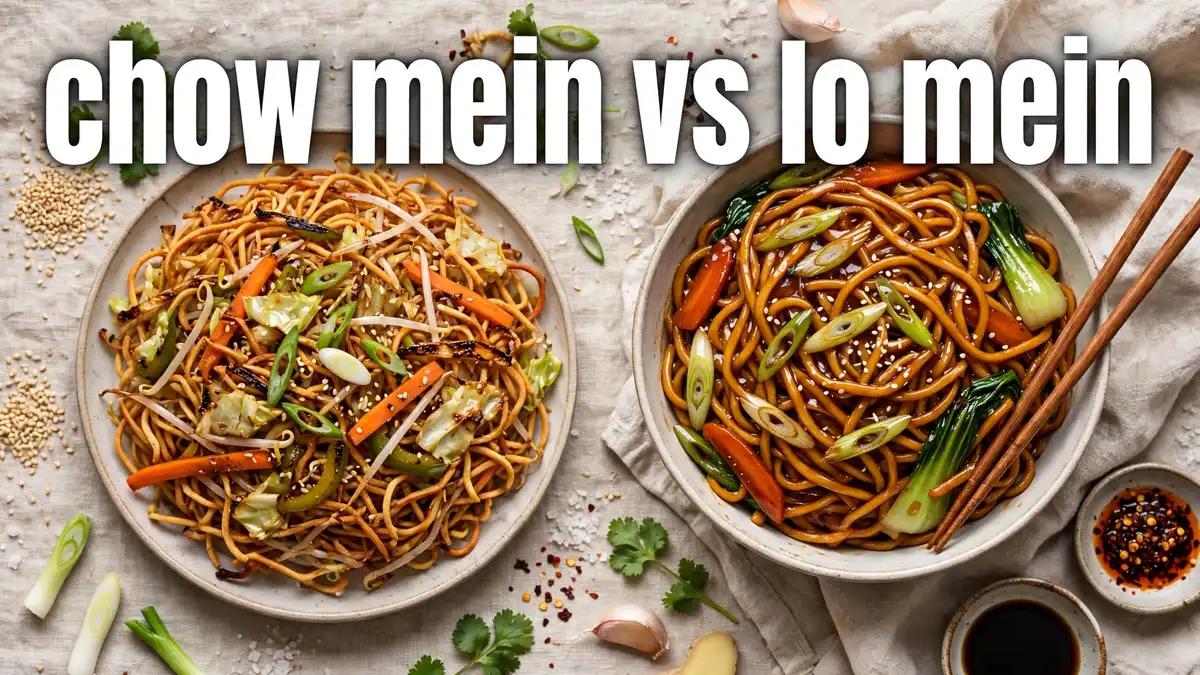
Yes, and the home versions follow the same split. For chow mein, par-boil dried egg noodles, drain them well, then stir-fry in a very hot wok or large skillet with a little oil until browned at the edges before adding vegetables, protein, and a light sauce. For lo mein, boil fresh or dried egg noodles until fully tender, drain, then toss with a soy-based sauce and already-cooked vegetables and protein, off the highest heat.
Two home-cooking notes matter most: do not crowd the wok for chow mein, or the noodles will steam instead of fry; and do not overcook the sauce for lo mein, or it will thicken into a sticky coating instead of a glossy toss. Fresh noodles cook faster than dried ones because they already hold more moisture, so check them early.
The bottom line
Chow mein is fried noodles — browned, chewy, sometimes crispy, lightly sauced. Lo mein is tossed noodles — fully boiled, soft, and generously sauced. Same noodle family, different cooking, different dish. Order chow mein for texture and lo mein for sauce, and you will never mix them up again — just as a quick check before you commit saves trouble elsewhere, the way checking the water first matters before Gus swims.